Cricketed? Seriously? Yes I know! Many, many sites exist about cricket. Many of them, like this, are free and contributed to by people who have played cricket or watched much more than I have been able to. More people are involved in written media about sport than ever before. But you have to start somewhere, and perhaps I can offer a different perspective on the game. Plus I love writing and love cricket, so why would I not have a go! So I will write about cricket, and it will appear on Cricketed. The bits and pieces I have written about cricket have all been migrated Cricketed, and more will appear.
It is an incredibly interesting – and dangerous – time for cricket. As with just about every part of life, Covid-19 has stopped everything in its tracks. It has also served to increase the impact of problems that already existed. In the medium term it seems that cricket will happen at empty stadia for the television, which is bound to impact the spectacle.
England are about to start a rescheduled Test series against West Indies, and I am working on my series preview which will be released ahead of the first game at Southampton. Hopefully August will bring about a domestic season in England. I intend to do some limited match reporting, but I do have other work and family commitments to work around. I will also write about aspects of the game that have interested or currently interest me.
I am not sure how regular the contributions will be, but hopefully the site will regularly be updated. The purpose is largely for interest and entertainment, though perhaps I can fuel some passionate and respectful debate (respectful is a none negotiable on Cricketed).
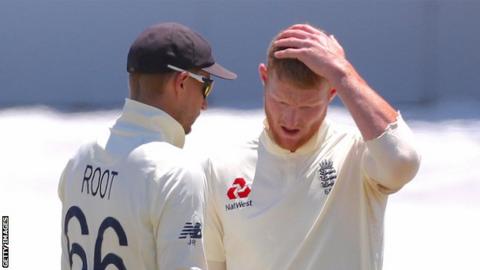
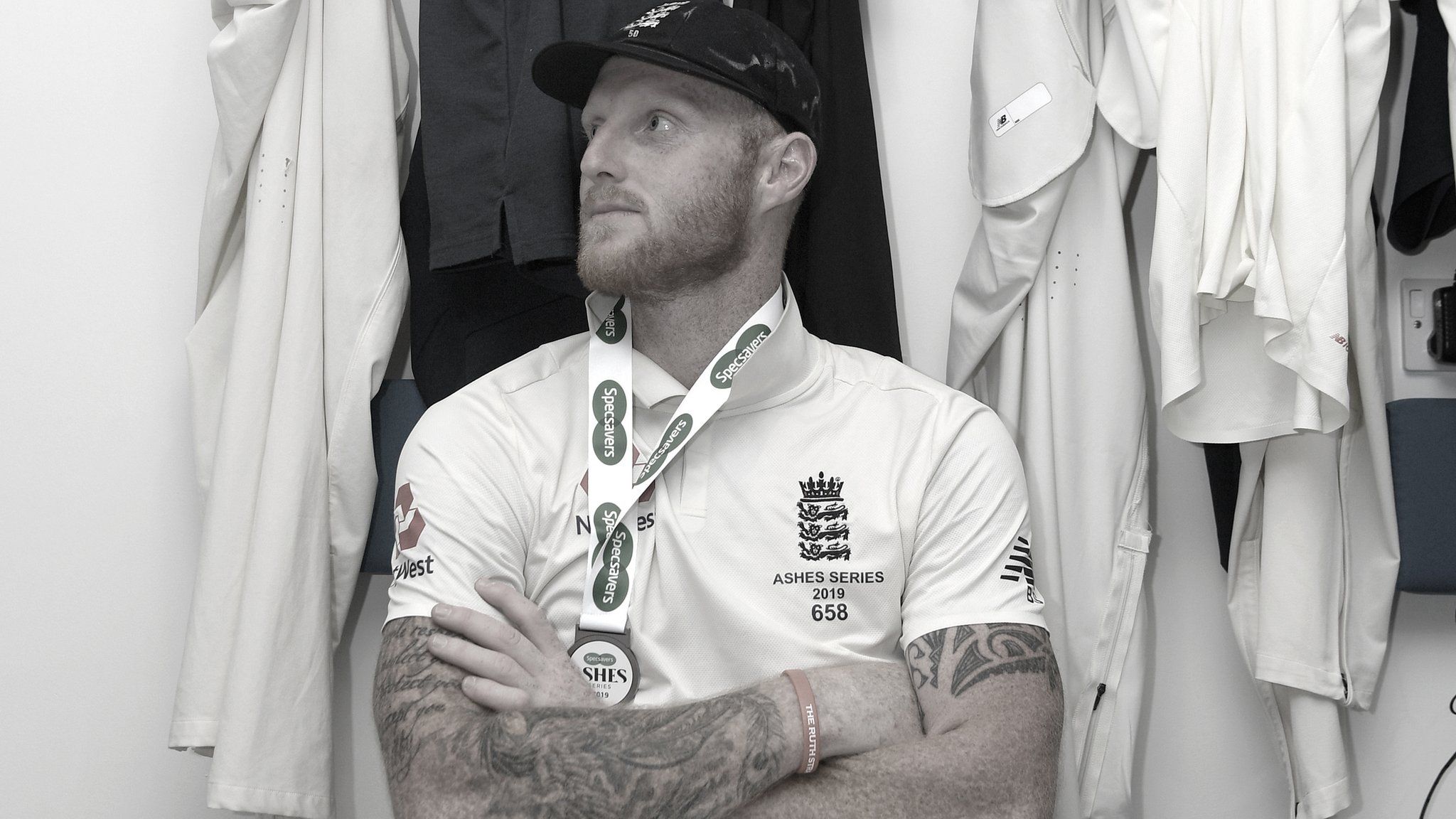
Captain and vice captain: Is Stokes the right person to cover for Root? Picture from the BBC.
ED: By the time this site went live, the decision had been made.
It has been widely reported that Joe Root may miss the first test match against the West Indies in July. Root has said that he will attend the birth of his second child, and I am certain most people would back him in making that decision. Of course, Michael Vaughan left a test match in 2004 for the same reason. Vaughan was lucky – the test match was at his home ground of Headingley, and had a clear second in command in Marcus Trescothick. Root is not so fortunate. He has to deal with the added complication of entering and leaving a COVID ‘biosecure bubble’. It is also not so clear who would take over.
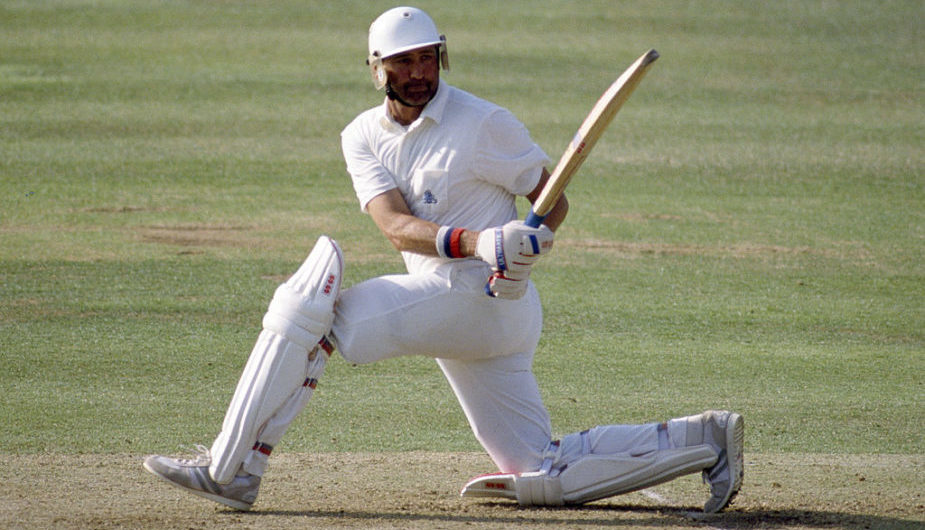
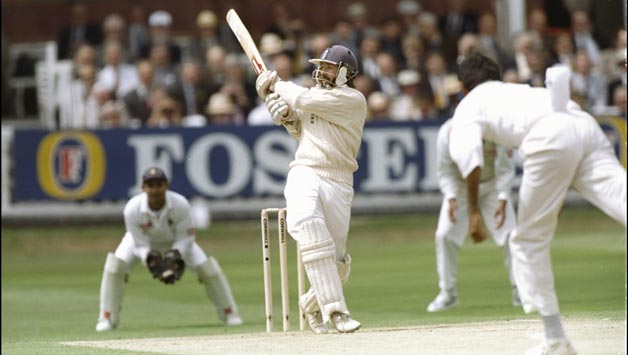
Gooch was one of England’s few captains who became better players when captain. (Photo by David Munden/Popperfoto via Getty Images/Getty Images)
Captaincy has been something of a problem for England in recent years. Since Graham Gooch was appointed England captain for the 1989/90 season, 12 people have offically ‘captained’ England in 1 or more test matches (this includes Allan Lamb, Mark Butcher, Marcus Trescothick and Andrew Flintoff who were essentially stand in captains). Of those 12 only Lamb, Stewart, Hussain and Strauss had previously been ‘County Captains’ (and Hussain was only appointed Essex Captain in 1999 – the same season he was later to assume the England role). Prior experience as a county captain is not the only consideration when appointing a captain – consider that Eoin Morgan is England’s most successful One Day captain of all time and has never been the Middlesex ‘offical’ captain. However, prior experience would certainly help, and I certainly believe that both Alistair Cook and Root have suffered from a lack of prior experience. I also believe that Cook’s captaincy career ought to have been terminated earlier, but it was felt that no alternatives were available. Some, including myself, have expressed concern about Root as captain, but after the victorious South Africa tour I think those concerns have, for now at least, gone away.
The England vice captain is Ben Stokes. My own view is that Stokes’ earlier issues are not relevant here – since returning to the England team in 2018 he has done absolutely everything possible to make up for earlier indiscressions. I also think Ben Stokes is the right choice as vice captain. He has the ability to inspire and unite, but also is clearly tactically aware. Stokes will be a great sounding board for a captain and will not be afraid to challenge a captain. Good leaders always want to be challenged. But I must admit to being concerned about Stokes as captain.
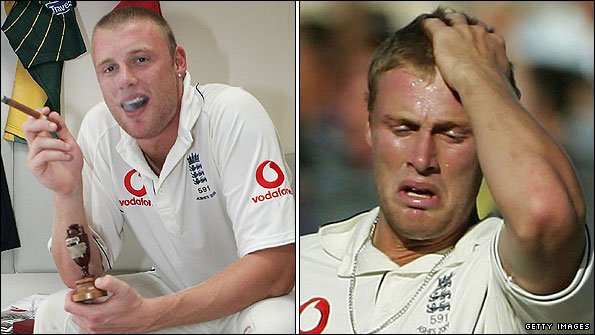
My worries are based around what happened to 2 other charismatic allrounders when they were made England captains. Actually, both Ian Botham and Andrew Flintoff were unfortunate. Botham came up against the mighty West Indians – seemingly endlessly – 9 of Botham’s test matches as captain were against the West Indies. The 1980/1 tour was particularly challenging both on and off the field. Flintoff came up against an Australian team in 2006/7 that were determined to avenge the 2005 Ashes loss. Flintoff also was handed a team minus Vaughan and Trescothick, while Giles and Harmison were shadows of their former selves. However, it has to be said that Botham never won a game as captain, and Flintoff only 2 out of 11, which included the 5 nill Ashes loss.
The highest times I have experienced as an England Cricket fan in 2005 watching a free spirited Flintoff. And the lowest in 2006 watching a shackled Flintoff. Pictures from the BBC
The effect of captaincy both on Botham and Flintoff was basically the same, though it manifested itself in different ways. Both felt constrained by the need to set the example and play to the situation, and therefore did not play their natural way. For Botham it let to a loss in confidence. Can you imagine Botham the captain in 1981 throwing his bat in the way he did at Headingly, or playing those remarkable hooks against Denis Lillee at Old Trafford? And would Botham have bowled himself in the Edgebaston test match of 1981? Mike Brearley suggested not. Flintoff wanted to do everything himself, and ended up bowling 68 overs in the first test match against Sri Lanka in 2006. Would Flintoff the captain in 2005 have been able to slog Shane Warne for 6 or play the famous ‘duck-hook’ that went for 6? Kevin Pietersen has also spoken about his own time as captain and an inability to play in his natural way.
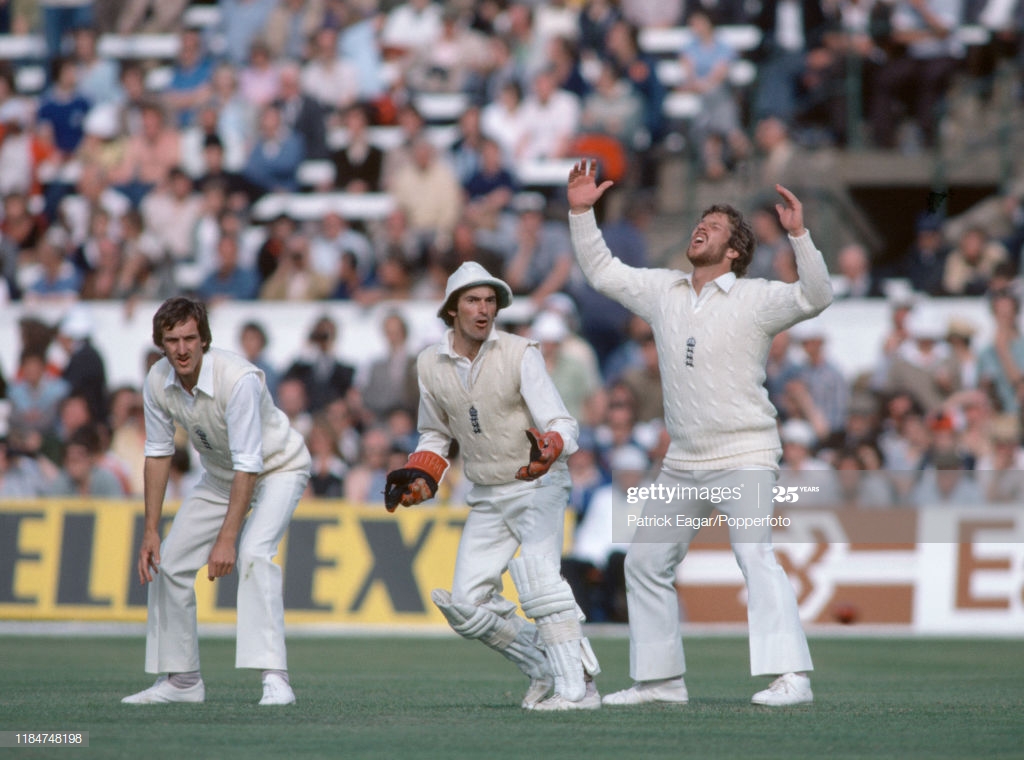
An image of Botham’s Captaincy? Ian Botham of England, in his first Test as captain, reacts as a chance is missed during the 1st Test match between England and West Indies at Trent Bridge, Nottingham, 6th June 1980. The other fielders for England are Chris Tavaré and wicketkeeper Alan Knott. West Indies won the match by 2 wickets. (Photo by Patrick Eagar/Popperfoto via Getty Images)
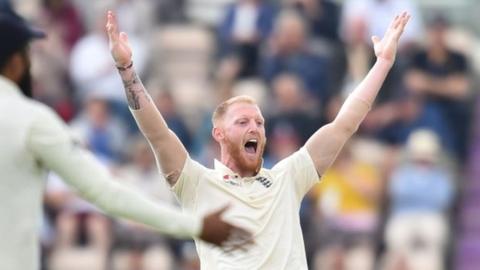
Stokes is a different personality to Botham or Flintoff. As captain, I think his batting will be fine. Stokes played a number of incredible innings in 2019, but what was most impressive is the way he identifed a need to play in a particular way and stuck to that method. Both in the World Cup Final and in the Headingly test match of 2019, Stokes realised that he just could not get out – and even preferred to ensure a super over to risking getting out. However, in the Headingly test match, it was Stokes the bowler who made victory possible – by bowling 24 overs. Is he likely to do a Flintoff and bowl 60 overs? Stokes is also full of fire. In 2019 he was able to use this passion to achieve the incredible. Perhaps he has learned to control his emotions. As captain, you certainly need self control – something that Cook and Struss had in abundence.
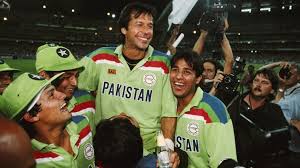
Imran Khan – brilliant allround and captain. It can be done. Picture from the BBC
When it comes to the great allrounders, perhaps the captaincy exception is Imran Khan. He sticks out as being the successful great all rounder and captain, culminating in victory in the 1992 world cup. I did not see a lot of Imran, but it seems to me that he had an ability to inspire others, without losing his own ability to play naturally. For Stokes, that is going to be the question. Can he play his natural game as captain?
So what do England do? Well, the decision has been made. Stokes will cover for Root if needed. I would prefer it if Stokes the captain could be avoided, and if Jos Buttler was guaranteed a place in the team he would be the perfect candidate. In reality though, he is not assured of a place. Rory Burns is not yet established enough in the team to captain it, and the only other realistic option would be Stuart Broad. Stokes will need his experienced players to back him, support him…and challenge him. The likes of Buttler, Moeen Ali (if playing), Broad and James Anderson need to give 100% support, but be willing to ask questions.
Longer term, England have just got to find a way for prospective leaders to get experience. Burns, Sibley, Buttler, Pope – they all need an opportunity to find out if they can be successful captains, preferably before any of them are asked to do it in a test match.
Ultimately, the only way to find out if Stokes the captain will work is to try it.
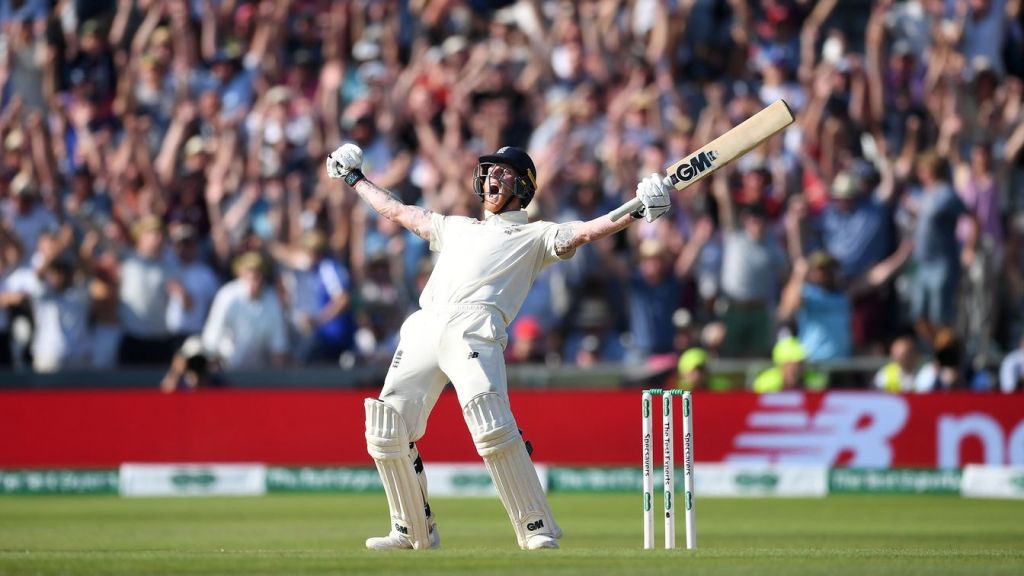
If Stokes can do anything even half as good as this while captain, it will have worked. Picture from the ECB.
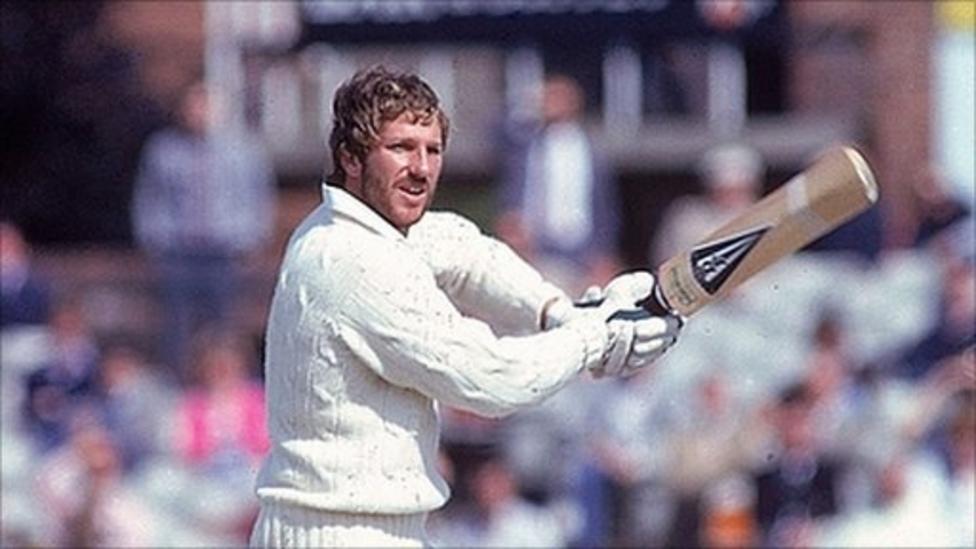
For this article, I focused on players I have seen live, be it on television or at a ground. Therefore, I could not choose ‘Beefy’. Picture from Cricket Country
How do you even pick a favourite cricketer? One can think about all sorts of qualities or statistics. But at the end of the day, while these things all matter, a choice of a favourite is not scientific at all. It is all about how a player ‘made you feel’. One stipulation I did make is that I wanted to focus on players I have seen. Whilst it was tempting to pick Ian Botham, I never saw the best of Botham, except on the old videos. Eventually, I pick 2 favourites.
Winning in Australia eventually was all it takes to be a favourite.
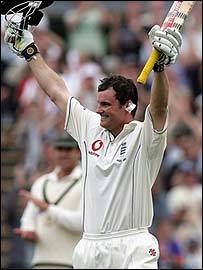
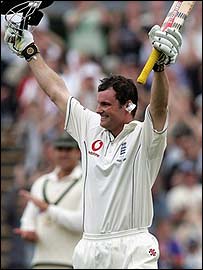
When Andrew Strauss came on the scene in 2004, he scored lots of centuries. Between May 2004 and September 2005, he scored 7 centuries. Adding Strauss to Michael Vaughan and Marcus Trescothick, it suddenly felt like England had a serious batting line up that could get big scores. Strauss was the only person to score 2 hundreds in the 2005 Ashes series, and I will always remember the image of him celebrating his hundred at Old Trafford which the bloody tissue on his ear, having been hit on the head early on. For me, Strauss was the obvious choice of captain in 2006/7 but it probably worked out better for him longer term that he was overlooked. Early on Strauss seemed a fairly free scoring player, but I feel that Strauss became a slightly different player later in his career, more of an accumulator. His high point as a batsman was probably 2009 – both the West Indies tour and home Ashes series, though the two centuries in the match against India in Chennai was a significant achievement.
Battered and bruised, up came the 100. Picture from the BBC
Strauss’ moment was as captain. Even though Strauss won the Ashes twice as captain and took England to number one in the world, many were critical of his tactical captaincy. Sometimes Strauss was perhaps conservative, particularly in the West Indies in 2009. However, you do not win the Ashes in Australia with a tactically inept captain. It was as a man manager that Strauss was most successful. He became captain after the total breakdown between Kevin Pietersen and Peter Moores, and my view is that Pietersen never quite got over that. Strauss held the dressing room together, including Pietersen, until the Headingly test match against South Africa in 2012, when Pietersen and some text messages contrived to end Strauss’ career. He should not have been left to finish his career in that way. His team was to fall apart spectacularly a year later in Australia – yes Cook was captain by then, but it was Strauss’ team – without Strauss.
Most importantly, Strauss won the Ashes in Australia – 24 years after Mike Gatting. He broke England’s ‘duck’ since 1986/7, though since 2011 the pattern of Australian home dominance has resumed. Indeed, it is astonishing to think that England have only won 4 test matches in Australia this millennium – Strauss won 3 of those, the other was won by Nasser Hussain in 2003. Winning in Australia eventually was all it takes to be a favourite.
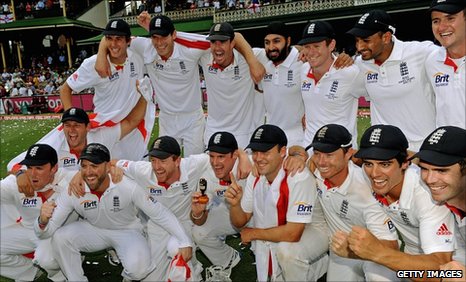
One can be in no doubt about Strauss’ greatest moment on the field. Picture from the BBC
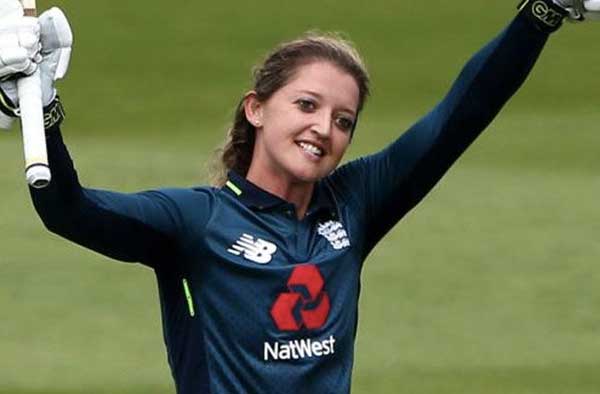
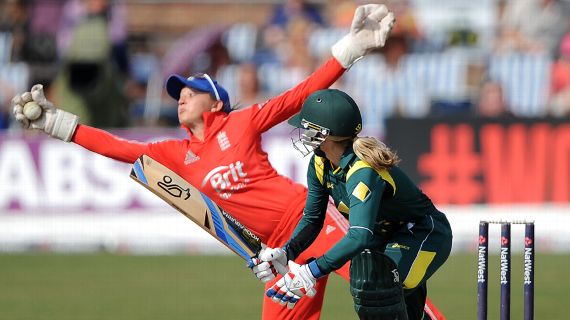
Sarah Taylor is responsible for my interest in ladies’ cricket. Growing up, I had always seen the ladies as rather dull – but I did not watch enough ladies cricket to know if this was real or perception. However, since 2006 Sky have shown more and more ladies cricket, and whatever the standard used to be, it has improved greatly. I cannot remember when I first watched Taylor, but I know she scored a century. Looking back at Taylor’s record, I think it might have been in 2008 when she made 129. I certainly do remember watching Taylor in 2009 when she broke a record for the highest score by an Englishwoman against Australia. As I watched Taylor bat, I started to watch other players like Charlotte Edwards and Anya Shrubsole, but I did need something to spark my initial interest. By 2020, it is just cricket to me.
Sarah Taylor
Sarah Taylor is responsible for my interest in ladies’ cricket
Taylor has clearly had a tough time with her mental health. Though she spoke bravely about it, I do not really know much about what she went through. I am not sure it is any of my business. What I do know is that she made a comeback, and a successful one. It was an amazing achievement.
It was fantastic that she was able to return and play a starring role in the 2017 World Cup. By 2017 I was watching her wicket keeping, and I realised that she was one of the best wicket keepers I have ever seen, up with Jack Russell. Sometimes, it seems like Taylor was able to remove the bails before the ball got to her. If she made a mistake, it would generally be an easy catch that would go down before then doing something truly remarkable. Taylor was also great fun to watch – though occasionally she would get carried away! That is part of the appeal – and I think that was also the role she was asked to play. In 2019 it was more and more apparent that Amy Jones was going to, at some point, replace Taylor, and so I think Taylor made the right decisions. We will always remember those stumpings!
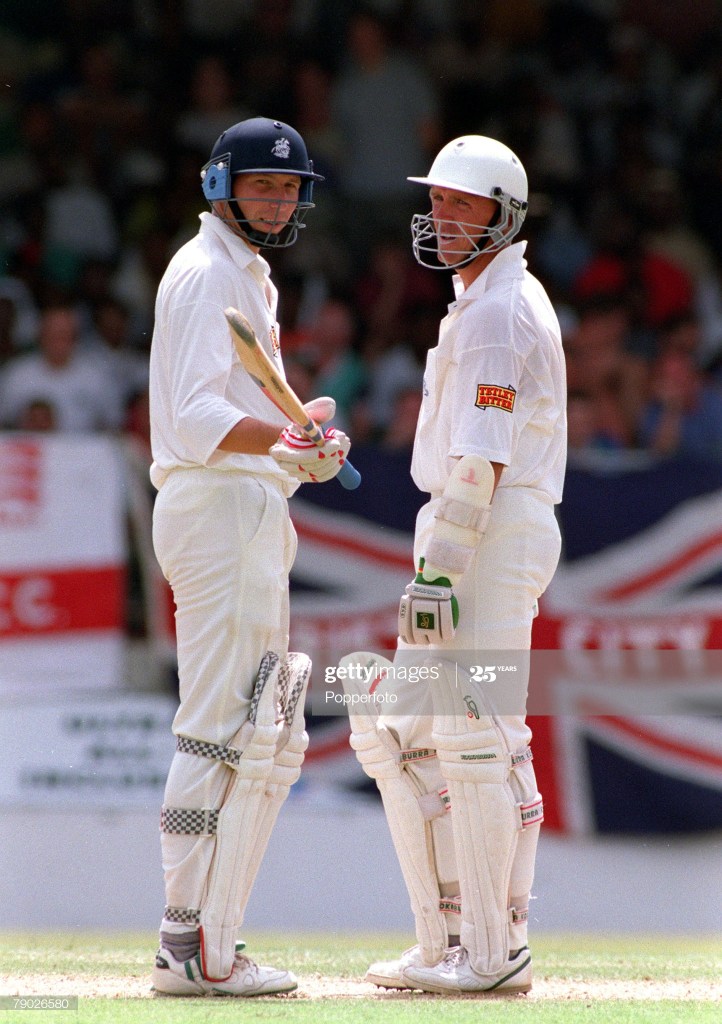
Fourth Test Match, Barbados, April 1994, England beat West Indies by 208 runs, England opening batsmen Michael Atherton (left) and Alec Stewart (Photo by Popperfoto via Getty Images/Getty Images)
In 1994 Michael Atherton and Alec Stewart opened the batting for England against the West Indies and performed well with two 100 partnerships in the series. Stewart made the famous two centuries at the Kensington Oval. In 1996, Atherton and Stewart performed well, and Stewart made 170 opening the batting against Pakistan at Headingley. England had an opening pair ready for the post Graham Gooch era. But we are talking about 1990s England here. Nothing was ever simple.
For those who did not follow English cricket in the 90s, it was a time of strange and inconsistent decision making. You never knew what an England team would look like, but one thing you did know is that every season would include a debate about whether or not Alec Stewart should keep wicket in test matches.
Jack Russell and his old hat. He could have been one of England’s best ever. Picture from Wisden.
Take the period of 1993 to 1996. In 93 Stewart did the entire Ashes summer behind the stumps. However, for the 93/4 winter tour to West Indies, Jack Russell was back in favour. In 94 we had an odd flirtation with Steve Rhodes, before we were back to Stewart keeping wicket in the first home test match against West Indies in 1995 (and we will ignore the incomprehensible decision to open the batting with Robin Smith). 1995 was unusual because we started with Stewart keeping but by the end of the series, Russell was back. Russell kept his place until the last home test match of 96 against Pakistan. 96 repeated what had happened in the 91 and 92 home seasons and the 90/1 and 92/3 away seasons – Stewart became a keeper at the end of a series to squeeze in an extra bowler. As England failed to win all these series, it is fair to say it never worked.
Russell on his way to a test match hundred against India in 1996. Enough to get him dropped. Picture from countycricket.com
The dropping of Russell in 1996 really annoyed me. Just 5 games earlier, Russell had top scored for England against India at Lords – taking the score from 107/5 to 344. Just 5 games before that Russell drove the South African bowlers to distraction in partnership with Atherton at Johannesburg. In Russell’s final test match in England at Headingly in 1996, Stewart had scored the 170 and Nick Knight 113. At the Oval, Stewart opened but after that, in Zimbabwe, moved to 3 and Knight opened. That means that 3 of the players that made 100s in the summer of 96 found themselves dropped or in a different role. It was a total shambles.
If you have read this far, you have probably already worked out that I always wanted Stewart and Atherton to open the batting, and I wanted Jack Russell to keep wicket. Looking back now I feel the same. But I will concede that this was never a simple issue. Gooch and Atherton had formed a good opening partnership and so generally when Atherton played, Stewart had kept wicket and batted down the order (93 being a case in point). England were always a class player short and were fixated on building a team around an allrounder batting at 6 (the ‘new Botham’). Jack Russell was always the victim of this. Another interesting point, hard to imagine in 2020, is that there were a lot of good openers playing county cricket – the likes of Hugh Morris, Martyn Moxon, Steve James, Nick Knight, Mark Butcher, Jason Gallian and Mark Lathwell. Astonishingly, in 1993 Lathwell had been considered such a talent that Gooch, at the time perhaps the best opener in the world and arguably the best England had ever had, was moved down the order resulting in top order containing 4 openers.
There are a number of reasons why I would personally have selected Stewart as opener, not a wicket keeper. Firstly, I believe Atherton played better with Stewart at the other end. They were, and remain, totally different character but they complemented each other perfectly. Stewart was an attacking opener, at his best against pace, happy to get the score moving. Atherton needed to dig in, but once in was hard to shift. Atherton was also captain and under huge pressure, as his presence had such an impact on the entire batting line up. We needed to take pressure off him and not put it on him. Stewart at the other end did this.
The second reason is that, to me, it always seemed that England were short of runs, not short of wickets. Using Stewart as a wicket keeper served to shorten the batting line up and reduced the effectiveness of one of our best players. As a pure batsman, Stewart’s average was close to 47 whereas his overall average ended up just below 40. Indeed, I was recently reminded that Stewart scored more runs in the 1990s than anyone else in world cricket (6407) at an average of just over 40). This stat is clearly going to favour Stewart because he played throughout the decade – Gooch was clearly a vastly superior player but he is 10th on the list of 90s run scorers but he retired in 1995. But I still wonder how many runs he might have scored if he had been consistently opening. England just did not have enough quality batting.
Look at the best sides of the last 40 years or so. West Indies in the 80s, Australia around the year 2000 and the world beating England side of 2011 all favoured a 4 man bowling attack with a keeper at 7 (though it must be said that Jeffrey Dujon, Ian Healy, Adam Gilchrist or Matt Prior could all have batted at 6). Continuing the international comparisons, it is notable that Kumar Sangakkara and AB De Villiers mostly did not keep wicket in test matches once they became so key to the Sri Lankan and South African batting line-ups.
The biggest issue of all though is that every time the Stewart swap occurred; the whole structure of the team changed. The opening partnership, the keeper, the slip cordon, the batting order…EVERYTHING! Contrast that to the England Team of 2010/11 when the England top 7 was unchanged for the entire tour.
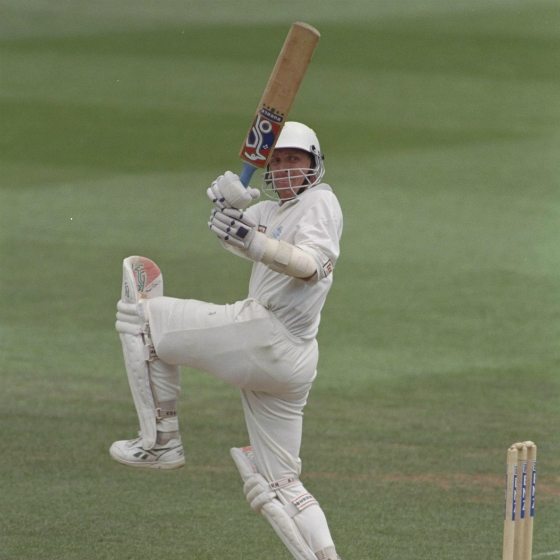
When I think of Alec Stewart, I think of the pull stroke, the white helmet and Kookaburra bat. Picture from Kookaburra.
With the arrival of David Lloyd as coach and the overdue departure of Raymond Illingworth, Stewart’s role generally became clearer. Stewart opened kept wicket in one day cricket – and that always made sense – after all, he was the 1992 keeper, and Russell playing in the 1996 World Cup was another moment of madness for England selection. In test matches, Stewart kept wicket and batted at 3 which advantageously allowed Nasser Hussain to bat 4 and Graham Thorpe 5. Memorably, Stewart as wicket keeper scored 2 fabulous hundreds at Old Trafford – 164 against South Africa in 1998, setting up a draw, and 105 against West Indies in 2000, rescuing England from 17/3. Even then, there were exceptions where Stewart did not keep wicket – the 1998 West Indies tour and Ashes test matches in 1997 (Trent Bridge scoring 87) and 2000 (SCG scoring 107). It is hard to ignore the fact that Stewart’s single century in Australia came when he was opening and not keeping.
If England are not careful, they will ruin the test match careers of both Buttler and Bairstow.
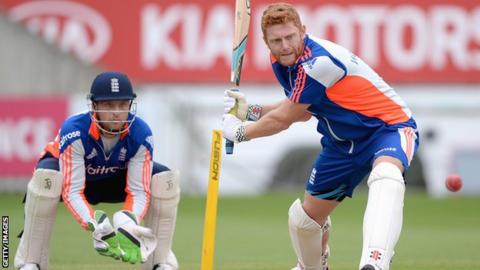
Twenty years later, you may be wondering why on earth this still matters? It matters because we have an abundance of keepers. Jos Buttler, Jonny Bairstow and Ben Foakes would seem to be enough options, but recently James Bracey was named in the training squad for the rescheduled West Indies series. In the 2015 home Ashes series, Buttler was in possession but in 2016 it seemed that Bairstow had made the position his own, before he was then moved to number 5 (Bairstow does not have the technique to be a test match number 5 in England). Not long after that, Foakes took an opportunity presented by injury, but a few games later was dropped. In the 2019 series, Buttler was batting in the wicket keeper’s number 7 spot but was not keeping wicket. Again, it made no sense.
Ed Smith would be well advised to take a look back at the 90s and the Stewart Saga. The lesson is actually simple. With Stewart, you could have gone either way, but you needed to make a decision and stick with it. By 2000, Stewart was established as first choice wicket keeper. It is no coincidence that the year 2000 saw England start to turn the tide, with series wins against West Indies and Pakistan. Consistency is key.
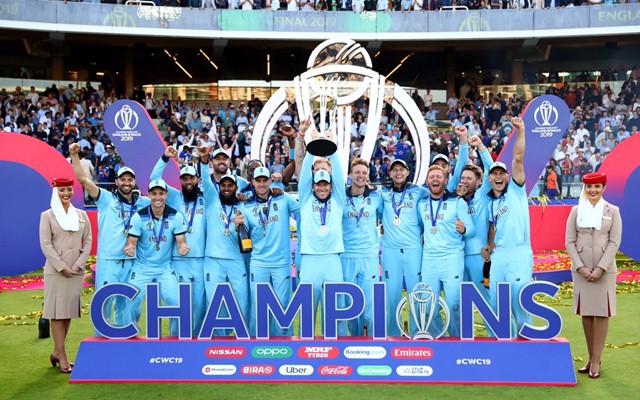
It feels like a good time to talk about something other than the public health crisis of 2020. So I thought I would turn my memory back to the Summer of 2019, specifically to the 14th July. That was the day England won the Cricket World Cup for the first time, and the day that my eldest son Henry fell in love with cricket.
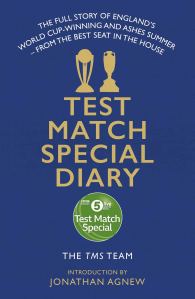
I have been reading the Test Match Special Diary of 2019, which I received for my birthday, and it bought it all back. Early in the season I knew that it was a summer of great excitement and that England had put together a powerful One Day Cricket Team. But I had not really given much thought to England being able to win the World Cup. It was in May, during a rained off One Day International against Pakistan, that I began to wonder. During an early rain break the BBC Test Match Special (TMS) commentators tried to pick the all-time England One Day Team. These things should never be taken too seriously, but in this case, something was becoming more and more apparent – that the current One Day Team was the best we had ever had – by a country mile. For a start, this was a team that could afford to drop Alex Hales (he was dropped for specific reasons that were not cricket reasons – but it would have been a lot harder to drop Hales in 1996 for instance).
Because England were useless at One Day Cricket for so long, I still clung to some old heroes who were the last England players to play in a World Cup Final – back in 1992 – Ian Botham, Graham Gooch and Allan Lamb. But when it came to the all-time team? I cannot remember exactly who was chosen by TMS, but I realised that, given the chance, you would just pick the current team. Consider 10 definite selections: Jason Roy, Jonny Bairstow, Joe Root, Eoin Morgan, Ben Stokes, Jos Buttler, Chris Woakes, Moeen Ali, Adil Rashid, Liam Plunket. Most likely, you would want an extra bowler (Jofra Archer had not yet played for England enough to make the All Time team) so personally I would have picked Andrew Flintoff (for those yorkers – just pushing out Darren Gough because of the batting. Botham, Lamb, Gooch? Or later players Marcus Trescothick and Paul Collingwood? Not a chance. And I suddenly realised we could win this – and then I got nervous!
I remember vividly the last time the Cricket World Cup was in England. As an England fan, it should have been a total turn off from cricket.
The England game I saw live was horrendous – England were knocked out of the tournament at Edgbaston in May 1999 and we all got soaked. The train home was a very damp one. But I remember being gripped by THAT game between Australia and South Africa which South Africa had to really work at to loose (that was the ‘you just dropped the World Cup’ game). And I was at the India Pakistan game at Old Trafford. It was not an amazing game – but it was an amazing atmosphere. Sat in the middle of about 10,000 Pakistan fans, my mum and I decided it was wise to become Pakistan fans for the day.
All this left me very excited about a home World Cup, and I was aware that based on history, the next home World Cup would be in 2038. And I am certain I will never experience a Summer with a World Cup and Ashes at home together.
I was only able to get to one game of the World Cup which was the England Afghanistan game at the Home of Cricket, which is of course Old Trafford. I did not realise the significance of what I was seeing at first – but Eoin Morgan went absolutely mad in hitting 6 after 6 – and Old Trafford is not small.
The combination of TMS and Sky Sports, plus my Samsung Tablet and car stereo meant I was able to listen to or watch every single game, and I have fond memories. I remember the game that England lost to Pakistan vividly – I listened to quite lot of that on the M5 and M6 motorways. I remember the incredible game between West Indies and New Zealand, again at the Home of Cricket, Old Trafford – that was remarkable, and I confess that I watched that game during a Sale Band festival – that Samsung Tablet fits well onto a good music stand. I remember watching the Semi Final when England battered Australia. But most of all, I remember the World Cup Final.
My wife Amie was at work, and Henry had been at grandparents. But I was too nervous to watch it on the television so I listened while painting and decorating. Henry came home, and we started watching – and England were struggling. The ever-elegant Joe Root could not get going, and then when Eoin Morgan, the Old Trafford destroyer, hit the ball in the air, I knew he was going to be out, and I heard Morgan shout ‘NOOOOO’. I kept telling people on social media that it was all over. I kept telling Henry that England often did not win. And he kept looking at me and telling me that ‘England were going to win’. Jos Buttler scored a vital run a ball 59, but while Ben Stokes refused to give up, we all knew we had a chance. Then came what we thought would be the last over. We had the 6 that Trent Boult ought to have caught, and the one where the return throw deflected off the stumps and went to the boundary (it was given 6, should have been given 5 – and really ought to have been a 2). That was when I started trying to Google what happened if it was a tie.
Ian Smith, the former New Zealand wicket player, was commentating with Nasser Hussain – and he told us all about the Super Over before Google told me. Even after all the madness of that last over, I did not think the 15 scored by Buttler and Stokes was enough – I would have liked 17 or 18. Henry assured me that it was enough. Then Jofra Archer bowled a ball that was incorrectly given a wide (it was never a wide) and another ball was flogged away by Jimmy Neesham for 6. And the Jason Roy mis field. Everything contrived against Martin Guptill of New Zealand who had to get 2 of the last ball. That time, Roy got the throw in.
I can still hear Ian Smith now in my ears. “England have won the World Cup by the barest of margins.“ And Henry turned around and looked at me reproachfully. “I told you daddy”
It was a brilliant game. The 2 points of inspiration for me? Stokes – he just would not give in. I love that. And Kane Williamson, the New Zealand Captain. The whole team was fabulous and if England had lost, it would have been easier to accept because the attitude of the Kiwis was so good. But Williamson set the most amazing example – amazing in interview, magnanimous in defeat, not at all bitter – and he could have been forgiven that. When he was told that he was player of the tournament, you could see him saying in a shocked voice “What….ME?”.
The biggest highlight? Henry had not really been into cricket until then. But since then, hours and hours have been spent in the garden playing. He has a decent cover drive. Who knows, once we get passed Covid-19, Henry might play a lot of cricket. Who knows? But sometimes, it does not hurt to dream!
Never in doubt….
As an aside….did you ever see what Gwen thought about it?
I really do think we can learn something about forgiveness from the 2019 Ashes.
A couple of months back, on the first day of the 2019 Cricket World Cup I wrote this blog – Ben Stokes Phase 2?. I genuinely thought that Ben Stokes could do something remarkable, and he really did look determined to make up for his earlier mistakes. And he looked like he wanted to make the most of his 2nd chance. We know all about the World Cup but if you need a reminder, my post World Cup blog is here – CWC2019: New heroes.
Today England survived. They won the third test match at Headingley. It means that when I go to the Old Trafford test match next week, on day 1 and day 5 (if it gets to day 5), the Ashes will still be ‘live’. It has to be said that England have been poor in this third test match until yesterday afternoon when Joe Root and Joe Denley dug in. That they won however was down to 1 man. Ben Stokes. He bowled his heart out, and then showed as much determination with the bat as I have ever seen in sport.
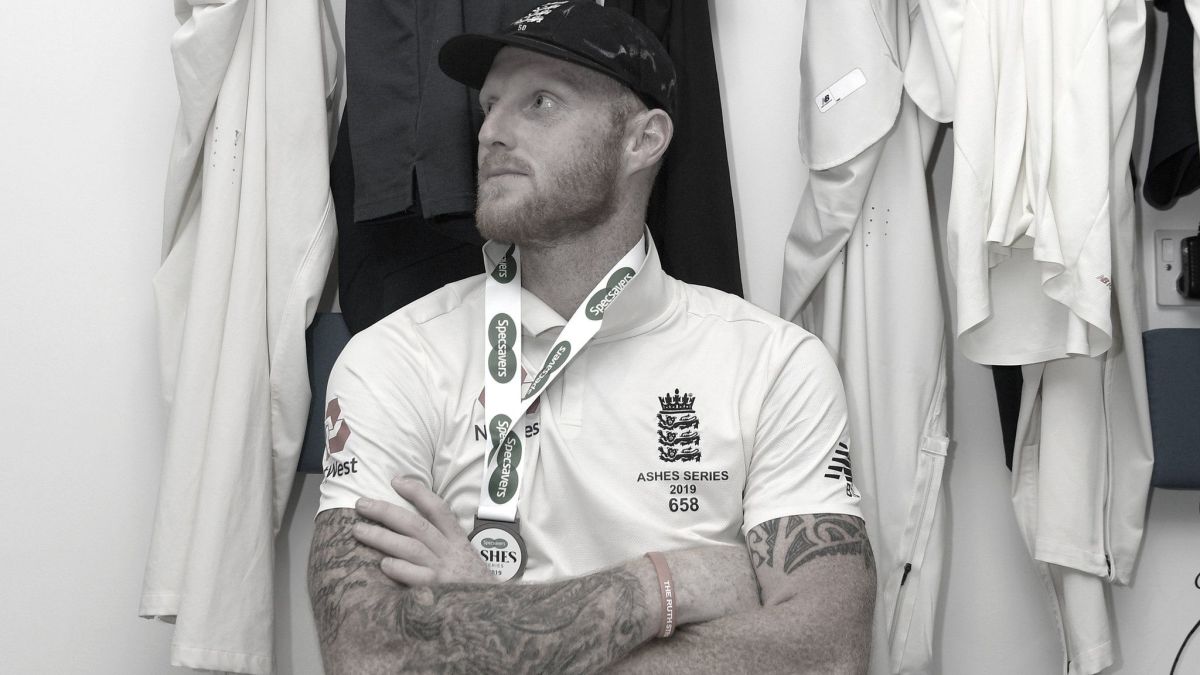
2019 is turning into the Redemption Ashes. At Edgbaston we saw the first test match return for Steve Smith since the sand paper incident (OK I never wrote about this – but you can easily read up on ‘Sandpaper-gate’). Steve Smith has been torn to pieces by anyone who follows cricket. Even the Australian PM had a pop. And Smith, along with David Warner and Cameron Bancroft, deserved every bit of it. It was the same with Stokes back in 2017. He deserved it.
And I have to be honest; personally I felt none of them should play for their countries again. It was the same with Mohammad Amir back in 2009 after the spot fixing fiasco. To me, these players had cheated to such a degree; they did not deserve another chance. But actually, I call myself a Christian. It makes it unacceptable for me to say that someone does not deserve another chance. Actually, as human beings, we should never say that people do not deserve a second chance. From a distance, I have watched Stokes carefully since he came back into the England team. And as I have already said, it really does seem that he now has a new level of determination.
At Edgbaston, Steve Smith singlehandedly won the game for Australia. I watched Smith when he put his bat in the air to celebrate both 100s that he scored. In his face, he looked desperate to make up for that crazy situation in South Africa – which Smith as Captain was responsible for. At Lords, Smith was on his way to another 100 before he was hit on the head. I do not think England bowl well at Smith, but he is darn good. And I am so glad he has had another go.
This innings by Ben Stokes at Headingley was incredible. He was on 2 off 50 balls for goodness sake. I have actually been at a wedding today. I had really given up hope, but with this England team you never know. I kept looking at the BBC live text feed, refreshing, refreshing, refreshing….waiting for it to say ‘Australia win by……’ Suddenly, England only needed 8 more. It was single figures. Then it was scores level. And then…England won. Now I have watched the highlights on Sky Sports and on Channel 5 and the BBC website. It was truly remarkable. It really was.
Stokes knew that if he stayed in, he could do something. Root and Denley seem to have worked this out in the 2nd innings. Hopefully we will see more application from the whole England top order now.
But I am delighted for Ben Stokes. We all deserve a second chance. We all need to take the chances we get.
Joe Root is on for a 100 at Old Trafford. You heard it here first.
One very nervous England supporter, the other full of confidence!
WHAT A FINISH!
On the 14th July at 1700 I had given up all hope for England.
By 1800 I was starting to realise something crazy was happening.
At about 1830 I started to Google the tie breaker rules.
By 1900 I was thinking that if England might just make it.
At 1930 England won the World Cup – and I had aged by several years.
New Zealand were magnificent and showed us true sportsmanship. I would not have minded them winning – but it would have been heart-breaking for the England players, as it ended up being for New Zealand. I have been saddened to see so much vitriol about the result on social media – and very little of it has come from New Zealand.
England did win the World Cup according to the competition regulations. Personally, I have no problems with the regulations of the tournament. I do not believe you can split The World Cup in two and share it so tie breaker rules are needed. I do not have a problem with the number of boundaries being used in the ‘tie breaker tie breaker’ scenario. If you are going to get picky about that then you can get equally picky about the fact New Zealand even made the final because of the Net Run Rate Rule – and I do not have a problem with this either. Pakistan were destroyed by West Indies and the scale of the defeat should be relevant. In my view, both India and Australia played more consistent good cricket than England and New Zealand – but not when it really mattered. And I am so glad it was England and New Zealand – otherwise we would never have had that amazing game. Whatever rules you have, someone will not like them.
And we have the question about the ‘6’ which came courtesy of the 4 overthrows – that rule needs to be changed. It is both unclear and completely crazy. Imagine if the run out rule applied from when ball was thrown rather than when the ball hits the stumps? No, that is crazy and I am not surprised it was missed by everyone in the ground! If you want to query that then you can query the wide that was given off Archer’s first ball in the super over – because it was not a wide. When you start to question things like that, you will never stop. The fact is that according to the rules of the competition, England Won. Let’s face it, at some point in the tournament both sides got lucky with Umpire Decisions.
When it comes to Test Match Cricket, I updated my heroes a few years ago – Strauss, Cook and Trott – after the 2010/11 Ashes Series in Australia. They took over from Gower and Botham.
However for most of my cricket following life, England have been rubbish at One Day Cricket and my heroes were still Gooch, Lamb and Botham from 1992 – even though they did not win. However, before The World Cup started, BBC Radio 5 Live attempted to pick an all-time England One Day team. I realised then that it was almost impossible to even fit Gooch and Botham into that team – and Gooch still remains the best England batsman of modern times (for me better than Kevin Pietersen). The all-time England One Day team is basically the current team. I think virtually every current first choice player would have got into any England side of the last 30 years.
So now I have 11 new heroes plus Moeen Ali. I have been so impressed with Ben Stokes – I know he had a terrible year or so but he has shown that you can turn things around in life – surely a good lesson. Don’t forget that you heard it here first (Ben Stokes Phase 2?).
Thanks for an amazing game and thanks to both sides for that last hour – I will always treasure the memory of watching that last hour with my 3 year old – who was gripped.
Ben Stokes is an England Cricketer with the potential to be a world beater. I have clearly never met Stokes, but he appears to be very passionate about cricket and life. This delivers a determination and ability to ‘make things happen’. But the negative is that over the years he has been easily wound up. The first time we saw this was the infamous incident with the Marlon Samuels salute (which I do not approve of). This culminated on a night out in Bristol on 25th September 2017 when video emerged which appeared to show Stokes in the middle of a late night street brawl. Stokes has since been cleared of affray.
On Thursday 30th May Ben Stokes 2019 took an amazing catch. It bought back memories of another ridiculous catch that Stokes took in 2015. The 2 catches are totally different. One is before the 25th September 2017.
When it comes to slip catching, I am not sure the quality is not as good as it used to be. Of course, England used to have one of the best slip fielders of all time in Ian Botham – he used to stand so close in. Even since then though, you could mention Thope, Trescothick, Flintoff, Strauss, Collingwood…..I could go on. In recent years though, England have had one of the poorest slip cordons I can remember. However, away from slip catches we see catches that would not even have been considered possible in 1993 when Botham called it a day.
All-Rounders are a different breed. Andrew Flintoff had his best and worst moments against the Aussies.
Ian Botham drove the Aussies mad.
It is tempting to compare Botham and Stokes in so many ways (throw Andrew Flintoff into the mix). On the field my view is that Botham was a vastly superior bowler and probably a better batsman (though the batting is less clear-cut). But when it comes to fielding, Stokes is the stand out. As the videos show, Stokes is brilliant in gully and in the outfield, and he is a decent slipper too. The 2015 catch is down to reflexes and natural ability. The 2019 catch should have been easy but Stokes misjudged it and then came a moment of brilliance.
I suspect that when it comes to the 3 all-rounders, it might be off the field where the similarities are greatest (alcohol and pedalos undoubtedly come to mind). And it is off the field where things really went wrong for Stokes.
In September 2017 Stokes scored a test match century and 2 half centuries. He scored 73 on 24 September. He had taken a few wickets and it really felt like his career was going to take off. Then he did not play for England for months because of the incident outside a Bristol nightclub.
We will never know what happened that night. The one thing we do know is that he should not have been wondering around Bristol in the small hours. Certainly not during a one day series, I would argue not at all in his position. I do wonder what his agent and the England security staff were playing at but that is another story. Eventually personal responsibility comes into it. Of course Stokes has been cleared of criminal activity. His career has been damaged for sure and he missed an away Ashes Series.
Since that incident, Stokes has not been the same cricketer. Word is that he is a changed man. Certainly what we have seen on the cricket field has been a focus on being the team player. The swashbuckling appeared to be gone. Last week was the first piece of outrageous brilliance we have seen since Stokes returned to English Cricket.
It is tempting to draw all sort of conclusions about Stokes. Some would say he should not have played for England again – and he would not have if he had been found guilty. But having been found not guilty, we move on. It is also tempting to get angry about the lost time. I think it highly unlikely that Stokes could have changed the result of the Ashes series in 2017/8 (not without Sandpaper anyway). Since Stokes has returned England have needed him and he has not performed. It is frustrating that Stokes is not listed as the best all-rounder in the world as he has the talent to be the best.
It is worth a mention of Alex Hales, who was with Stokes that night though was not the person throwing the punches as far as we know. But as a result of that night, Hales and Stokes were suspended which let Jason Roy back in the team. ‘JRoy’ has been ‘un-droppable’ since. A lesson in that about not taking life for granted.
Rather than being angry, I prefer to respect Stokes who has apparently learnt something and striven to change his ways. I really hope this article does not come back to bite me, but I do believe Stokes is taking a different approach. Time will tell.
I hope he will now find away to combine this with more brilliance on the field. Against the West Indies on 14th June would be a good time for some brilliance, I think England will need it in that game.
I am hoping that Stokes will be permitted a night out on Sunday 14th July, just after he has scored a century and taken 5 wickets in order to allow England to win the World Cup.
Having listened to Andrew Strauss on the radio this morning, I wanted to share this with you and ask you to take a little look. Andrew Strauss ought to be enjoying retirement with his wife and 2 boys, Sam, 13 and Luca, 10. Sadly, Andrew’s wife, Ruth, died in December 2018 from a rare and incurable form of lung cancer. Andrew has just launched The Ruth Strauss Foundation.
Clearly, as a former and extremely successful England Cricket Captain, Strauss has an opportunity that not everyone has. He says himself that he has “…a platform to try to make a difference to other people.” Struss also says that “…it’s such a wonderful thing to be able to launch something in her honour to try to provide a legacy for her (Ruth), but more importantly to help other people who are going through a similar journey.” (Seehttps://www.bbc.co.uk/sport/cricket/48364893).
Celebrating turning things around in 2009. Pictures from the BBC.
Given what Strauss achieved as a cricketer and a leader, he deserves every bit of support and I want to wish him all the best. I am quite certain that the England and Wales Cricket Board will support the Strauss family with this venture.
As it happens, I had been thinking for a little while that I might write a little bit about cricket. The combination of this foundation and the fact that 2019 is going to be such an amazing summer makes this a good time to start. While I have never been any good at all at playing, I have loved watching Lancashire and England from a young age. Andrew Strauss was a bit of an inspiration for me as player and captain.
In 2004 England were turning into a good team that would go on to win the Ashes in that great 2005 series but still needed young batsmen. England had gone from being utter rubbish in 1999 (and most of the 1990s) to being a determined and hard to beat side though one that did not win too many games. And then it started to change and in 2004 England won 7 out of 7 test matches in that summer of 2004.
In the first test match against New Zealand, Strauss arrived and he seemed to keep making hundreds. He would have made 2 centuries on debut but for Nasser Hussains’s intervention. In the 2005 Ashes he was the only batsman on either side to make 2 hundreds and the Old Trafford one still is memorable (even after having his helmet knocked off). Not to mention that catch at Trent Bridge. In the 1990s it felt like a batsman was in the team if he scored a fifty but with Vaughan, Trescothick and Strauss England had batsman that belonged in international cricket.
Its 100 against Oz in 2005. It was a fantastic innings. Pictures from the BBC Website.
Post 2005, England did not quite manage to kick on and in 2009 it felt like we were heading towards farce once again when England were bowled out for 51. Strauss was appointed Captain, took England to number one in the world and won the Ashes home and away. People like me will never forget that scorecard at the end of Day 1 of the Melbourne Test Match. 157 for no lost and England were already well past Australia’s 98 all out.








 Cricketed