I wrote a tribute to Graham Thorpe soon after I heard of this death. But I felt I had ‘missed the spot’ so I took it down. A few days later I realised that the entire cricket world might have missed the spot.
Graham Thorpe died of multiple injuries following an attempt to take his own life. It was not his first attempt and, as a result, he had spent time in hospital in the past. The cricketing world went from sadness to a deep sense of mourning. One cannot escape feeling that cricket failed Graham Thorpe, who clearly did not realise how much he was loved and respected by cricket watchers – particularly a certain generation of England fans who watched England in the 1990s. Cricket has a responsibility to Thorpe’s family to try not to fail any more cricketers. Wider than that, we ALL have that responsibility not to fail each other, because any of us could fall into the kind of spiral that Thorpe suffered.
I would not want to talk about Graham Thorpe’s challenges in his personal life. That is not my place. I recommend you read Thorpe’s book to find out more about that. All I would say is that many people respected Thorpe because he faced the type of difficulties many other people face. I do not think anyone would claim he got it all right – who does? – but that is not really the point. Seeing a gifted sportsman face the challenges of every day life and do his best to get through them was quite powerful. Thorpe was the first cricketer I know of who wanted to share some of that for the good of future generations. Marcus Trescothick and Jonathan Trott would follow suit in later years.
Unlike seemingly all of Thorpe’s teammates, I cannot share that experience of chatting to Thorpe over a glass of wine in a hotel room. I never even met him, though I once patted him on the back as he walked off the ground. That is as close as I ever got. But one of the trends in other tributes from people that got close to Thorpe is that he was great to talk to. Nasser Hussan talked of going to Thorpe on his darkest days. Joe Root said that Thorpe had an ability to make things simple (paraphrased). I think it might be a common trend. Perhaps to people facing ongoing mental health challenges, winning and losing a test match or scoring a pair at Lords does not seem top priority. Certainly, I cannot think of a cricketer that seems to have been so popular with other cricketers – whether that might be teammates or people whom Thorpe coached.
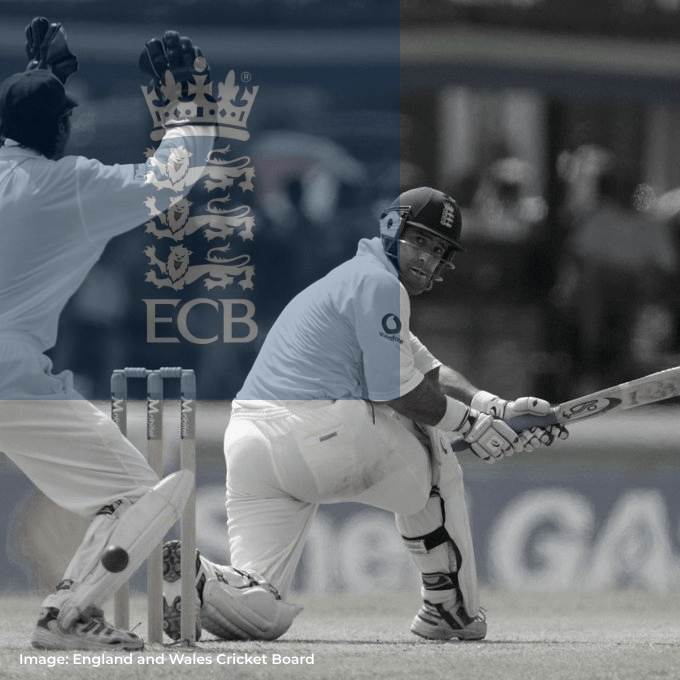
I have sat and watched many highlights of Thorpe batting in the last couple of weeks. He used to come out with this serious and stern expression in his eyes, and I used to take comfort as an England fan. Thorpe will sort it out – it was usually 20/2 or 50/3. Looking back, I think it was a facial expression that betrayed a certain nervousness – but I did not see that at the time. I just saw England’s best player of the time – because I am very much an England fan of that generation who came to have such respect for Graham Thorpe.
So my memories will be the cricket – and despite the sad circumstances of Thorpe’s death, we should not forget the cricket. I watched the highlights of Thorpe’s debut hundred in 1993, and in 1994 and 1995 I was really getting into it. Thorpe always seemed to come out and get 70 – and he was actually criticised for not getting hundreds. It seemed harsh to me – in the 1994/5 Ashes, Thorpe did score a hundred – one of only two England players to get to three figures in any of the Ashes test matches, the other being Mike Gatting. But by 1997 the hundreds started to come – memorably against Australia in 1997 at Edgbaston. Thorpe shared a massive partnership with Nasser Hussain who also scored a century – it cannot be a coincidence that some of Hussain’s best efforts came in partnership with Thope. I will never forget watching that test match – the 13 year old Edward really did think we were going to win the Ashes. The Aussies got it together and eventually won 3-2 – the closest Ashes series between 1986-7 and 2005 – and Thorpe had a fine series.
The late 90s saw Thorpe face personal difficulties and back problems, but by 2000 he was a proper player – not just someone who made nice 80s. He scored an amazing hundred in Pakistan featuring only 1 boundary, got England over the line in the dark and had a fine tour of Sri Lanka. A year later, he scored England’s quickest ever double century at the time – against New Zealand. What versatility. Then another enforced break before his twilight turn – a final 18 month run in the England side where Thorpe scored runs galore – most memorably in Barbados in a performance that Bob Willis said was marvellous and masterful. Its the Edgbaston and Barbados innings that I remember the best.
After such a fine career, he became a coach and was clearly popular. That he had such an impact on the career of Joe Root – both in spotting him and getting him on the India tour in 2012 and in getting Root to be more ruthless leading to big scores since 2020 – is an amazing achievement in itself. Thorpe clearly faced his own demons for many years, but it seems that while he was in the team environment he was able to get the best out of life. It seemed brutal at the time when Thorpe was sacked as batting coach after a horrific away Ashes series. Yes, England’s batting was awful, but everything about that tour was extremely difficult because of Covid restrictions. It seemed like Thorpe was the wrong victim, but in the context of that tour, perhaps nobody should have been a victim. Imagine the impact Thorpe might have had on the Bazball era. Instead, Thorpe was sacked. It surely cannot be a coincidence that a few months later, he was in hospital. After an horrible tour combined with the loss of that dressing room environment, I wonder what support was given?
Nasser Hussain showed real emotion when he said on Sky that his greatest sadness was that he was not around for Thorpe’s darkest days. I do not think Hussin should blame himself, but I do think Hussain would want us all to learn a lesson. Are we around for our friends on the darkest days? We cannot fix every problem for our friends, but we can at least try.
 Cricketed