Day 1: England edge day 1 but Ruth Strauss dominates

Day 1: England 258/4 – Pope 91*, Burns 57, Buttler 56*, Roach 2/56

The most important thing about this test match is the focus on The Ruth Strauss Foundation – #RedforRuth. Sir Andrew Strauss spoke perfectly about the challenges he has faced in recent years and the work of the foundation. I would ask anyone reading this to take a look at the Foundation or watch the video. It was Ian Bishop on commentary who said that he could not begin to imagine what Strauss has been through. I would not try to do it justice either – other than to say that Strauss and his family deserve so much love and respect.

If you can make a donation or contribute via the auction then please do.

The cricket seems secondary, but it was a good day of cricket. By the end of the day England were moving ahead but the first two sessions were tight. Both sides made interesting selections at the start of the day.

West Indies selection of Rahkeem Cornwall made some sense initially, but combined with bowling first seems surprising. However, the toss was tricky given the (unusual?) Manchester weather today and the forecast. I suspect Joe Root will be happy to have not had to make the choice. Undoubtedly, questions will be asked about Cornwall’s build, but at the end of day all that will matter will be his performances. Cornwall bowled ok and is clearly a sharp slip catcher – highlighted by the catch taken to dismiss Rory Burns. I think questions also have to be asked about the fitness of Shannon Gabriel. Gabriel seems to keep bowling, but I am not sure it is acceptable for him to be on and off the field so much. However, when he does bowl, it is generally quick. West Indies best bowler has has been Kemar Roach, who has deserved more luck in the series.

England always had a tricky call to make when it became clear that Ben Stokes was not fully fit. The problem with players like Stokes is that they want to do everything – so England had to pick a bowling attack that could cope without Stokes, but also ensure Stokes does not feel forced to bowl when not fit. This was sometimes a problem when managing Andrew Flintoff. In the end, the option England took was to drop a batsman. It is not the choice I would have made, and Zak Crawley can feel very unlucky. However, in the end I quite like the selection in the context of the must win game that might well be rain shortened. Going in with Jos Buttler batting at 6 carries some risk, but it is also an aggressive move – and this England team are best when playing positive cricket. I also would not play Chris Woakes and James Anderson in the same team too often and would have selected Sam Curran. However, Woakes is the stronger batting option at number 7.

Once play started, England lost Dominic Sibley early thanks to some clever bowling by Roach. Root was starting to find some form when he needlessly ran himself out. It was a fine piece of fielding by Roston Chase, but runs like that are not sensible on day 1. Stokes was undone by a slight lack of footwork and some swing. Burns batted well but played a poor shot on 57 and missed the chance to cement his place in the team with a century. Burns has a rather Root-like tendency to fall between 50 and 100 and a definite problem with Chase who keeps getting him out. However, he does look like a good option at the top of the order though I fear for his technique in Australia. With Crawley around and Dan Lawrence, Burns’ place is not yet certain.

From then on England were in control. Ollie Pope was lucky to escape a top edged pull and also should have been run out early on. Pope has all the makings of a class player for England in all formats, though in test cricket might need to tighten up when driving through the off side. He played well and deserves a 100 tomorrow. After his performance in South Africa, Pope was assured of his spot. The same cannot be said of Jos Buttler, though 40 in the last game would have got him a few more games. Today he played extremely well and looked just the player that England keep looking for when selecting him. He looked every inch a test match player. If Buttler could get up to three figures, England will have enough runs and he will be sure of a place for a while.

With Buttler, England really do have a conundrum. People have considered that Buttler is suited to the Adam Gilchrist role. When one looks at Gilchrist’s record, it is incredible that he so often made runs at 7 with no recognised allrounders to follow. Buttler though has played better at 6 than 7. I think Buttler needs to understand his role. In that World Cup Final batting with Stokes, his role was clear. At number 7 in test matches, I think Buttler has struggled to know how to play. At 6, Buttler knows he can play a proper innings. I think batting with a proactive player like Pope helps too. When both Buttler and Jonny Bairstow have played in the same team, England tended to put Buttler at 7 and Bairstow at 5. However, I wonder now if this was the wrong way around. Bairstow was much more successful at 7 and Buttler has played well at 6. However, if Buttler is going to keep wicket, it is hard to find a way for him to bat regularly at 6 – unless Root bats at 3. Why such small differences of position seem to impact England batsman so much is a mystery. However, England need to look at how they have handled Crawley who soon will have batted in every spot in the top 6. Clarity of role is clearly something England players need.

Day 2 will almost certainly be rain curtailed at some point, but will be crucial. If England can push up to 350 they will have a strong position. However, with such a long tail England could fall short of 300 if West Indies bowl well tomorrow. Experience tells us that in England, test matches where the first innings score is around 300 are generally exciting games. Lets hope that is the case in this game.
Stokes: Another Great Escape

2nd Test Match: England win by 113 runs – Series tied at 1-1

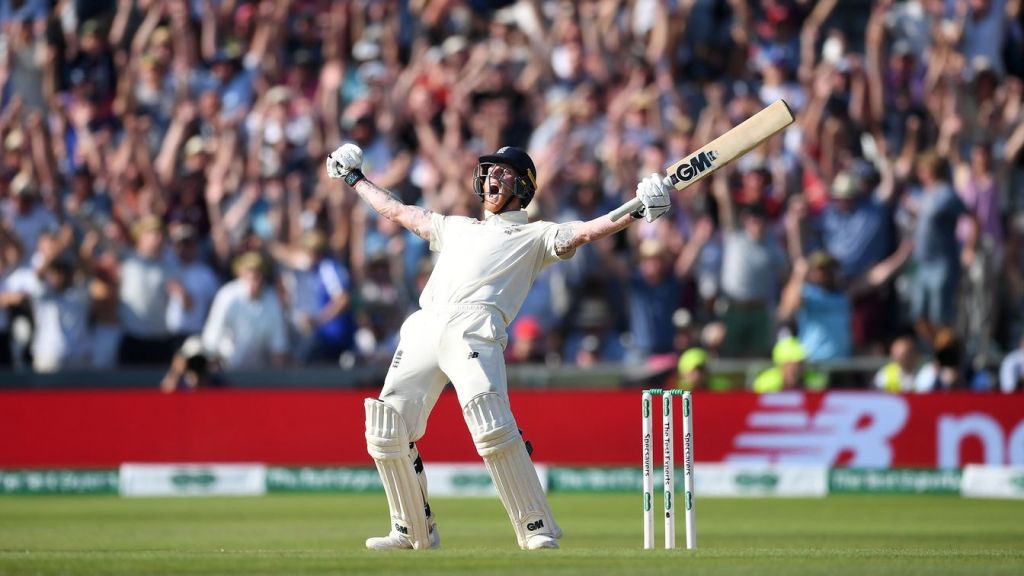
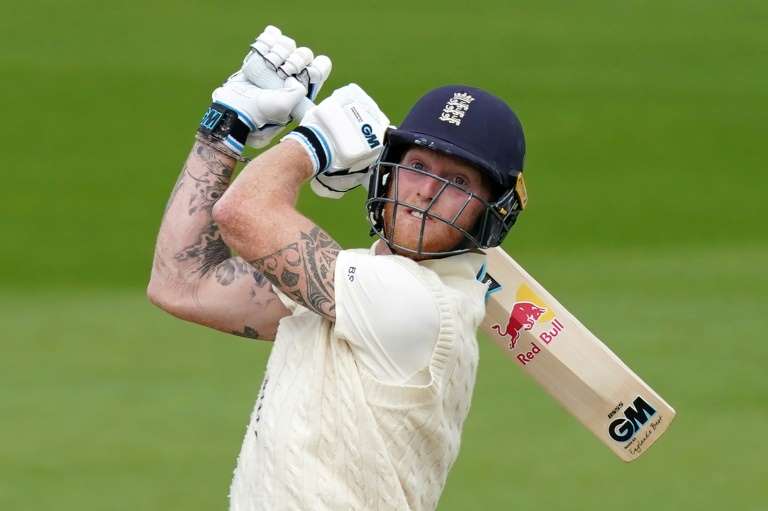
Early on day 5, Ben Stokes hit a massive 6 into the empty seats at the biosecure Old Trafford. He would end up plundering 78. That was when I wondered if England were going to pull off a victory. On Sunday afternoon, I could not see an England win being possible until Stokes’ endless short pitched bowling finally removed Kraigg Brathwaite for 75. None of this was possible without Stokes, who scored 176 in the first innings. Did I mention Ben Stokes?

Stokes hit a big 6 and I wondered if England were going to pull it off. Picture from MSN

On day 5 at Old Trafford Joe Root and his team did almost everything perfectly. The only blemish was the failure to review when Shamarh Brooks was given not out having clearly edged the ball behind (and this was another mistake by umpire Richard Illingworth). Over the 4 days (with one day washed out) England played the game that Root has often talked about:

  1. Build a good first innings total around solid batting by the top order. Generally, a 400+ score is not a losing score.
  2. Attack with the ball and if this does not work immediately, apply pressure over a long period by finding a way to keep the scoring rate down.
  3. Later in the game allow the strokemakers to attack and score quick runs meaning that you have enough time to take 20 wickets in the game.
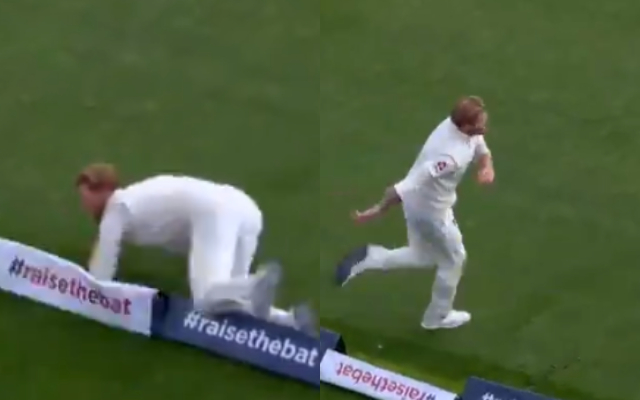
He even did the fielding off his own bowling. Picture from Crictracker

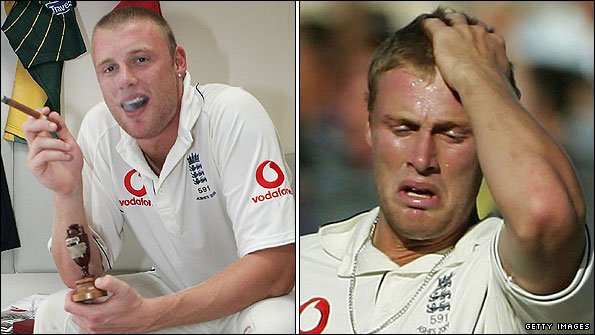
Nothing remarkable in that game plan, but it is hard to think of another example of a single player having such an impact on a game in so many different ways. You could talk about Headingley in 1981 – but of course Sir Ian Botham played aggressively throughout. Perhaps in 2005 at Edgbaston Andrew Flintoff had an even greater impact on the game (debatable) but again the style was largely aggressive. We already know that Stokes is adaptable. Let us not forget that at Headingley in 2019 Stokes finished day 3 having scored on 2 off 50 balls. In the first innings here he batted for over 300 balls with a strike rate just under 50, before he batted for 57 in the second innings at a strike rate of 136. I know that by now, we should be used to the exploits of Ben Stokes, but this was another astonishing performance.

Only 5 times in history has a player taken 3 or more wickets and scored 250+ runs. Ben stokes is now one of them.

Stokes would say this was a team performance – and he would be right. He was clearly well supported, most notably by Dominic Sibley and Stuart Broad, though others also made important contributions. Without Sibley’s 120, England did not win this game, simple as that, and I hope the ludicrous criticism of his strike rate now goes away. Broad ripped through the West Indies late on day 4 which was vital. However, Stokes just underpins the whole game.

I think we need to give Root some credit as well. I have to admit that I would not have opened up the second innings with Stokes and Jos Buttler – I thought that was bound to fail. Some felt he should have declared earlier on day 5, though I thought he got it just right. I was very critical of Root in 2017, when he clearly declared too early. However, he has not let that game impact his decision making, and we did not see a repeat of Sir Andrew Strauss declaring too late in 2009 in the West Indies.

This was a lucky escape for England, who needed the win. If they had gone into the final game of the series in a situation where they could not win the series, this would have been viewed as a failure. As a Manchester local, it pains me to say it, but the Manchester weather also was against England from the start – though once again Old Trafford came up with a great pitch. But England have dodged a bullet. This failure to win the first game of a series is a real problem which nearly cost England the series here.

England now need to win again and keep that strong record against West Indies in England – were England have not lost a series since 1988.

My team for the third test match – but with a ‘get out’ clause between Sam Curran and Jofra Archer

Burns, Sibley, Crawley, Root (c), Stokes (v/c), Pope, Buttler (w/c), Bess, Curran/Archer, Broad, Anderson

Archer’s Cummings moment

Day 1: England 207/3 – Sibley 86*, Stokes 59*, Chase 2/53

Jofra Archer provided today’s talking point, without being in the team. He was removed from the team at the eleventh hour after he chose to disregard the rules and return to his home in Brighton before heading to Manchester. Google tells me that the Ageas Bowl to Old Trafford is 227 miles (I have done Southampton to Stockport many times and it is quite a nice drive traffic pending). Inject Brighton into the mix and it goes to 320 miles and adds the M25 to the collection of motorways needed. I question the acceptability of this behaviour in normal circumstances, let alone now. It plays into a bizarre narrative of political figures, such as Dominic Cummings amongst other senior political figures globally who have considered themselves above the rules. Carlos Brathwaite spoke of his disappointment on Test Match Special, but said that Archer’s transgression was relatively minor. I do not agree and, as Ashley Giles outlined in interview, the consequences of these actions could have been the end of the cricket season. Brathwaite also played down the role of Archer as a role model. Again, I have to disagree. These players are watched by millions of people of all ages. Like with the politicians, the rules have to be seen to apply to all – even to England’s best bowler.

I wrote last night that cricket in a bio-secure bubble has been shown it can work. Today we were reminded that one foolish action, and Archer’s action was foolish, can bring it all crashing down. Covid-19 is like that. A single mistake can result in an infection. Fortunately for the ECB, the season goes on. One wonders why the players are driving around in cars and not travelling by coach. Failing that, one wonders why nobody noticed that not all the players arrived at Old Trafford at the same time. After the Stokes incident in 2017, I wondered if the players should be more tightly controlled. However, I believe that personal accountability is key to life, both on and off the cricket field. My feeling is that in the public eye you need to be more careful, not less. Players are responsible for their own actions and Archer will now suffer the consequences. I will not criticise the ECB for allowing personal accountability, but perhaps the education on these issues needs to be clearer. And I suspect a coach is now being procured for the next journey to Southampton. As for Archer, he cannot automatically return for the third test match, and nor should youngsters like Sam Curran or Ollie Robinson sit behind Archer in the queue. Archer will have to earn his place in the team again – and he will undoubtedly do so.

A final note on the subject. Brathwaite was not happy with the way Archer was vilified for his actions. Unfortunately, with the image that Archer cultivates, he will have to accept the criticism alongside the adulation. However, now we move on. Archer will have to endure missing the remainder of the series against West Indies. Giles made it clear that an employment disciplinary process will invoke. Other than that, no sanction is needed. A mistake was made, a foolish one. But we all make mistakes. What matters the most is what we learn from them.

Eventually we were able to focus on the action, and England have had a good day, despite working extremely hard to turn Roston Chase into Shane Warne. Burns and Crawley both perished to Chase, but really both should not have done so. Burns missed a straight ball and Crawley pushed the ball into Jason Holder’s waiting hands. Joe Root looked ‘rusty’ and played a poor shot. Mike Atherton said on commentary that as a ‘glass half empty’ opener, he would have been expecting that trap – the wide ball to drive at. But after so many months away from the game, and bot even being able to play in the intersquad game, I think we can cut Root some slack. He could do with a century or two this summer though.

I was surprised to hear some criticism of Dominic Sibley by Ebony Rainford-Brent though. He clearly needs to improve some aspects of his game (who doesn’t?) but you cannot argue with his record so far at the highest level. As Nasser Hussain pointed out, also on Sky, he needs to find a way to deal with spin. Without Stokes’ proactive approach to the spin, perhaps Sibley would have ground himself into a mess. For me though, the only time Sibley got into trouble was when he felt under pressure to score, and some of this pressure came from Stokes, who was frustrated. However, once Stokes settled down, they formed a strong partnership. It is a reminder that 2 people can work together in totally different ways and be effective. Sibley needs to ensure he does not get totally stuck, but other than that change nothing. His approach of ‘grinding the bowlers down’ will make him popular with the middle order, not to mention the bowlers. We have been crying out for a Geoffrey Boycott / Atherton / Alastair Cook opener for years and we must not criticise him in the way that Nick Compton was criticised for slow scoring. Indeed, Sibley is the first England opener since Cook to score 50s in consecutive games.

It was not such a good day for West Indies, though again they never lost control. One hopes that they will be able to get Shannon Gabriel through the game. Playing him was a risk, but an understandable one. However, it will increase the other bowlers workload. Chase bowled accurately and Holder could easily have had a few wickets. Sky made a great deal of the fact that Kemar Roach not taken a wicket for ages, but while maintaining an economy rate of 1.85 he does not need to worry – his time will come. He is part of an overall attack, and by bowling so tightly, makes a great contribution.

England now have to take the opportunity. They should get 400 here, but anything less than 300 is a total failure.

Finally, another complaint about the amount of time taken to get the game started. For an hour we saw a rain free ground with no cricket happening. Then the players came out for an hour before going back into lunch. It meant that by 2PM we had only seen an hour of play. Yes conditions have to be safe, but test match cricket has to deal better with rain delays. Either play could have started at 12, or if that was really not safe (unlikely) then lunch should have been taken at 11:45 to allow play to start at 12. Tea could be taken early or an extra break slotted into the session (2 twenty minute breaks as opposed to a 40 minute and a 20 minute break). We have to get flexible, or else test match cricket will die.

England must pick the best team for each game and take every chance

England v West Indies 2nd test match: 11:00 on 16th July at Old Trafford

The return of test match cricket was a success. The bio-secure environment worked and can be copied elsewhere. It was not perfect, and the total silence that greeted runs and wickets took some getting used to. The silence reminded me of silence at Lords in 1981 when Sir Ian Botham returned to the Pavilion. At Southampton, both teams deserve a great deal of credit for being competitive from ball one – despite the silence and limited preparation. We now know that test matches behind closed doors can work, and that is a huge relief to all of us in need of cricket to watch.

It can work – Southampton did a great job. Picture from Twitter

In the first test match we saw a good game with an exciting last day, and established that ‘this can work’. However, England made some poor decisions and missed chances. West Indies were workmanlike, consistent and well led. Only Shai Hope and John Campbell failed to make a significant contribution. West Indies played a style of cricket that took advantage of England’s mistakes. West Indies showed that they can be a high quality team and deserved to win, but England were to some degree responsible for their own downfall. At 1-0 down with 2 to go, England cannot afford to underestimate the opposition or make mistakes. The catches must be taken, but perhaps even more crucially, some of the 20+ scores need to become centuries – and Joe Root needs to take a lead on this and set the example.

It starts with selection though. After the first test match, Mike Selvey tweeted that England should focus on the opposition in front of them, not the opposition they face in 18 months time (he went on to make some good clarifications in later tweets). The requirement to build a team for the Ashes is clear, but if that results in confused decision making that undervalues the immediate opposition, it will do more harm than good. West Indies are a dangerous team to underestimate, and the decision to rest Jimmy Anderson and Stuart Broad in 2012 at Edgebaston led to a second string attack being punished by, of all people, Tino Best in a memorable 95. Selvey is right – England must pick the best team for today. That does not mean we ignore the future, nor does it mean that England cannot pick different teams for different games. It does mean that England have a clarity of selection, and flexibility to make changes.

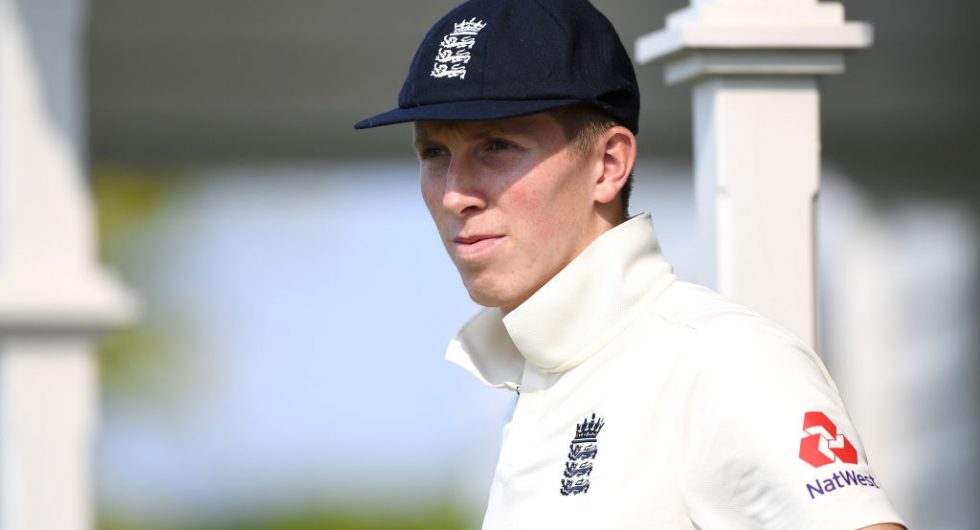
Crawley looks every inch a test match player. Picture from Wisden

Today England have announced 13 players for the second test match starting, and it is an interesting squad. I had expected that England would persist with Joe Denly at the expense of Zak Crawley. This would have been the wrong decision so I was pleased to see England announce that Crawley will bat at number 3. After the performances of both Denly and Crawley at Southampton, only one decision was sensible. One could argue that if England are dropping Denly they should also drop Jos Buttler, but I think it is reasonable for Buttler to be given until the end of the series. However, Buttler cannot be allowed to play as he is doing for the rest of the summer. With Buttler, it seems that confidence is more of an issue than perhaps he would like to admit, and England must be careful not to damage Buttler’s one day game in pursuit of the test match Buttler.

The bowling raises an eyebrow. England have ‘rested’ both Anderson and Mark Wood. One assumes that Broad and Chris Woakes will play, though Sam Curran will never be far away. One wonders if the decision about which bowlers would play in which games was made before the series started, because it does seem some odd decisions are being made – resting two bowlers at once creates a totally different attack. Whilst Anderson and Wood need to be looked after, it is Jofra Archer that needs to be looked after the most, as he bowled the most overs of the 3 at Southampton and is most likely to impact an Ashes tour (Anderson should not go to Australia and Wood’s impact is not as consistent as Archer’s). Ironically, Old Trafford would usually be the place for Wood to succeed – and is of course Anderson’s home ground. Broad ought to have played at Southampton (instead of Wood), and perhaps England needed to make a late change to the plan when conditions changed.

England must look after Archer. Picture from Wisden

Talking about flexibility, England need to make sure they are flexible when the coin is tossed. Ben Stokes defended his decision to bat first, arguing that events of the last day justified it. However, the reason England lost the game is because they conceded a 100 run lead on first innings. When it was dark and damp on day 1 after a long rain delay, it was the time to bowl – whatever the preconceived plan was.

For West Indies, it will be a case of ‘more of the same’ and I am sure Hope and Campbell will keep places, though a full time spiner would be useful at Old Trafford, bringing Rahkeem Cornwall into the picture. The question will be if Shannon Gabriel can get through the series – and if he does, England will struggle to win 2 games.

My team:

Burns, Sibley, Crawley, Root (c), Stokes (v/c), Pope, Buttler (w/c), Woakes, Bess, Archer, Broad

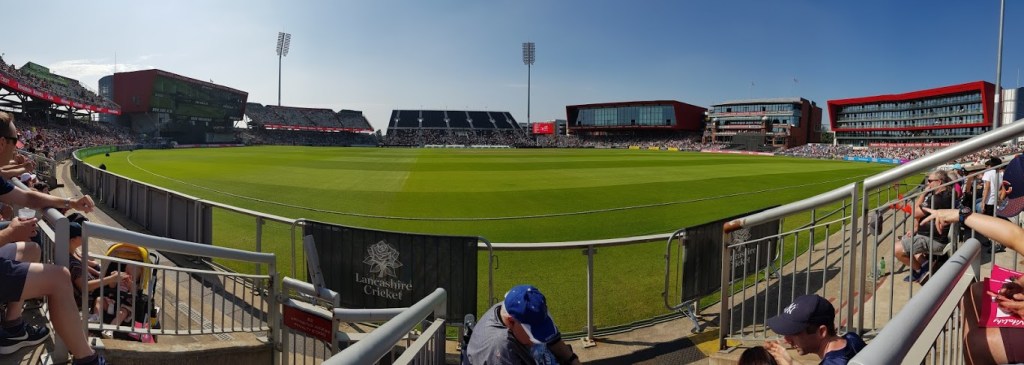
Old Trafford – the Home of Cricket! Venue for the next test match.

Day 4: A missed opportunity for England

Day 4: England 284/8 – Archer 5, Wood 1, Gabriel 3/62

For England, Day 4 must be considered a missed opportunity. Whilst West Indies again bowled well, the top order scores of 42, 50, 29, 76 and 46 show a failure to capitalise. Someone in the top 5 needed a century, as it was always likely that wickets would fall in a hurry once a breakthrough came. Burns and Denly contrived to gift their wickets, Crawley was a slightly soft dismissal and Sibley appeared to lose concentration. Twice. For Stokes, it is too scores in the forties and 2 below par dismissals – but credit to the bowlers for putting the ball in the right place often.

The West Indies key tactic has been about keeping control of the game. At no point did the scoring rate get remotely out of control. With the exception of Shannon Gabriel, all the West Indies bowlers had economy rates well under 3, and Gabriel took 3 wickets. For a while, England seemed to be picking things up when Crawley and Stokes were batting – but Crawley had the higher strike rate of the two which was still below 60. It means when that wicket came, England were still not far ahead. They went on to lose 5 late wickets cheaply late in the day. The West Indies discipline has kept them well ahead of the game and they should beat England comfortably.

What are England to do? Well, for now, they must focus on trying to get as near to a 200 lead as possible. The bowlers still have a chance – with bat and ball – to show they were the right selections. When England bowl, they must be ‘on the money’ from the first over, and will need to have West Indies 30/3 and shift the limpet-like Kraigg Brathwaite to have a chance of an unlikely victory. If Brathwaite digs in, as he often does against England, West Indies will cruise to any sub 250 target. Looking ahead to Old Trafford, it is a shame that none of the top 4 have really grabbed their position in this game, but it would seem extremely odd if Denly plays at Crawley’s expense to accommodate Joe Root.

One other talking point is the Gabriel no ball. Sir Ian Botham bowled famously few no balls, and he just kept back from the line. I think no balls should be minimised and therefore the penalty for no balls should be harsh. I also think that it would be easier to have a policy of ‘if in doubt, call it a no ball’, rather than the current policy which is the other way round. This would speed the game up as well. Of course, in the end, it made little difference to the day.

Day 2: Same old England

Time of writing: Day 3 – 12:20 – West Indies 108/2 – Brathwaite 50, Brooks 5, Bess 1/11

Day 2 was back to the same old England. At 35/1, England needed to be looking at 300. They barely made 200. West Indies bowled well, but the England batting looked weak and nobody scored a 50. We kept talking about how you cannot judge a pitch until both sides have batted and bowled on it – but West Indies closed just 1 wicket down and looked strong.

England seem to struggle with the pace of batting. Back in 2010, the likes of Jonathan Trott and Alistair Cook were happy to dig in and bat and bat. They did not score quickly, though Trott did not let bad balls go to often. When Burns and Denly were batting, it all looked ok but runs were not coming. Ben Stokes and Jos Buttler batted sensibly but Stokes played a poor shot and Buttler got a good ball. Dom Bess saved the day with the bat, and has just got a wicket. England need to find the balance of patience and aggression as they did in South Africa.

However, South Africa’s bowling in January is not up to the quality of what we are now seeing from West Indies. West Indies have a really good bowling attack in this game and have responded well to the empty grounds. In the face of it, it seems that Jason Holder should not be taking 6 wickets too often, but as part of a 4 man pace attack, he is extremely handy. It was a team bowling effort – even if the bowlers were shared between 2 bowlers only.

At the moment, Holder is well ahead in the battle with Ben Stokes – including in the context of DRS reviews. At the moment, Holder has made good decisions – including with regards to DRS. At the moment, Stokes made a poor decision to bat first – it made no sense in such murky conditions. At the moment England made a poor decision to drop Stuart Broad – this pitch looks perfect for Broad.

It can all change in a flash of course – and England really need it to. Jimmy Anderson, Jofra Archer and Mark Wood can show that England’s selection was good – and Bess already is well on his way to doing so.

One other talking point from this test match. The on field umpiring has not been good at all. Richard Illingworth and Richard Kettleborough want to be very grateful for the excellent third umpiring we have seen from Michael Gough – and thank goodness West Indies had not run out of reviews a la Tim Paine. We must remember that this lockdown situation is as hard for umpires as it is for players. These are proven good umpires and are absolutely full of integrity. However, any suggestion that we do not need neutral umpires has been dismissed already in these game. But I think the ICC need to reconsider if all 3 umpires need to be neutral.

Day 1: Anticlimax?

England 35/1 – Burns 20, Denly 14, Gabriel 1/19

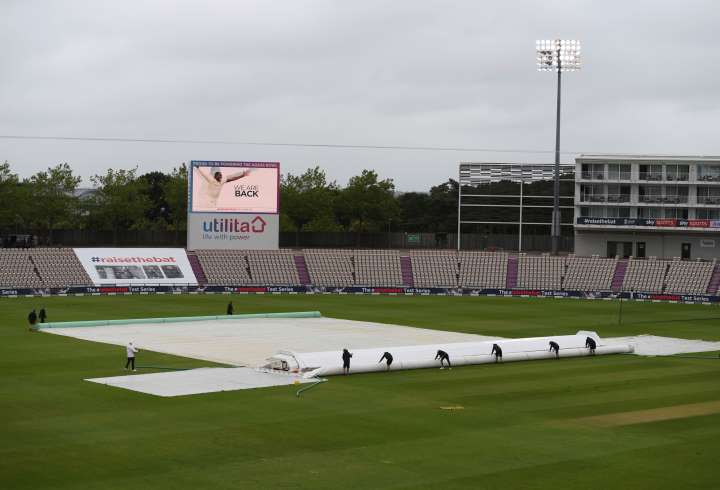
Of course, it rained. Picture from MSN.

In many ways, the cricket was an anticlimax. But in a sense, it was reassuring to begin the season with delays due to rain and bad light. That was just so typical, especially after the dry June. Not being at the ground it is hard to know, but on television we saw the pictures of a covered pitch with no rain currently falling. Later, we saw the ridiculous spectacle of an early finish due to bad light – with flood lights. This has been going on for a few years now, but going off for bad light – with flood lights beaming – does not look good. If today had been a One Day fixture, we would have seen more overs. If Test Matches are to survive, the ICC just have to sort this out.

The cricket we did see was good, solid test match cricket. I really rate Shannon Gabriel as a bowler and he easily could have had more wickets then he did. The wicket he did get made Dom Sibley look slightly foolish, but was a result of the ball before when he beat the bat with a little bit of away movement. We cannot be critical of Sibley – sometimes openers do get out to good bowling, but he did make a misjudgement. Denly was fortunate, but he can resume his innings tomorrow – he needs a score, but hopefully he can also use up a lot of balls. Burns also needs to re-establish himself, but after an early LBW scare – saved by ‘Umpire’s Call’ – looked solid. Both batsman need to dig in tomorrow as the West Indies bowling attack is strong – their stats over the last 2 years show real consistency and the worst thing for England would be Stokes coming to the crease before England post 50.

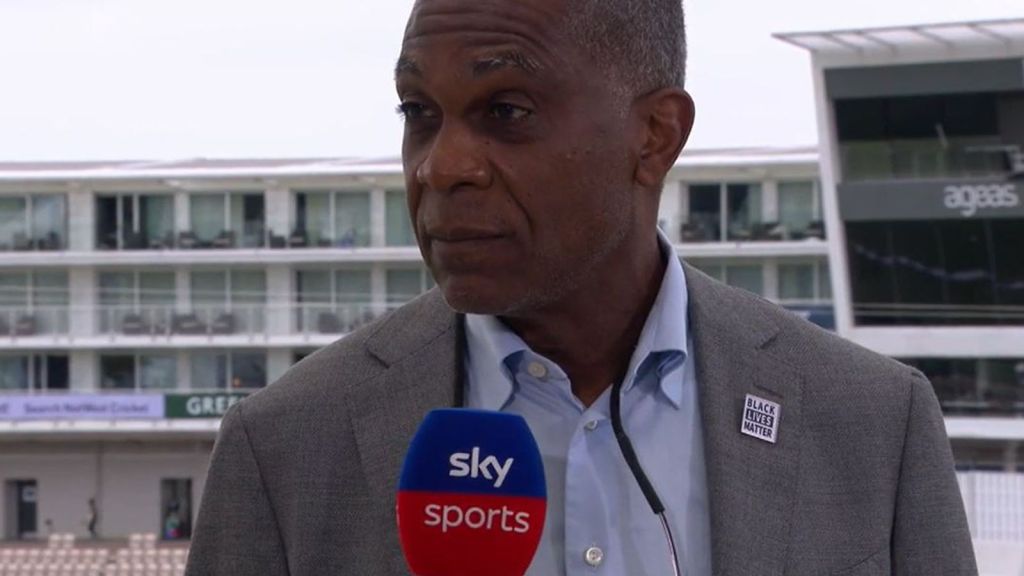
Away from cricket and weather, the day will be memorable for the coverage. It is great to see Test Matches back on the BBC – just highlights of course, but the music evokes memories of those voices from yesteryear (Benaud and Laker mainly). The BBC have made a good (re)start. However, Sky chose to focus on #BlackLivesMatter. Hearing Michael Holding and Ebony Rainford-Brent talking about their experiences of racism was chilling. Both were emotional, both were strong, both were positive about the future. The players were united. Cricket owes it to them, and many others, to make sure that racism in cricket is stamped out.

Holding and Rainford-Brent were inspiring. Watch ‘Mikey’ speaking here

England v West Indies: Preview

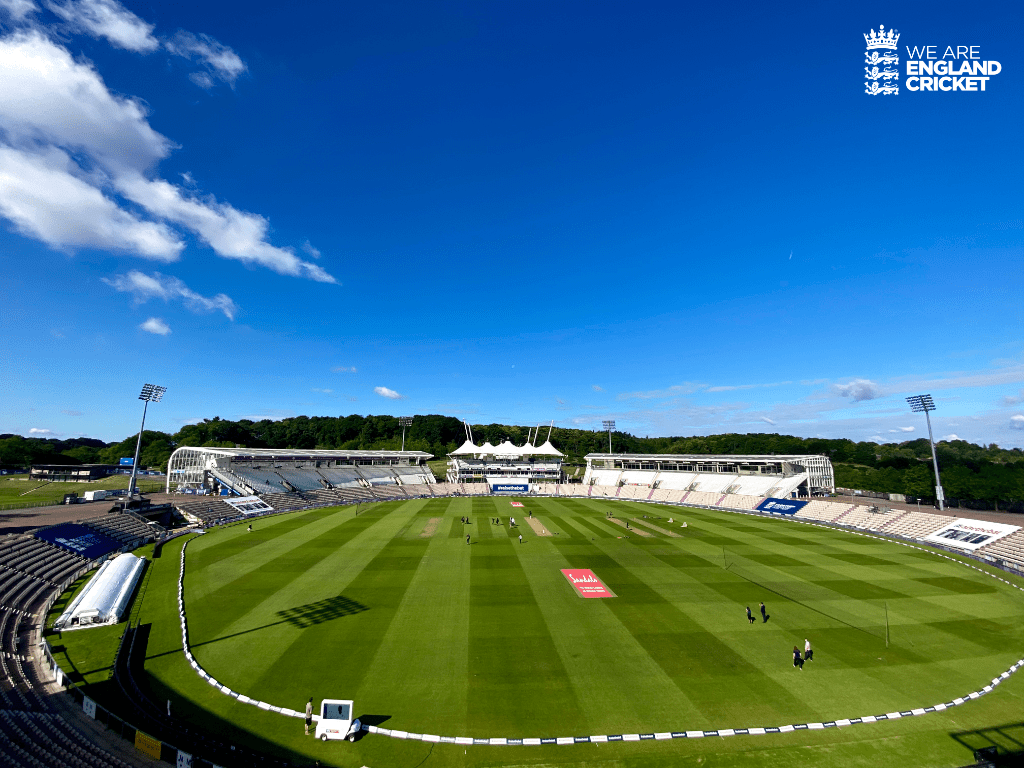
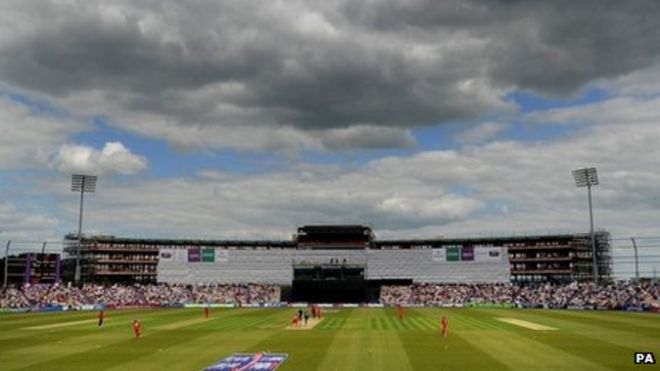
The hotel at the Ageas Bowl, here shown when under construction, has made international cricket possible again, along with its counterpart at Old Trafford. Picture from the BBC

When it comes to the England Test Match team, predictions are a dangerous game. This ‘biosecure’ series is no different. This test series is like none before. The grounds will be empty and viewed purely on television. It is home conditions for England, but without a home crowd. The teams have tried to prepare, but intersquad games cannot replicate first class cricket. The teams are both bound to be ‘rusty’.

Under ‘normal’ circumstances, history would count against a West Indies team touring England – they have not won a series in England since 1988. However, it remains to be seen how much of a ‘home advantage’ England have without the usual crowds. Take away the home advantage, and England’s record against the West Indies is not ‘flash’, though England have probably just about had the better of things since 2000. That being said, England have not won a series in the West Indies since 2004. After England’s disgraceful performances in the first 2 games of the 2019 tour, West Indies hold the Wisden Trophy.

After England’s disgraceful performances in the first 2 games of the 2019 tour, West Indies hold the Wisden Trophy.

Roach and Gabriel in 2019. Picture from Yahoo

Talking of disgraceful performances leads on quite naturally to talking about England’s batting. Last summer, England were bowled out for 67 by Australia and 85 by Ireland. Before that they were bowled out for 77 in the first game of the awful West Indies tour of 2019. Not long ago they were bowled out by New Zealand for 58. Last winter though, Chris Silverwood and England laid out a template for test match batting. It did not quite work for them in New Zealand, but it eventually started to work in South Africa. For years, England seem to have been 20/2, but in South Africa a couple of times the team century was posted before Joe Root came out to bat at 4. Rory Burns must return from injury (sorry but I have no sympathy for football injuries) and team up again with Dom Sibley. Sibley perhaps played the most important innings of the winter for England when he scored 133 not out at Cape Town. Zak Crawley did enough to keep his place, so Joe Denly will fill Root’s shoes at number 4. Denly is the man most under pressure when Root returns for Old Trafford. With Pope top scoring in the intersquad warm up game, England have the makings of a top 6. In this series, we will find out if the South Africa success was a ‘flash in the pan’ or not – Kemar Roach and Shannon Gabriel will certainly be a test for the quirky techniques of Burns and Sibley.

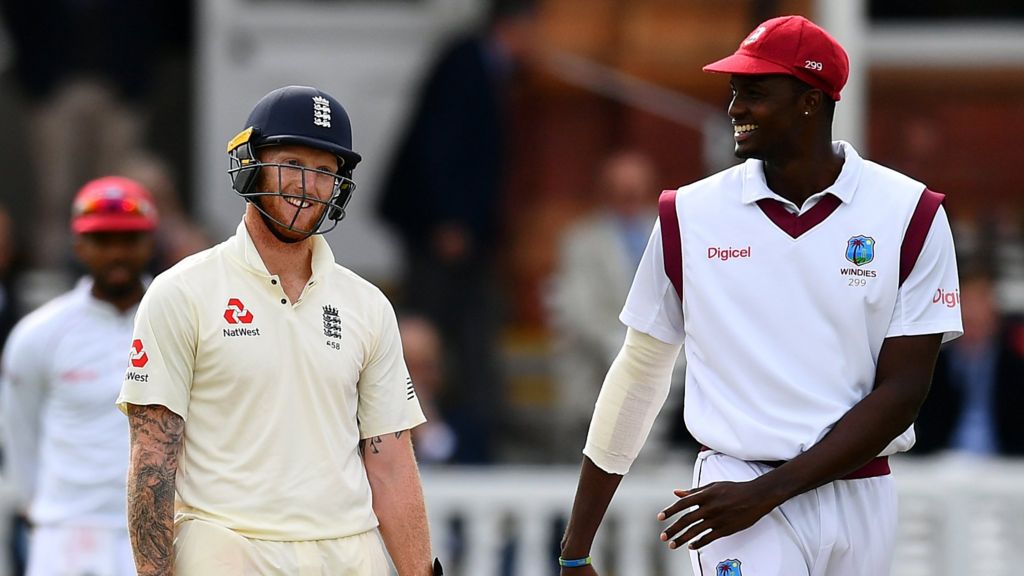
The truly ‘mouth watering’ match up though will be between Holder and Ben Stokes – captains for the first game before Root returns for England. In 2019, Holder made a fine double hundred, and I must admit that I did not think he was capable of playing like that. He is the number 1 rated allrounder in the world, but has not fired in England. Stokes has often struggled to control his emotions against West Indies in the past – but I think we have moved on from that – particularly as Marlon Samuels is no longer around. Whoever wins this contest will be on the winning side.

The big match up. Stokes and Holder. Picture from the BBC

Over recent years, the England and West Indies bowling attacks have seemed quite well matched. Obviously James Anderson and Stuart Broad are totally different bowlers to Roach and Gabriel, but it felt like those 4 were the key bowlers – or would have been if selected (the omission of Broad in the 2019 is as perplexing now as it was then). The problem for England in 2019 was the lack of backup – until England included Mark Wood. Wood showed that neither batting line up is confident with fast bowling. Whilst Jason Holder is a key part of the bowling unit for West Indies and Roston Chase had an unexpected role to play, England should have the stronger attack when you add Jofra Archer. Archer will bring extra spice to this series, and the West Indies have already made it clear that Archer will be no friend to them on the pitch.

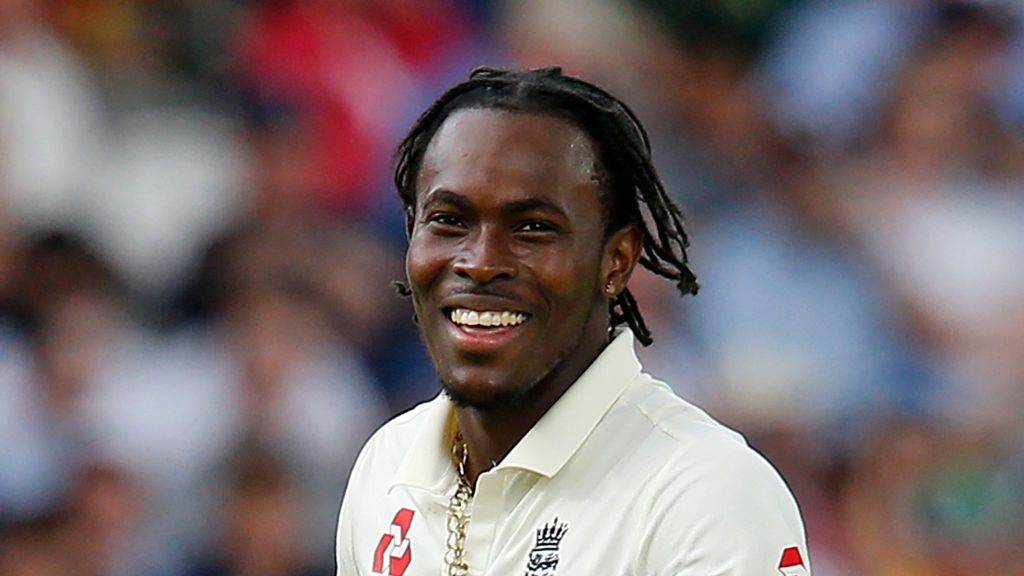
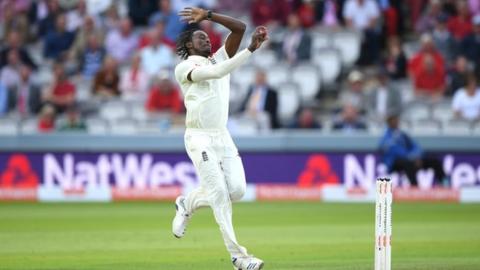
Archer gives England the bowling edge. Picture from the BBC

All things considered, England still ought to win. They ought to have won in 2019 and they certainly ought not to have been bowled out so many times for less than 100. Ironically, England would have been forgiven loss to Sri Lanka in 2018. If England play well, they will learn a great deal – and they will learn whether Jos Buttler is worth his spot.

The West Indies are a real threat though, and England must treat them as such. I think England have been guilty of complacency in the past. In 2015 the then ECB chairman elect Colin Graves famously described West Indies as ‘mediocre’ (not quite on a par with Tony Grieg but not a sensible thing to say). In 2017 Root allowed the West Indies to win at Headingley by declaring – though the batting of Shai Hope will live long in the memory. If England take the opposition seriously, they should win. But if West Indies win, it would not be ‘an upset’, it would be a significant turning point in recent West Indies cricket history.

Captaincy conundrum

Captain and vice captain: Is Stokes the right person to cover for Root? Picture from the BBC.

ED: By the time this site went live, the decision had been made.

It has been widely reported that Joe Root may miss the first test match against the West Indies in July. Root has said that he will attend the birth of his second child, and I am certain most people would back him in making that decision. Of course, Michael Vaughan left a test match in 2004 for the same reason. Vaughan was lucky – the test match was at his home ground of Headingley, and had a clear second in command in Marcus Trescothick. Root is not so fortunate. He has to deal with the added complication of entering and leaving a COVID ‘biosecure bubble’. It is also not so clear who would take over.

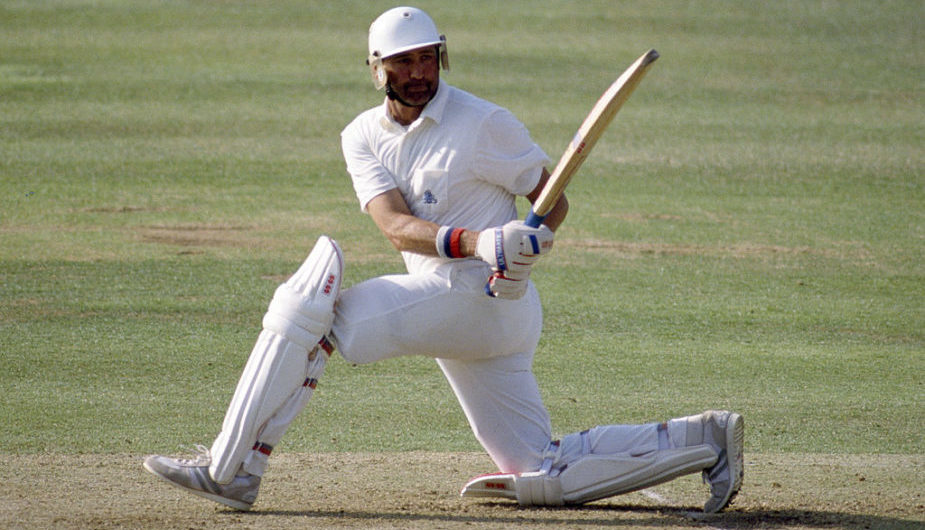
Gooch was one of England’s few captains who became better players when captain. (Photo by David Munden/Popperfoto via Getty Images/Getty Images)

Captaincy has been something of a problem for England in recent years. Since Graham Gooch was appointed England captain for the 1989/90 season, 12 people have offically ‘captained’ England in 1 or more test matches (this includes Allan Lamb, Mark Butcher, Marcus Trescothick and Andrew Flintoff who were essentially stand in captains). Of those 12 only Lamb, Stewart, Hussain and Strauss had previously been ‘County Captains’ (and Hussain was only appointed Essex Captain in 1999 – the same season he was later to assume the England role). Prior experience as a county captain is not the only consideration when appointing a captain – consider that Eoin Morgan is England’s most successful One Day captain of all time and has never been the Middlesex ‘offical’ captain. However, prior experience would certainly help, and I certainly believe that both Alistair Cook and Root have suffered from a lack of prior experience. I also believe that Cook’s captaincy career ought to have been terminated earlier, but it was felt that no alternatives were available. Some, including myself, have expressed concern about Root as captain, but after the victorious South Africa tour I think those concerns have, for now at least, gone away.

The England vice captain is Ben Stokes. My own view is that Stokes’ earlier issues are not relevant here – since returning to the England team in 2018 he has done absolutely everything possible to make up for earlier indiscressions. I also think Ben Stokes is the right choice as vice captain. He has the ability to inspire and unite, but also is clearly tactically aware. Stokes will be a great sounding board for a captain and will not be afraid to challenge a captain. Good leaders always want to be challenged. But I must admit to being concerned about Stokes as captain.

My worries are based around what happened to 2 other charismatic allrounders when they were made England captains. Actually, both Ian Botham and Andrew Flintoff were unfortunate. Botham came up against the mighty West Indians – seemingly endlessly – 9 of Botham’s test matches as captain were against the West Indies. The 1980/1 tour was particularly challenging both on and off the field. Flintoff came up against an Australian team in 2006/7 that were determined to avenge the 2005 Ashes loss. Flintoff also was handed a team minus Vaughan and Trescothick, while Giles and Harmison were shadows of their former selves. However, it has to be said that Botham never won a game as captain, and Flintoff only 2 out of 11, which included the 5 nill Ashes loss.

The highest times I have experienced as an England Cricket fan in 2005 watching a free spirited Flintoff. And the lowest in 2006 watching a shackled Flintoff. Pictures from the BBC

The effect of captaincy both on Botham and Flintoff was basically the same, though it manifested itself in different ways. Both felt constrained by the need to set the example and play to the situation, and therefore did not play their natural way. For Botham it let to a loss in confidence. Can you imagine Botham the captain in 1981 throwing his bat in the way he did at Headingly, or playing those remarkable hooks against Denis Lillee at Old Trafford? And would Botham have bowled himself in the Edgebaston test match of 1981? Mike Brearley suggested not. Flintoff wanted to do everything himself, and ended up bowling 68 overs in the first test match against Sri Lanka in 2006. Would Flintoff the captain in 2005 have been able to slog Shane Warne for 6 or play the famous ‘duck-hook’ that went for 6? Kevin Pietersen has also spoken about his own time as captain and an inability to play in his natural way.

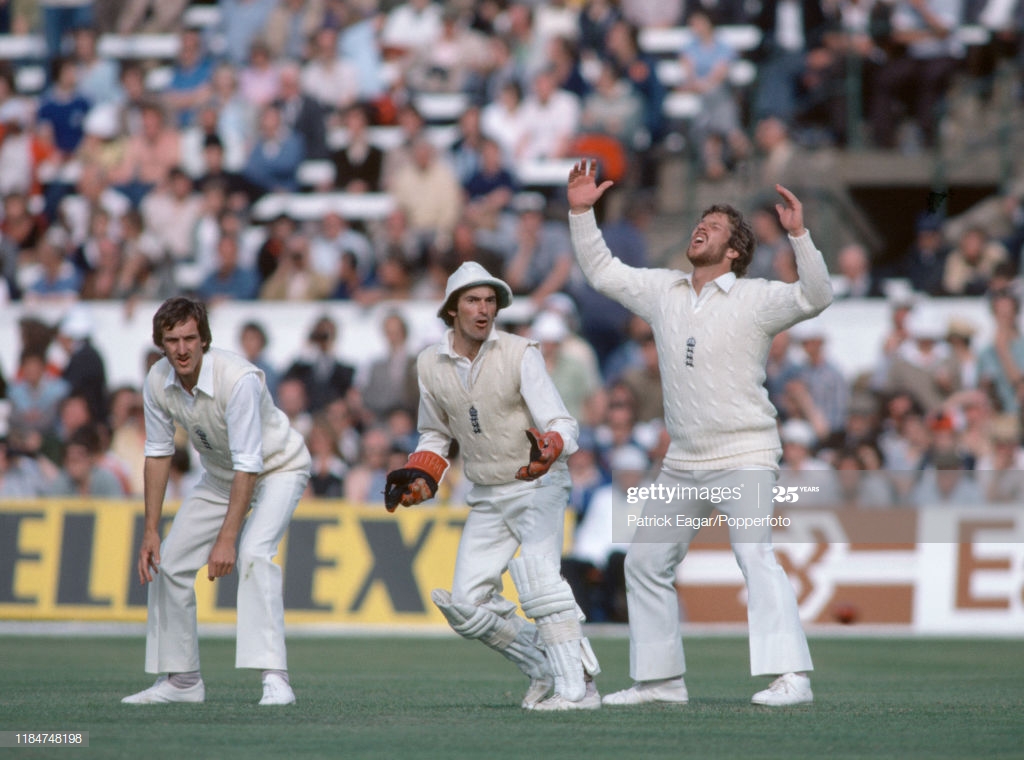
An image of Botham’s Captaincy? Ian Botham of England, in his first Test as captain, reacts as a chance is missed during the 1st Test match between England and West Indies at Trent Bridge, Nottingham, 6th June 1980. The other fielders for England are Chris Tavaré and wicketkeeper Alan Knott. West Indies won the match by 2 wickets. (Photo by Patrick Eagar/Popperfoto via Getty Images)

Stokes is a different personality to Botham or Flintoff. As captain, I think his batting will be fine. Stokes played a number of incredible innings in 2019, but what was most impressive is the way he identifed a need to play in a particular way and stuck to that method. Both in the World Cup Final and in the Headingly test match of 2019, Stokes realised that he just could not get out – and even preferred to ensure a super over to risking getting out. However, in the Headingly test match, it was Stokes the bowler who made victory possible – by bowling 24 overs. Is he likely to do a Flintoff and bowl 60 overs? Stokes is also full of fire. In 2019 he was able to use this passion to achieve the incredible. Perhaps he has learned to control his emotions. As captain, you certainly need self control – something that Cook and Struss had in abundence.

Imran Khan – brilliant allround and captain. It can be done. Picture from the BBC

When it comes to the great allrounders, perhaps the captaincy exception is Imran Khan. He sticks out as being the successful great all rounder and captain, culminating in victory in the 1992 world cup. I did not see a lot of Imran, but it seems to me that he had an ability to inspire others, without losing his own ability to play naturally. For Stokes, that is going to be the question. Can he play his natural game as captain?

So what do England do? Well, the decision has been made. Stokes will cover for Root if needed. I would prefer it if Stokes the captain could be avoided, and if Jos Buttler was guaranteed a place in the team he would be the perfect candidate. In reality though, he is not assured of a place. Rory Burns is not yet established enough in the team to captain it, and the only other realistic option would be Stuart Broad. Stokes will need his experienced players to back him, support him…and challenge him. The likes of Buttler, Moeen Ali (if playing), Broad and James Anderson need to give 100% support, but be willing to ask questions.

Longer term, England have just got to find a way for prospective leaders to get experience. Burns, Sibley, Buttler, Pope – they all need an opportunity to find out if they can be successful captains, preferably before any of them are asked to do it in a test match.

Ultimately, the only way to find out if Stokes the captain will work is to try it.

If Stokes can do anything even half as good as this while captain, it will have worked. Picture from the ECB.

The summer of 2019

71yN8hjOJsL

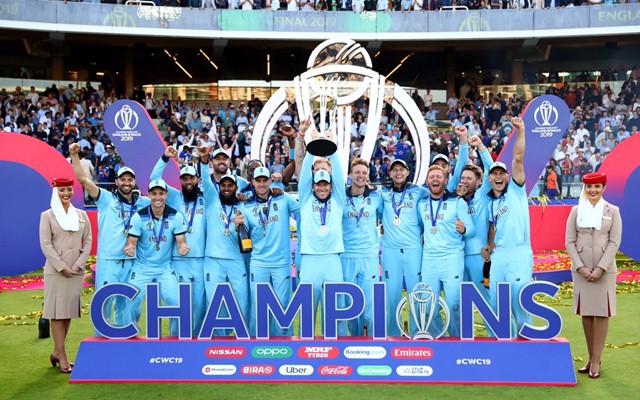
It feels like a good time to talk about something other than the public health crisis of 2020.  So I thought I would turn my memory back to the Summer of 2019, specifically to the 14th July.  That was the day England won the Cricket World Cup for the first time, and the day that my eldest son Henry fell in love with cricket.

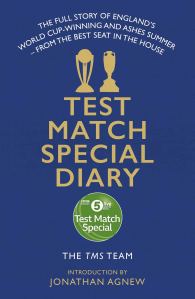
I have been reading the Test Match Special Diary of 2019, which I received for my birthday, and it bought it all back.  Early in the season I knew that it was a summer of great excitement and that England had put together a powerful One Day Cricket Team.  But I had not really given much thought to England being able to win the World Cup.  It was in May, during a rained off One Day International against Pakistan, that I began to wonder.  During an early rain break the BBC Test Match Special (TMS) commentators tried to pick the all-time England One Day Team.  These things should never be taken too seriously, but in this case, something was becoming more and more apparent – that the current One Day Team was the best we had ever had – by a country mile.  For a start, this was a team that could afford to drop Alex Hales (he was dropped for specific reasons that were not cricket reasons – but it would have been a lot harder to drop Hales in 1996 for instance).

Because England were useless at One Day Cricket for so long, I still clung to some old heroes who were the last England players to play in a World Cup Final – back in 1992 – Ian Botham, Graham Gooch and Allan Lamb. But when it came to the all-time team?  I cannot remember exactly who was chosen by TMS, but I realised that, given the chance, you would just pick the current team.  Consider 10 definite selections: Jason Roy, Jonny Bairstow, Joe Root, Eoin Morgan, Ben Stokes, Jos Buttler, Chris Woakes, Moeen Ali, Adil Rashid, Liam Plunket.  Most likely, you would want an extra bowler (Jofra Archer had not yet played for England enough to make the All Time team) so personally I would have picked Andrew Flintoff (for those yorkers – just pushing out Darren Gough because of the batting.  Botham, Lamb, Gooch?  Or later players Marcus Trescothick and Paul Collingwood?  Not a chance.  And I suddenly realised we could win this – and then I got nervous!

I remember vividly the last time the Cricket World Cup was in England.  As an England fan, it should have been a total turn off from cricket.

The England game I saw live was horrendous – England were knocked out of the tournament at Edgbaston in May 1999 and we all got soaked.  The train home was a very damp one.  But I remember being gripped by THAT game between Australia and South Africa which South Africa had to really work at to loose (that was the ‘you just dropped the World Cup’ game).  And I was at the India Pakistan game at Old Trafford.  It was not an amazing game – but it was an amazing atmosphere.  Sat in the middle of about 10,000 Pakistan fans, my mum and I decided it was wise to become Pakistan fans for the day.

All this left me very excited about a home World Cup, and I was aware that based on history, the next home World Cup would be in 2038.  And I am certain I will never experience a Summer with a World Cup and Ashes at home together.

I was only able to get to one game of the World Cup which was the England Afghanistan game at the Home of Cricket, which is of course Old Trafford.  I did not realise the significance of what I was seeing at first – but Eoin Morgan went absolutely mad in hitting 6 after 6 – and Old Trafford is not small.

The combination of TMS and Sky Sports, plus my Samsung Tablet and car stereo meant I was able to listen to or watch every single game, and I have fond memories.  I remember the game that England lost to Pakistan vividly – I listened to quite lot of that on the M5 and M6 motorways.  I remember the incredible game between West Indies and New Zealand, again at the Home of Cricket, Old Trafford – that was remarkable, and I confess that I watched that game during a Sale Band festival – that Samsung Tablet fits well onto a good music stand.  I remember watching the Semi Final when England battered Australia.  But most of all, I remember the World Cup Final.

My wife Amie was at work, and Henry had been at grandparents.  But I was too nervous to watch it on the television so I listened while painting and decorating.  Henry came home, and we started watching – and England were struggling.  The ever-elegant Joe Root could not get going, and then when Eoin Morgan, the Old Trafford destroyer, hit the ball in the air, I knew he was going to be out, and I heard Morgan shout ‘NOOOOO’.  I kept telling people on social media that it was all over.  I kept telling Henry that England often did not win.  And he kept looking at me and telling me that ‘England were going to win’.  Jos Buttler scored a vital run a ball 59, but while Ben Stokes refused to give up, we all knew we had a chance.  Then came what we thought would be the last over.  We had the 6 that Trent Boult ought to have caught, and the one where the return throw deflected off the stumps and went to the boundary (it was given 6, should have been given 5 – and really ought to have been a 2).  That was when I started trying to Google what happened if it was a tie.  

Ian Smith, the former New Zealand wicket player, was commentating with Nasser Hussain – and he told us all about the Super Over before Google told me.  Even after all the madness of that last over, I did not think the 15 scored by Buttler and Stokes was enough – I would have liked 17 or 18.  Henry assured me that it was enough.  Then Jofra Archer bowled a ball that was incorrectly given a wide (it was never a wide) and another ball was flogged away by Jimmy Neesham for 6.  And the Jason Roy mis field.  Everything contrived against Martin Guptill of New Zealand who had to get 2 of the last ball.  That time, Roy got the throw in.

I can still hear Ian Smith now in my ears.  “England have won the World Cup by the barest of margins.  And Henry turned around and looked at me reproachfully.  “I told you daddy”

It was a brilliant game.  The 2 points of inspiration for me?  Stokes – he just would not give in.  I love that.  And Kane Williamson, the New Zealand Captain.  The whole team was fabulous and if England had lost, it would have been easier to accept because the attitude of the Kiwis was so good.  But Williamson set the most amazing example – amazing in interview, magnanimous in defeat, not at all bitter – and he could have been forgiven that.  When he was told that he was player of the tournament, you could see him saying in a shocked voice “What….ME?”.

The biggest highlight?  Henry had not really been into cricket until then.  But since then, hours and hours have been spent in the garden playing.  He has a decent cover drive.  Who knows, once we get passed Covid-19, Henry might play a lot of cricket.  Who knows?  But sometimes, it does not hurt to dream!

66859813_10162183492395158_1292991993131040768_o
Never in doubt….

As an aside….did you ever see what Gwen thought about it?

Design a site like this with WordPress.com
Get started