FROM the moment that Eoin Morgan retired, it was over. Morgan has led the transformation of the England One Day Teams and achieved what some of England’s greatest Captains failed to do in winning the World Cup. If the creation of the new team in 2015 was a joint venture with Trevor Bayliss and Sir Andrew Strauss, it was Morgan who set the example on the field.
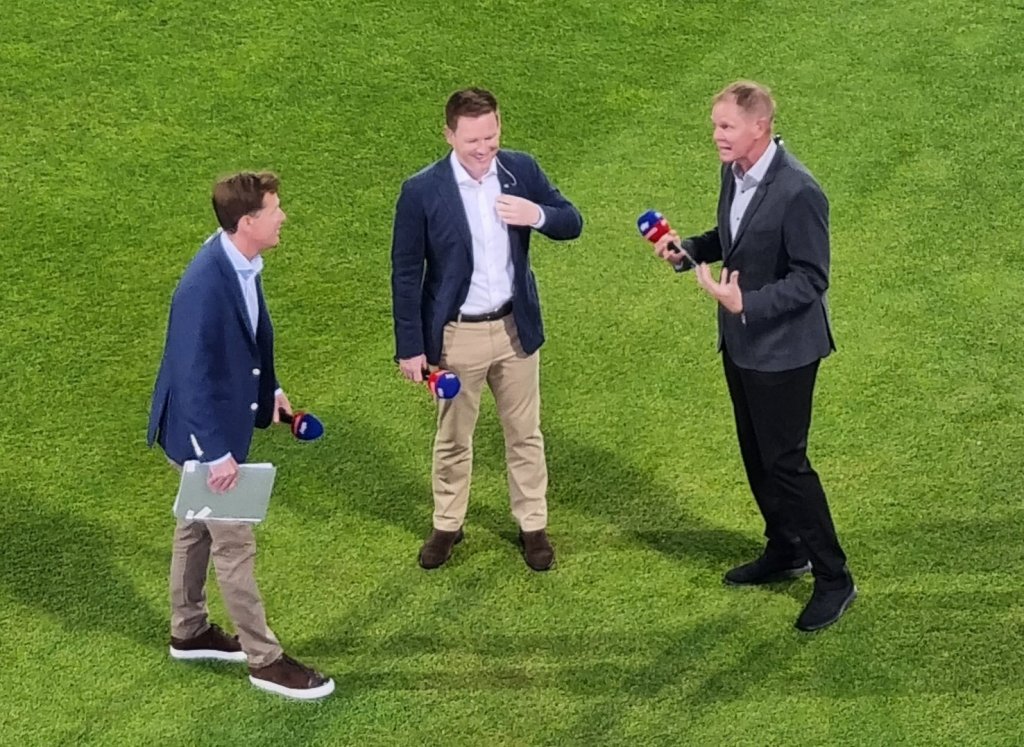
Not the best quality but its my own! Morgan now is a media man – here at the Old Trafford ODI against South Africa
Perhaps it was over from the moment that Jos Buttler broke the stumps at the end of the World Cup Final. Let’s face it – that team has never played together again. That was also when Bayliss stepped away. Since then England’s results have not been quite as good but they needed Morgan to get the team through Covid. By the time of the T20 World Cup last year, he was blocking a slot in the team and not giving the performance required. As his batting fell away, he was not able to set the same leadership example with that bat, and it became about words and culture. Indeed, Morgan’s values became a bit too dominant at times with the strange treatment of Dawid Malan and the refusal to move on with Alex Hales. In my opinion, Morgan should have retired sooner, but it is easy to say – you are a long-time retired. He is gone now. Buttler and Moeen Ali need to make decisions and not just ‘do what Eoin would do‘. Of course, they would all be aligned in many ways, but Buttler has to show his own true colours.
England has not done transitions well. Duncan Fletcher tried to replicate the 2005 team in 2006/07 and it led to a predictable 5-0 Ashes thrashing. The 2013 England Test Match Team imploded in a spectacular way. Even those few teams that manage success over many years change. The West Indies bowling attack had to accommodate the retirement of the fearsome foursome (Holding, Garner, Croft Roberts became Ambrose, Walsh, Marshall and Patterson). Australia went from Taylor, Slater, Boon, Jones, S Waugh, Border to Haydon, Langer, Ponting, Martyn, Clarke, Symonds).
What unites those two great sides of the past is that they ruthlessly picked the best players. Australia had to drop Michael Slater to create the Matthew Hayden / Justin Langer partnership and had to drop Ian Healy to allow Adam Gilchrist into the team.
England will need to do the same thing, and cannot ignore all the talent that was evident in the T20 Blast and The Hundred (Salt, Smeed and Jacks come to mind). Jason Roy has to get back into the runs, Liam Livingstone has to make meaningful scores and the bowlers have to tighten up or be changed. Even Adil Rashid is not quite the bowler he was.
In some ways, Ben Stokes has got the easier gig. It is perhaps easier to take over a failing team. However, I am not convinced by Buttler the Captain, and wonder if Moeen would be a better option. With Buttler I am reminded of Marcus Trescothick, who was passed over in 2003 when the England Captaincy went from Nasser Hussain to Michael Vaughan. Looking back now, it is clear that Vaughan was a good Captain, but he would not have coped well as a Deputy. Trescothick was the ideal deputy, but not the leader.
Buttler might yet prove me wrong, but he needs to step out of Morgan’s shadow. Moeen has a chance to turn things around, and if he was to do so it would be an interesting dilema. But difficult decisions might be needed to avoid another transitional failure by England.
Eoin Morgan has retired from International Cricket, stepping down from Captaincy. Some would say that it is a case of leaving before being pushed – he could not have continued much longer without scoring some runs. Despite this, Morgan will go down as one of the best England One Day Captains. Equally important as his success as a leader is that he was given the chance to succeed in the first place, and a lot of that credit must go to Sir Andrew Strauss.
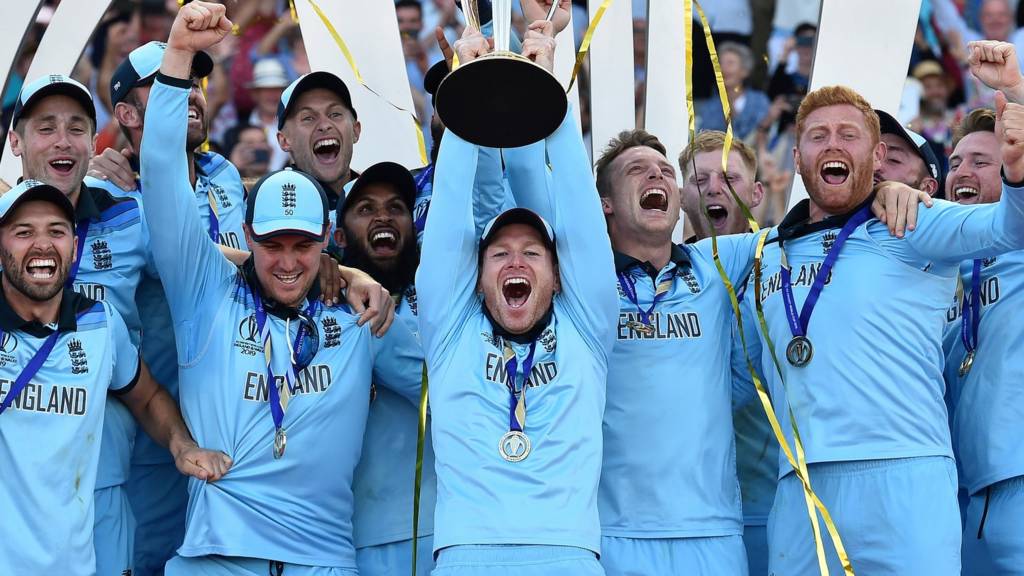
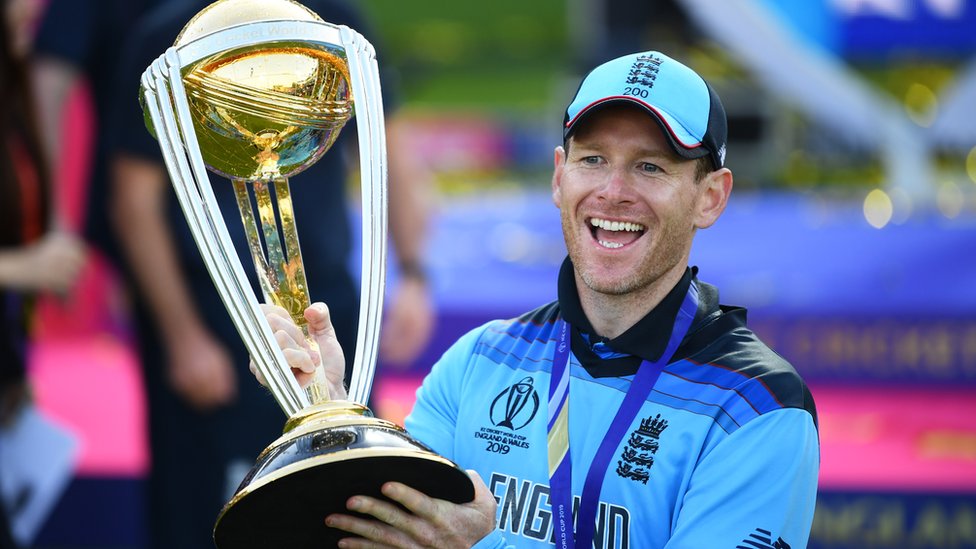
Finally England held the World Cup in 2019 – Picture from the BBC
World Cup 2015
One way or another, it all starts with the 2015 World Cup. Morgan had been around for a while and was probably England’s best One Day batter in the first half of the 2010s, along with Kevin Pietersen. He had failed to crack Test Match Cricket – the hope had been that Morgan would fill the Number 6 spot vacated by Paul Collingwood. Morgan had made a couple of hundreds, but it always felt like he would struggle technically – though he probably would have gone ok under the Ben Stokes / Brendan McCullum regime! In 2012, England had nearly managed to win a Champions Trophy somehow, but that flattered an England Team that, by 2015, was playing an outdated form of One Day Cricket under Sir Alistair Cook. Cook was a hero in the longer form of the game but was failing in the One Day arena both as batter and leader. England was terrible at One Day Cricket.
It was clear England needed to make a change before the World Cup, but every opportunity to do this was missed. The result was that Morgan was made England One Day Captain also immediately before the start of the World Cup. Morgan had no chance. He was given a squad that would have struggled in the 1996 World Cup, never mind 2015. For instance, Ben Stokes was not selected. The whole campaign was a disaster.
Morgan joined an ever-growing list of England Cricket World Cup Captaincy failures. It is a high-profile list, including Michael Atherton (1996), Alec Stewart (1999), Nasser Hussain (2003), Michael Vaughan (2007) and Strauss (2011) – all of whom only got 1 go at a World Cup.
Morgan went away to the IPL and waited for the phone call telling him he had been sacked as Captain. It felt like Morgan was going to be remembered as a decent One Day batter who was not quite able to make the most of his undoubted ability. However, when that phone call came, it would be Morgan’s big chance. From what I have read, Strauss was clear – Morgan was to be the One Day Captain, but only if he was certain he wanted the job. Unlike the others, Morgan would get a second go at the World Cup, and England meant business.
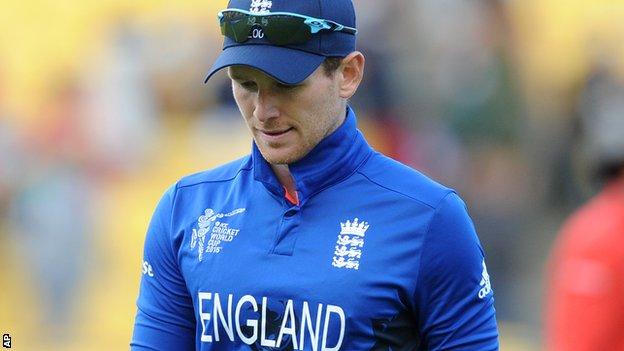
In 2015 Morgan thought it was all over – Picture from the BBC
2016: It all went mad
I remember the 2016 English Cricket season reasonably well. It was a summer when I spent a lot of time in the car, and it so happened that I must have been in the car on 30th August when England smashed past the 400 barrier, because I remember the incredulity of the Test Match Special Team when Alex Hales was battering the ball to all parts. By the end of the season, England was regularly getting well past 300 in 50 overs. Something had started.
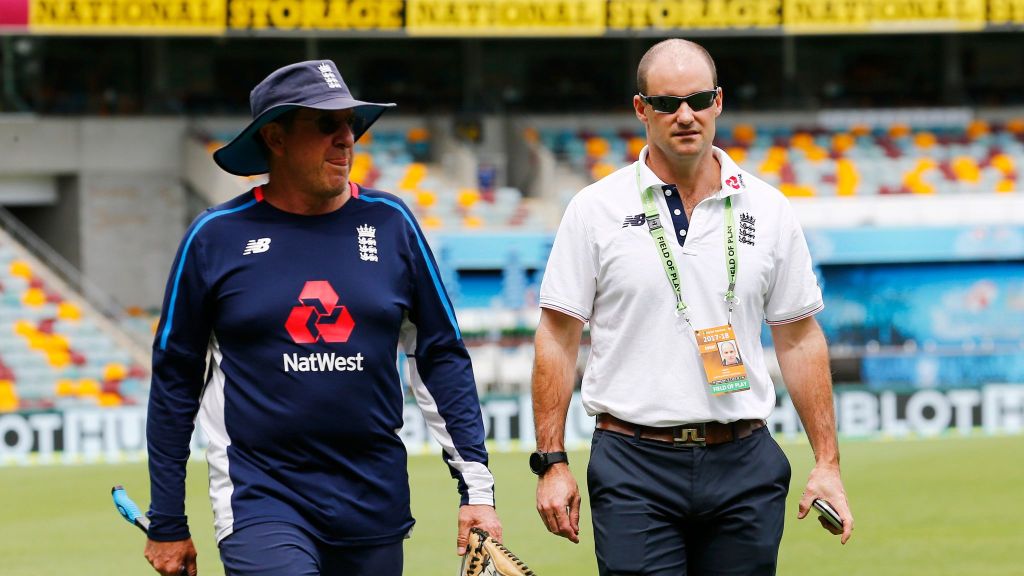
It took the combination of Morgan, Strauss and Bayliss to set England on a new path. Picture from Sky Sports.
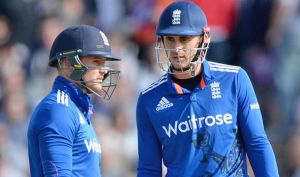
The obvious thing that happened was that England started to pick the right team, but it is a bit more subtle than that. It actually came down to deciding on an approach and assigning clear roles. The approach would be the very aggressive approach taken by New Zealand – but dialled up still further. So England finally started to pick Alex Hales and Jason Roy. England had the talent – people had been screaming for these two to be picked for a while – and it was time for that talent to be given a go.
Finally, England picked Hales and Roy. Picture from Express.
But while we all remember the 444/3, batting is only ever half of the equation. After the 2019 World Cup, we would hear about those early conversations between Morgan and new coach Trevor Bayliss. They quickly agreed on the need for a World-Class, wicket-taking spinner and Adil Rashid was to be that bowler, joining Moeen Ali.
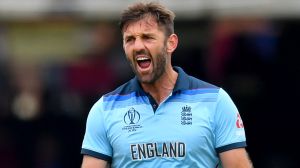
As important as the approach was the assignment of responsibilities. This most obviously applied to bowlers. Liam Plunkett was recalled and given that clearly defined role in the middle overs – yes the objective was to slow the scoring rate but the way to do this was to take wickets, alongside Rashid who would also be encouraged to attack, but with well-set fields offering protection. On the other hand, Moeen would often bowl in the Power Play, and batters would perish as they took liberties against Moeen, knowing Rashid was coming at them later on. It is worth noting that England only won the 2019 World Cup games in which Plunkett played, and it is something of a mystery that he was cast aside after 2019.
Plunkett had a clear role from 2015 to 2019 – Picture from Sky Sports
Batters too were given clear roles. Jos Buttler would be the finisher, Root would accumulate while Roy and Hales would try and hit the ball out of the ground. You might think this was all put together by a committee in the dressing room, but it still takes a leader to ensure the individuals in the team were playing in the way they were being asked to. With the batting, this meant he took the super aggressive option, showing the batters that it would be ok to get out caught at deep midwicket on the slog-sweep. Funnily enough, it freed him up and made him better as a batter. With the bowlers, it was about communication – be clear in terms of expectations but also be supportive.
It set England on a path to winning the World Cup in 2019. Remarkably, some would say England underachieved, failing to win the T20 World Cup and the Champions Trophy. That to me was churlish – England had been rubbish at One Dayers for so long that to win a World Cup was the stuff of dreams, dreams that I had not dared to dream since 1992.
2019
By 2019, it was clear England had a serious chance to win that elusive World Cup. I remember a conversation on Test Match Special when they tried to pick England’s All-Time best One-Day Team, and it was basically the entire 2019 team. Legends such as Graham Gooch, Allan Lamb, Robin Smith, Marcus Trescothick, Paul Collingwood and Darren Gough were not getting near that All-Time team.
However, Mike Brearley, Mike Gatting and Gooch had already found out the hard way that getting through an entire World Cup campaign was not so easy. England powered through the early stages of the World Cup but then got in a mess and had to win against India and New Zealand to make the semi-finals. Those early days in 2016 were important, but it was those last couple of weeks in the 2019 World Cup where Morgan would really earn his money. In those last couple of weeks, he had to get the best out of a team that was under incredible pressure, and yet even in the super over, he was calmness personified. No loss of temper, no public panic, no tantrums, no lectures. He just got on with it.
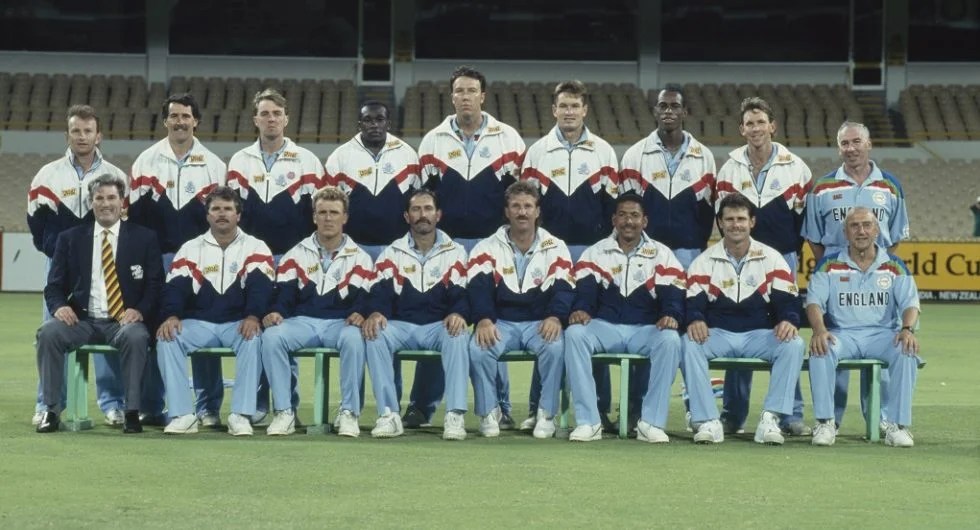
Gooches 1992 heroes were not getting near England’s All-Time One Day team.
Batting
A word about Morgan’s batting. We knew back in 2007 that Morgan was different. He had all those sweeps and reverse sweeps, and his wrists seemed to be made of rubber. In 1988 we could tell that Gatting was going for the reverse sweep practically before Allan Border started to walk in. With Morgan, he could leave it incredibly late before swishing the bat round in a reverse sweep. They all do it now, but then it was unusual. Then he became a six-hitter.
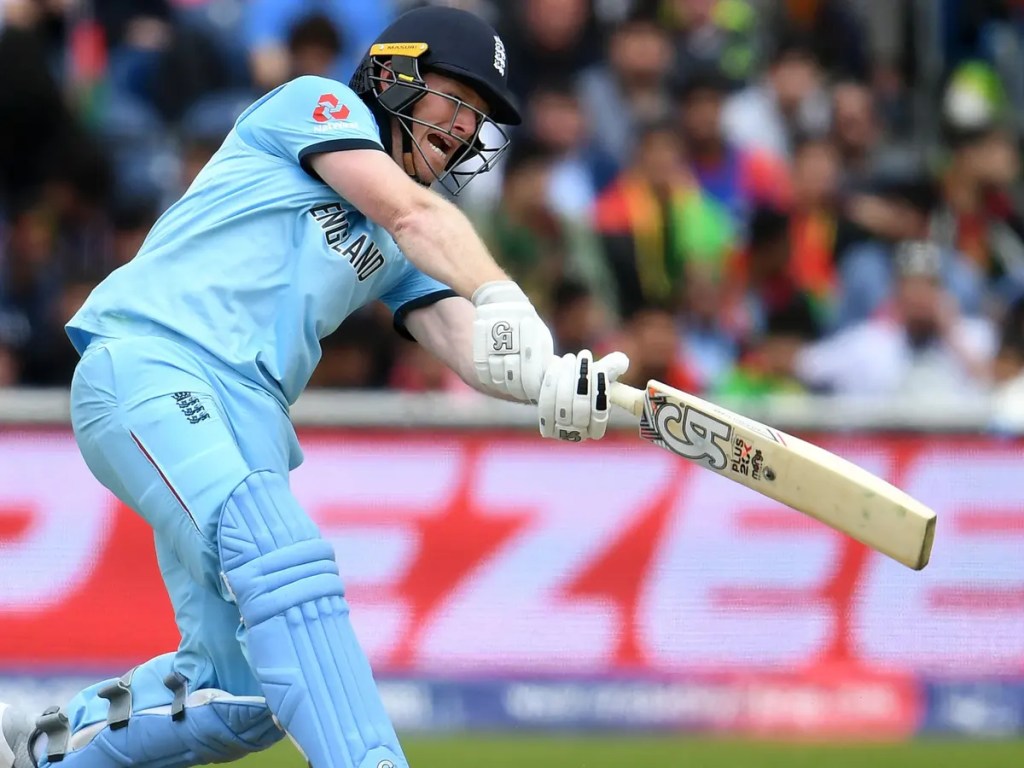
I was at the Old Trafford game against Afghanistan in 2019. It was only after he had hit about 5 sixes that we started to realise something mad was going on. That day he was outrageous – Old Trafford is not small and the sixes were way back, particularly the ones over long-on. Not only was it amazing batting, but it also showed the team how he wanted them to play. He was prepared to perish in the quest for quick scoring – and so the rest played the same way.
Morgan at Old Trafford – Picture from The Guardian where Ali Martin made the point on 18th June 2019 that ‘Eoin Morgan’s brutal 148 shows he practises what he preaches’. That was vital for the rest of the team.
In 2022 his batting seems relatively normal – alongside Liam Livingstone and Jos Buttler. But in 2010 alongside Collingwood, Strauss and Jonathan Trott it was remarkable.
Legacy
Whatever Rob Key says, Morgan’s legacy is the 2019 World Cup. It was so important that England used that home advantage. But to achieve that, he had to redefine the way England played the game. He had some proper players to work with, but he freed them up to succeed. The England One Day team had been a laughing stock from 1992 to 2015. Now they are feared. It is quite the transformation.
CWC19 will always be Eoin Morgan’s legacy – Picture from the BBC
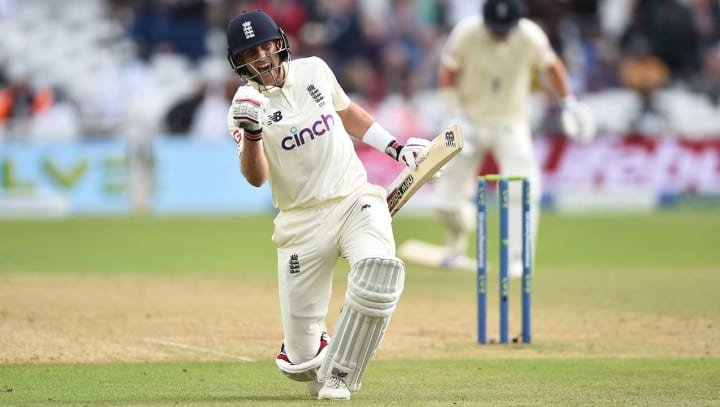
Joe Root’s performance is clear for all to see (outside of Australia). Since the start of 2021 he has scored 10 centuries – some of them were massive hundreds, and mostly he was on his own for England. Everyone has gone mad over his recent hundred at Trent Bridge. It was a marvellous effort but for me, his hundred against India at Trent Bridge last year will live long in the memory. That was a solo effort when he single-handedly dragged England into a game they deserved to lose.
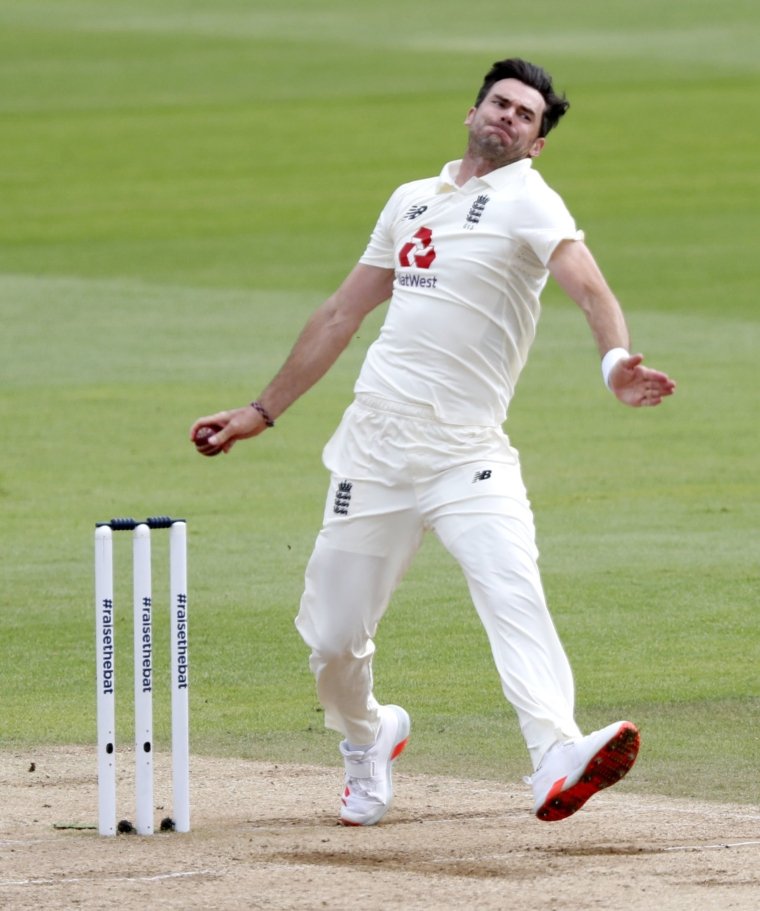
Despite how rubbish England were in 2021, Root’s innings at Trent Bridge against India was a great innings. Picture from Trent BridgeAnderson had a great year too, here in Sri Lanka where, when England picked him, he took wickets. Picture from Inews
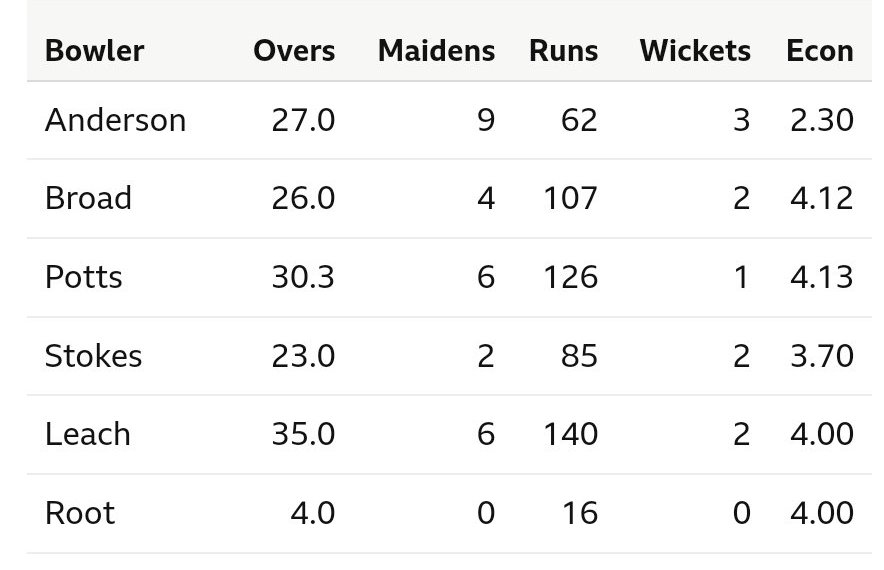
As for James Anderson, he has taken 50 wickets in the same time period. It does not sound special, except that England regularly did not pick Jimmy in that period. The more you think about that, the crazier it seems. Looking at 2021, Anderson took 39 wickets at an average of 21.74. If you are still unconvinced, look at his bowling figures at Trent Bridge in the first innings – 3 wickets at 2.3 per over. All the other bowlers went at over 3.5 and nobody took as many wickets.
While Root’s impact is obvious, for Jimmy sometimes you need context. For example, look at the England Bowling figures from the first innings at Trent Bridge in 2022.
These guys are not machines. They are just very good cricket players. We need to savour every stroke Root plays and every ball Jimmy sends down.
In all honesty, I do not think I would have chosen Ben Stokes as England Captain. But the more I think about this, the more I think it is the right call.
In recent years has been that it has all got so complicated. Yes, Covid made things complicated, but England managed to make it even more complicated than it needed to be. Strip away the complexity, and the choice of Stokes becomes a matter of common sense. He is the only person who is guaranteed to be selected (other than Joe Root). He had to be picked as Captain, and Rob Key was strong enough to ignore the noise.
Yes, The first thing that Stokes can bring is some common sense. In the first test match of a series, you pick the best players available. Sure, some may not be available due to workload, but of the best available, you take the best. In the first game of the recent Ashes series, the best available team included ‘Broaderson’ (Jimmy Anderson and Stuart Broad).
That also involves using your best players correctly. England’s best batters are Root, Stokes and Jonny Bairstow (plus Nat Sciver, Heather Knight and Tammy Beaumont). Stokes has already made 2 key decisions about himself and Root, and they both warrant exploration. Let us start with Stokes himself. He is the Captain, he gets to bat where he wants to, and he wants to bat at 6. Perhaps Root was too willing to ‘fit in with the team’ so hence moved himself between 3 and 4 in the order. Stokes has made a choice and he believes he can make the most impact at Number 6. The decision about Root is also very important. Root is one of the best we have ever had, so actually that should be enough – he bats where he wants to. But Stokes also pointed to Root’s record at 4. But the most important thing is that a clear decision has been made. Whether we think this is a good decision or not, the decision has been made and the debate is closed. Which brings me onto Jonny Bairstow.
Recent years have been blighted by a repeat of the The Stewart Saga, but this time the protagonists being Bairstow, Jos Buttler and Ben Foakes. When it comes to Bairstow, England have to make a decision and stick with it. I wanted Foakes to ‘keep, but he did not grab his chance. I would go with Bairstow at 7, keeping wicket. And I would give it a solid year. But if they go for Foakes they need to go for it consistently. And it is time for Buttler to move on, which I think will be easier. Rounding off the batting, perhaps Stokes’ common sense can also ensure that Rory Burns, Dom Sibley and Ollie Pope stop doing crazy things technically, and just go back to watching the ball.
As for the bowlers, picking the best ones is less clear cut, but choices have to be made and committed to. But Stokes must be the 5th bowler. That means going with a spinner and sticking with him – for me it would be Matt Parkinson, with second spinners picked when it is sensible. Normally it will mean 3 other seamers. If rotation is required, then make it consistent rotation (e.g. one of Anderson or Broad plays every game). And pick the best bowlers. The best bowlers, not the bowlers who can bat best. That has to involve Saqib Mahmood.
The other thing Stokes must bring is honesty. The appointment of Brendon McCullum as Test Match Coach will surely only boost this. In recent years, it has really annoyed England fans when England have blamed everything on Covid or rotation (which both did have a big impact). Some things were just poor decisions. For example, the fans supported the decision to rest Jos Buttler in India. But they did not support the decision to take him just for the First Test Match, then rest him. That was nuts.
It is back to basics. Pick the players who are the best, and do the right things with them. Own up when you get it wrong and learn from it. OK, sometimes it is debatable who is best, but as long as you have clear reasoning it is fine. Sometimes you will loose games. But do the best you can to win. Otherwise, England fans will stop going, which will be the end of the Test Matches.
Before we try and consider how Ben Stokes will get on as England Captain, let’s consider how Joe Root got on in the job. It is not that easy to give a definitive answer – eventually, it comes down to a matter of opinion.Mine is that, irrespective of many challenges, and some were self-inflicated, Root always promised, but did not deliver enough as Captain. It goes without saying that Root the batter is a different story.
The ambassador
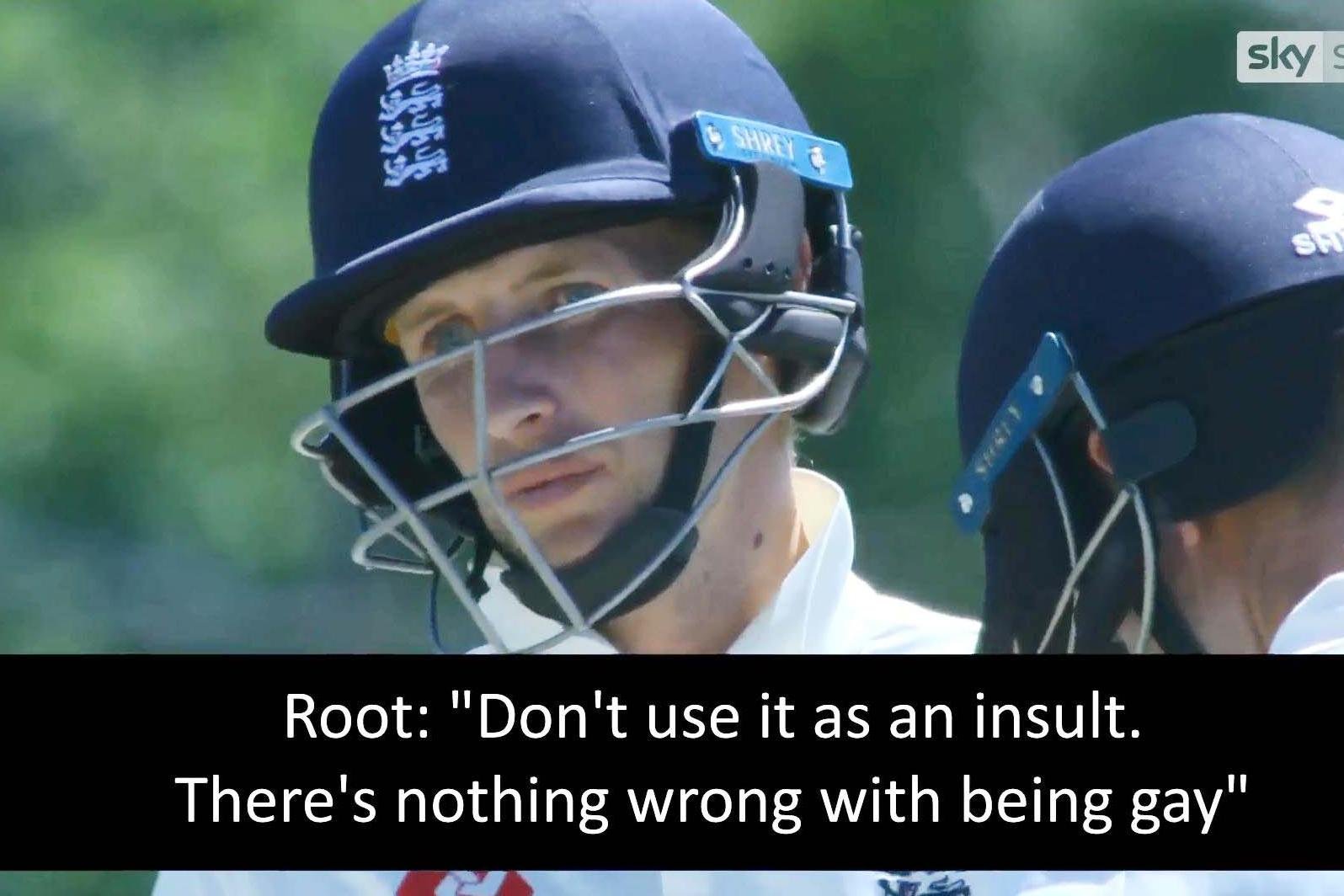
Firstly, one overwhelming positive. It sounds a bit ‘corny’ perhaps, but Root has been an amazing role model. When my son asks who he should watch, I say Joe Root. I cannot remember such a positve example being set by an English cricketer. In my lifetime, perhaps Moeen Ali or a young David Gower (pre Tiger-moth) could stake a claim – Ali for the way he has shared his faith, Gower for the way he played the game. But Root has done it consistently, while his team has been battered despite his endless runs. It would have been easy to get a bit cross in those difficult interviews with Gower in Australia, but he never did. He backed his players, he backed the various initiatives of the ECB relating to racisim and inclusivity. He handled the Ollie Robinson fiasco so well – even having fronted up to that campaign he also treated Robinson fiarly and did not unduly criticise him.
His rebuke to Shannon Gabriel in 2019 will live long in the memory for many of us. Root consistently plays the game the right way. Whilst nobody is in doubt about any of this, I have often wondered with Root if he was just a bit too nice for Captaincy. I think this was the issue for Gower at times. Being a ‘good bloke’ is not enough.
The good news is that he can continue to do all this despite no longer being in charge. He can lead by example, and people will follow. Again he can take the lead from Michael Atherton, Alec Stewart, Nasser Hussain and Sir Alastair Cook, who all provided vital support for Stewart, Hussain Michael Vaughan and Root repectively when playing on after being the Captain.
We can dismiss the number of wins and losses as a pointless statistic. Let’s face it, Root won more games than most because he Captained more games than most. We could consider win percentage, where Steve Waugh is the winner – but whatever the merits of Waugh as a Captain, it was pretty hard to lose too many games with that Australian Team.
My next tack was to consider Draws. I do think a major weakness of modern International Cricket is the absence of Draws – it shows a lack of determination, and some of this comes from the Captaincy. When it comes to determination, Atherton managed to come out of 37% of his games with a draw compared to Roots 17%. But any attempt to utilise that Statistic fails too – Waugh only achieved 12% – and that is not for a lack of grit, more because he won so many games.
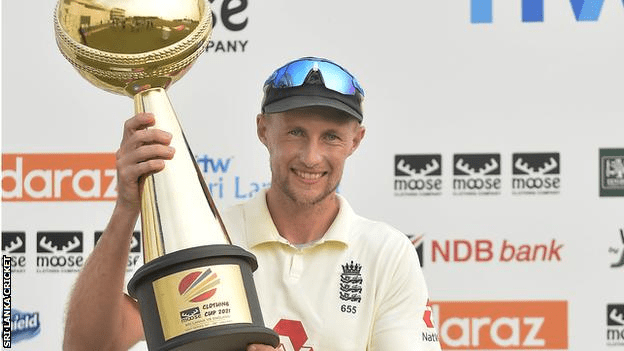
Picture from YahooPicture from the BBCA good day agaisnt Sri Lanka and a terrible day against Australia just about sums up the wins and losses
What we can do is try and compare Root’s record with some of those England Captains who were not blessed with the resources that were available to Vaughan and Sir Andrew Strauss, or Mike Brearley for that matter. Root did have some world class players available, but rather like the 1990s, he had to carry too many passengers. Atherton and Hussain tried to make England ‘hard to beat’, and a justifiable criticism of England in 2021 was that they were easy to beat, so here we will focus on loss ratio. Atherton lost almost 39% of his games, Hussain 33% and Graham Gooch, another England Captain lacking resources, 35%. Root lost 40% of his games – not much different to Atherton who many considered to be an good Captain.
I remember hearing David ‘Bumble’ Lloyd talking about Atherton the Captain – he described him as a great Captain, if only he had had the players. And of course, that has also been an issue for poor old Joe – a Captain can only be as good as his players.
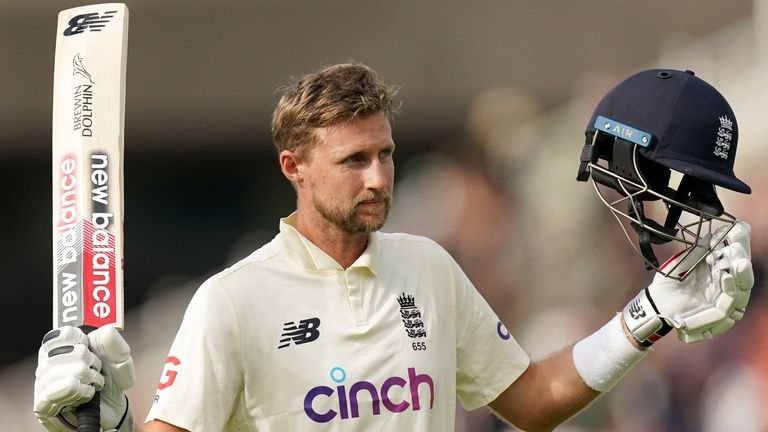
Whilst a Captain needs to win some games, we do have to look at Root’s batting, which, outside of Australia at least, has been out of this world. As Captain Rooot scored over 5,000 runs at an average of over 45. For England in modern times, only Gooch came close to that record as a Captain – his batting got better when leading. I think Root’s batting also got better as Captain – or certainly he became more determined to get the really big scores, after his relatively lean patch around 2019 (relative being the key word here). In 2022 it felt as if the more the Captaincy dragged him down, the better he batted.
Picutre from Sky Sports – Root the batter was incredible in 2021 and his innings at Trent Bridge was something else.
Where both Gooch and Root both failed was Australia, where they both have moderate records. The Aussies know how to sort a Captain out – just ask Atherton. One thing that sets Strauss and Mike Gatting appart is that they won that Ashes away as Captain (and they only got one chance). It is no coincidence that both Strauss and Gatting scored important centuries in the series they won down under. Let’s hope Root gets one more chance to conquer Australia.
Picture from ESPNPicture from ESPNLike Gooch, Root has not yet been able to conquer Australia, with notable exceptions in 1985 and 2015. Gooch eventally did get on top of them with the bat late in 1990/1 and 1993, and Root will get another go surely?
Tactically?
And I am sorry to say that this is where things go downhill. I know that David Lloyd said that a Captain is only as good as his players, and he is right. But my word, some poor decisions have been made on Root’s watch.
Root rarely had his best players over recent years, and even when he did have England’s best ever bowlers available he did not manage them well, or even select them at times. Jimmy Anderson and Stuart Broad have clearly been a challenge for Root. Add in the white ball focus and Covid and it cannot be doubted that Root was unfortunate in his timing. Cook was not a great Captain either, so Root lacked a strong leadership role model in the team. If all this was not enough, the hapless ECB have really offered little support.
Yes, we must accept these mitigating factors, but we must also accept that basic errors have been made. You only need to look at recent Ashes series and the West Indies tour for those decisions to jump out. Selection has consistently been awful, and if you want to put some of that blame for that down to Chris Silverwood, Root is entirely responsible for some poor decisions the toss.
Worse, Root also lacked presence on the field. Often, it was not clear who was in charge. The game was allowed to drift too often, when a quick bowling change was needed or a field change. Hussain was full of emotion on the field, and took it too far at times, but I would rather Captains err that way than become too passive. At times, Root needed to ‘bang heads together’. Equally, Root often lacked patience – none more so than when England worked so hard to successfully snatch defeat from the jaws of victory against India at Lords. That hour at Lords in 2021 was one of the worst passages of Test Match Cricket I have ever seen, and Root did nothing to change it. When a good team wins it is one thing, but on that occasion India were gifted a win. What was needed on that dreadful day of cricket was dicipline, not bouncers.
A further observation is that England have been obsessed with this concept of a ‘brand’ of cricket in the last few years. In Root’s early years the ‘brand’ was aggression. It resulted in that game against West Indies at Headlingly in 2017 being thrown away, but, retrospectively, perhaps he should have stuck with this method, as the best players available were aggressive ones. Later, the plan was to be attritional – something that worked for Strauss, but he regularly had 500 on the board combined with a world class spinner.
The problem with having a pre-determined approach is a loss of flexability. At times, it has felt like Root has been playing yesterdays’s game with tomorrow’s plan. For example, at Brisbane last year England were so fixated with a plan for the second game at Adelaide, they picked the wrong bowling attack. Then at Adelaide they picked the bowlers they should have picked at Brisbane. Constantly, England were focussed on ‘what was next’, forgetting about what was right in front of them.
Summary?
For me, things just did not work for Root as Captain. He failed to manage his key assets (Anderson, Broad, Jofra Archer and Stokes). His longevity is impressive, but in other eras Root would have been gone in 2018 or 2019, and certainly he should have been encouraged to resign after the 2021/2 Ashes. One could aos argue that longevity has contributed to the lack of replacement candidates for the Captaincy. In 2019, Broad would have been a good choice, but by 2022 it felt too late.
On the good days Root had a gameplan, and on the occasions he could stick to the plan he was successful. For example, he was successful in Sri Lanka and South Africa when big scores were made. In the home summer of 2020 it also felt like Root made lots of good decisions, particularly at Old Trafford against Pakistan.
But when things when wrong for Root, they went massively wrong. It is easy to look at the batting collapses, but also one cannot ignore the awful sessions with the ball when games of cricket were handed to the oppoition. Some might wish to point out that it was good teams that beat England in 2021, but I do not think they were as good as England made them look. And Root also lost two series away to the West Indies.
His professionalism, courtesy and dignity are greatly to be admired. His class as a person and a batter is obvious for all to see, but I never felt Captaincy sat comfortably on Joe Root’s shoulders. Without doubt, it was time for a change.
It is pretty easy to conclude that the current England Test Match team is terrible. What is rather harder is to put this team into historical context. Richie Benaud always said that you can not compare teams of different eras. Despite this, I have wondered for a while how this current team would fare against the England team of the 1990s.
It is a bit crude, but I still think Averages are a good metric in Test Matches. So, I have identified representative teams from 1999 and 2022, added up all the batting averages and subtracted the bowling averages. For good measure, I threw in England’s all conquering team of 2011.
Before I talk about the results, a word about the teams. Originally, I was thinking in terms of an early 90s team – undoubtedly, this representative 99 team would be boosted by the inclusion of Graham Gooch, Robin Smith and Angus Fraser (replacing Mark Butcher, Mark Ramprakash and Dominic Cork I imagne). However, I felt we should compare England’s two ‘worst in the world’ teams, so 1999 and 2022 it is.
I then considered taking 2 specific teams – specifically the England teams from the 4th test match of 1999 against New Zealand and the 3rd test match of 2022 against West Indies. For various reasons, this did not quite work. So I picked ‘representative’ teams.
The 1999 one is arguably one of England’s more powerful sides, based on England’s 1997 Ashes team plus a couple of players who became good England performers in the early milenium. It represents the team I might have chosen at the end of 1999.
The 2022 one is again representative, but I wanted to reflect the England teams we have seen over the last couple of years to make the stats more comparable. Plus, I do think Joe Root should bat 4, which means Zak Crawley at 3. I could have picked any of the openers of the last couple of years. Right now, I would go with Jonny Bairstow ‘keeping, and I would give him an extended run again (Jack Russell never got an extended run!). Still, I would pick Saqib Mahmood* and Matt Parkinson*, and I used First Class Averages for these two.
The 2011 team are only here to show us how quickly things can improve and decline, but they do show us the gulf in class. The only question was who to pick as third seamer – I went with Steven Finn.
The results are exactly as expected. The 2022 team comes out botom (131) with the 1999 team 25 runs better off in terms of the batting averages subtract the bowling averages. The 2011 team is another (almost) hundred runs ahead.
Don’t get me wrong. The ‘Edward Reece team metric’ is not perfect. For example, I disregarded Paul Collingwood’s bowling average. It does mean the other two teams have 5 bowling averages to subtract, whereas the 2011 team only have 4. But if I was to include Collingwood’s bowling, I would have to include Root and Michael Atherton etc.
However, it does have some interesting observations. We look for batting averages to be 40+ and bowling averages to be under 30. In 2012, even the ‘weak link’ in the 2011 side in Finn had a bowling average of 30.4, so only just over that benchmark. But if we look at the other 2 teams, the batting is not THAT different in terms of pure numbers – only Graham Thorpe and Root top 40, though Atherton and Alec Stewart are close. However, Andy Caddick, Darren Gough and Cork are all sub-30. In 2022, it is hard to find bowlers except for Anderson and Broad.
In the end, it is all a bit of nostalgia. But I think that 1999 team under Nasser Hussain would run rings around the 2022 team. With Gooch, Smith and Fraser it would be as one-sided as the recent Ashes joke. –
I recently said that England had regressed to 1993, when they had 1 world-class player in Graham Gooch. Joe Root now occupies the Gooch role. But they have jumped forward to 1999 when England were officially the worst in the world. He has not taken the Nasser Hussain role on yet and he either needs to or needs to go.
I remember watching in 1999 when England beat a reasonable New Zealand side at the Oval and won the series 2-1. Except that they didn’t. Chris Cairns was on form that summer – he battered England for 80, but it was the batters that failed big time (again) and collapsed from 122/2 to 202 all out. Mind, nowadays, that collapse does not seem so bad. In 1999, rather like 2021, England were dreadful all summer. To start with, Captain Alec Stewart and David Lloyd presided over an awful World Cup where they were given little chance because of some terrible selections. After that, Stewart and Lloyd were out – though Stewart had done OK as Captain overall. In came Nasser Hussain and Coach TBA. It turned out to be Duncan Fletcher of course, but he was not available until after the English season ended.
In the case of 1999, you can find mitigating factors. Hussain got injured, Mike Atherton was injured, Darren Gough missed the whole series. England’s new Coach was not available. However, England made some classic errors (again) – they jump out of the scorecard. The Alec Stewart conundrum should have been resolved by 1999 – we knew Stewart was England’s best keeper option once Jack Russell was out of the international picture and Stewart was no longer Captain. Yet Chris Read kept wicket for the first 3 games and Stewart opened with Mark Butcher for the first 2 games. Atherton came back at Old Trafford for the third game so opened with Mark Butcher. This would have created the ideal chance for Stewart to keep wicket as he batted at 3 in this game. Instead, England waited till the last game of the series to do this when they also dropped Butcher (actually I am not certain if he was dropped or injured but I think he was dropped despite being Captain in the third game at Old Trafford in Hussain’s absence to injury). All of a sudden England had gone through 3 opening partnerships in a summer (Butcher / Stewart, Butcher / Atherton, Atherton / Darren Maddy) and England had messed Alec Stewart about again. Even worse, Ronnie Irani (never a test match cricketer in a million years) played at 7 ahead of Andy Caddick at 8 (a number 10 at best) and 3 real tail-enders in Ed Giddins, Alan Mullally and Phil Tufnell. I guess we should be glad they did not throw in Devon Malcolm.
Does it not all sound incredibly familiar? Except in 1999, the England Captain was quite new and took action. The fans booed Nasser Hussain at The Oval, and after initially being defensive (“proud of the lads” etc), he reacted. Yes, he showed some frustration, but he also pledged to use that low point in English Cricket to change things.
In 1999, Hussain was mortified by being booed by the home fans. He made a decision that it would change. Picture from ESPN
“But people must understand we don’t just turn up at 10am and think, ‘Who are we playing today? Oh, it’s New Zealand.’ We work damn hard. I’ve been waking up at five or six every morning with nerves in my belly because I so much want England to do well. We have a hell of a lot of desire.
“I’ll use the papers,” Hussain concluded. “We’ll be reminded we’re bottom of the heap and I hope all my players read them. I’ll tell them ‘That’s what people think of us.’ It should hurt them.”
Nasser Hussian – August 1999 at the conclusion of The Oval test match
Kevin Pietersen is keen to let everyone know that England have a terrible system that needs to change. He says Joe Root should stay as Captain because nobody could do better. Well, English Cricket was different in 1999 but it was still the same 18 counties, and that set up England’s run to being Number 1 in the World by 2012. We have gone full circle, but we must look back at 1999.
We saw a Captain visibly distraught, who vowed to make a change. Nobody called for Hussain to be sacked after 4 games because he was new, unlike Root in 2022. Duncan Fletcher provided common sense and clarity of roles. He was also darn good and changed everything about England Cricket along with Hussain’s attitude. A year later England beat West Indies to embark on a winning streak where they won 4 series in succession, but many of the players were the same. Atherton, Stewart (with one role), Hussain, Graham Thorpe, Darren Gough, Andy Caddick…even Graeme Hick made important contributions, though never the big breakthrough sadly. Later on, Butcher came back in a big way and was a vital part of the 2005 buildup, though his career was curtailed by injury.
In 2022, we talk of the red-ball reset, but as yet, we have not seen the red ball attitude reset. We do not possess great players and will not for some time. But I do think a better attitude would help. This would start with an acceptance that these players are not playing as well as they can. We need to accept that basic mistakes are being made all the time, and they need to be stopped. It all comes from attitude.
Yet so far, Root, who is by no means a new catain, refuses to accept this. He does not get past the ‘proud of the lads’ part. He certainly does not talk about using the papers to create a reaction. It is simply not good enough.
I cannot see Root being able to do an Hussain. Picture from The Mirror.
We need a bit of grit. A bit of attitude. We need a willingness to accept England are not a good Test Match Team. How bad does it have to get before things change? England will definitely lose games this summer. But perhaps they could show that they are learning.
No, I am not talking about 10 Downing Street. I am talking about the England Cricket Team. But what does it take to get rid of these people? By this point, the Captain, Coaches, Director of England Cricket and ECB Chief Executive should have been given marching orders. To say nothing of the Prime Minister.
Ashley Giles should have gone after that dreadful interview he gave a few weeks ago, in which he blamed everyone else for all the problems of the world but took credit for looking after the players mental wellbeing. I would question how much good it does them to be thrown into another Pominshambles Ashes tour. I have never seen Giles as England Management material – I thought we had given up on that a few years ago. Giles is out of his depth, yet has the job of giving the ECB a report into what has gone wrong. That will take 2 minutes…..pick the wrong players, give them zero preparation, totally overload them. Thats your written report Ashley.
Tom Harrison of course should be gone as soon as the conversation came up about that £2.1 million bonus. A failure bonus? That should have been enough on its own, but after England failed to win every Ashes since he has been in post plus failed to qualify for the T20 World Cup Final. Not to mention the Racism scandal. He seems to be untouchable.
Then we have Chris Silverwood. Things were going ok until he was given control of selection, and since then it has been a shambles. Though I think we had doubts from day 1 – Essex and England are somewhat different. But Ray Illingworth had already shown us in 1995 that you need a separate coach and selector. I guess we cannot blame Silverwood for that Giles inspired piece of stupidity (Giles again). It would be harsh to point out that England’s ‘least bad’ result came when Silverwood was absent…but he is paid for this stuff so I am going to be harsh. England did better without him in Sydney. By now he should be gone and a Selection Panel should have been created ahead of the West Indies Tour.
It is not just Silverwood though is it? Lots of the same names have been around for a long time. Graham Thorpe was one of my heros in the 90s and should be regarded as one of England’s finest middle order bats. But the England batters have failed consistently for years – pretty much since England got rid of Graham Gooch actually. Thorpe is credited with unlocking Joe Root’s run of brilliance by telling Root to be more selfish. Perhaps Thorpe is a great mentor, but he has not delivered an England batting line up. Time to say goodbye.
And we have to come to Joe Root. Sorry Joe, but it really would be best if you stepped aside out of your own choice. But if that is not happening, someone needs to make the decision for him. Keeping people in a job because nobody else can do the job is a terrible place to be. Give someone a chance and they might actually show some ability – but they won’t if not given an opportunity. Root is not cut out for Captaincy and is not getting any better at it. His batting is so important to this team, and sadly he cannot bat in Australia. But perhaps if he has not been carrying the Sunday School second 11 for years he might have had more chance. It is time for Joe to go.
But the worst thing is that all these people seem to have backing, particularly Root and Silverwood. Vice Captain Ben Stokes backs up Root, who backs up Silverwood. Failed Wicket Keeper Jos Buttler speaks of still wanting to conquer test match cricket. Jimmy Anderson wants to keep going. Since when was it any of these people’s choice? You fail, you move aside or get moved, and then you let someone else have a go.
It speaks of an insider culture, where the likes of Stokes, Buttler and Root carry the player power. It is time to stop. It is time for a completely new team. That means a new Captain. If Stokes does not want to be Captain, it means a new Vice Captain. It means a new Wicket Keeper. It means a new batting line up (yes, yet another). It means another set of bowlers. Yes, even Stuart Broad and Jimmy Anderson need to retire, or be retired.
To paraphrase Teresa May…..a new start means….a new start.
The latest ‘Ashes Shambles’ is simply not acceptable, and my impression is that this time the English fans are cross. Even the Barmy Army have expressed a certain amount of frustration which in itself is quite a statement.
Let me just have a little recap of where we have got to from an England perspective. Let us initially go back a little bit to 2019:
2019 was been the year of the World Cup. Back then even the most diehard Test Match Fanatic was prepared permit the focus to be on One Day Cricket. Let us not forget that England fans were sick of being ‘World Cup no hopers’.
Overall in 2019 the Test Match Team got away with it in that they held Australia to a 2-2 draw in the Ashes in England. However, it was the first time England had not beaten Australia at home since 2001, and the year also saw a loss to New Zealand and a number of sub-100 scores. It was a sign of what was to come.
However, 2020 seemed like it was a ‘bright new dawn’. Maybe hindsight is a wonderful thing, but things did seem to be on the way up.
England beat South Africa away despite a terrible start to the test match series. In the first test match England faced an illness crisis – and it is hard not to wonder about Covid-19 given what was about to happen to the world.
That South Africa team was not a strong team, and that is more evident now then at the time. However, it was a good series for Dom Sibley, Ollie Pope and Dom Bess. Zak Crawley showed potential, and with Rory Burns coming off a good, though lucky, 2019 we saw an England batting line up coming together.
England beat West Indies and Pakistan at home. England have since found out how hard it is to be the touring team in Covid times, but England did play well.
During the Home Covid Summer, the Burns / Sibley partnership worked, though both had very odd techniques. Crawley had been doubtful until be scored 267 in the last test. Jos Buttler also had enjoyed a good summer and Ben Stokes batted well (though both bowling and catching were not so good – he was perhaps understandably distracted by his father’s health).
England seemed to have lots of bowlers available, and had a logical rest and rotation policy going where Anderson and Broad never played together.
The good form continued into 2021 and we saw evidence of a Joe Root breakthrough as he began his amazing year. England won the first three games of the year. The Sri Lanka side was hardly steller, but the conditions were not easy. The victory against India was spectacular. However, even then, we were concerned about the reliance on Root.
Since that first test match against India, it has been a disgrace. I am certain that it is no coincidence that this is when the Chairman of Selectors was scrapped. The mistakes began in India. Of particular note:
After 3 victories, the side was changed significntly. I would ssuggest Jos Buttler has not been the same since he went home from India.
England played 4 fast bowlers in the day night game. England tried a similar thing in 1992 and we know how well that went. But that was where the Anderson and Broad rotation policy was thrown away, and the rotation randomisation begain.
The Home Summer was so poor that I do not want to re-live it here, and so we reach the present day – the Ashes capitulation. And let us note a few things:
This is not a great Australian team by any means. I think this makes it all the more annoying. They are a good team, but not great.
The decision making has been incredibly bad. Amazingly so. The selection, the decisions at the toss and in the game…you could pick any number of decisions – the number of basic mistakes both before and during the tour is quite incredible.
The decision to go into Brisbane without both of Jimmy Anderson and Stuart Broad is as crazy as playing 4 fast bowlers in India.
The catching is diabolical. We are at the point where if the players cannot catch they need to be dropped. Surely this has contributed to the dropping of Burns – but also his technique was always going to fail down under
But let us come to the worst aspects of all this. Firstly, Selection. Constantly it seems as if they are picking the team for the previous game. If nothing else, look what the home team does – they picked the best bowlers in the first game. Yes, they lost bowlers due injury in the second game, but being 1-0 up made up for that. Whereas England bought in the best bowlers when they were already 1-0 down. Australia also always pick a spinner, without fail.
Worst of all is the lack of progress. Yes, we can easily list endless lists of names. Players such as Dom Sibley, Rory Burns, Haseeb Hamid, Zak Crawley, Ollie Pope, Dom Bess have regressed. The likes of Dawid Malan, Jos Buttler and Jonny Bairstow are treading water. Even coaches have changed over the years. It does feel a bit too cosy.
Yes, we have to direct some anger at the current coaching team. And even now, Chris Silverwood refuses to own up. He speaks of positives and says he would made the same (*STUPID*) selection decisions again. That is not only totally perplexing – it is incredibly disrespectful to the fans.
Silverwood does need to go and needs to be replaced. Joe Root also needs to step down as captain. But we need answers from higher up. Where is Ashley Giles? Where is Tom Harrison? How many Ashes do we have to loose before the ECB ‘top brass’ changes?
If I hear one more England representative talking about the positives of being 3-0 down…………………..
In 1986 it was said that England could not bat, could not bowl and could not field. Well, if Ian Botham and David Gower were tarred with that brush, how do you go about describing this lot?
Firstly, we have to ask questions of the management (and we will talk about Australia later). Can you seriously imagine Mike Gatting or Micky Stewart going up to Botham and Graeme Dilly on the 14th November 1986 in Brisbane and leaving them out? “Yes chaps, I know you are the best bowlers, but we think it would be better to throw away the first game and pick you in the second when we are already on the way to a 5-0 thrshing”.
Yet on the 8th December this year, that is exactly what Joe Root and Chris Silverwood did. Back in 2012, when Andrew Strauss’ England were top of the tree, they left out Stuart Broad and James Anderson for a test match against West Indies. It caused quite a reaction at the time. The fact is, it was a questionable decision for a top class team with an unassailable lead in the series. It is the sort of thing you can consider when you are winning. When you have lost virtually all of your games in the year, you have to pick your best players.
When it comes to selection, England are a shambles now. We are willing to cut some slack – Covid and injuries have been a nightmare combo. The loss of Jofra Archer was a cruel blow. But we also have to ask why all of England’s batters have regressed? I would list them but it would require a lot of space. Simply England pick test match batters who fail to kick on. Why, and when will someone own up? Graham Thorpe was my hero, but as a batting coach he is not having the desired impact on these players.
But even accepting all of that, Root and Silverwood are in a muddle, and they have created a situation where they have nobody else involved in team selection. The teams they are picking up are almost as mixed up as the crazy teams that Ray Illingworth chose in the mid 90s.
My view is that they are just making it too complicated. It seems like they keep picking the team that they should have picked in the team before. They are messing about with the basics. For example, you pick a spinner unless a compelling reason exists not to. Even on a dark day in Leeds (not that we can have test matches in Leeds these days) you would think twice about not picking a spinner (see England v South Africa in 2012). Pick the same spinner regularly and the captain and bowler will learn to work together and the bowler can get some match practice. But most of all…..PICK YOUR BEST PLAYERS.
We can expand the theme of not doing the basics to Rory Burns. I have always felt that Burns could not succeed down under. He probably will get the rest of the series now however badly he plays, but he does not deserve it. His technique is miles away from the coaching manual but we do not care about that. He is also miles away from common sense. I am sorry, but he is the only batter I have ever seen in international cricket who does not look at the bowler. You can stand where you want, but watching the bowler is pretty key. Staying still would help. In Brisbane he was so busy moving he missed a ball that Alistair Cook would be clipping through the leg side. We could maybe cope with that, but then Burns must be England’s least good catcher – and it is a low bar. We are at the point where we must consider just picking players who can catch, irrespective of runs and wickets.
Talking about basics, what about the No Balls. Ben Stokes and Ollie Robinson have done it. What are all these hundreds of coaches doing? Simple – in the nets, practice properly. Don’t permit no balls in practice and you know what, they will not happen in real games. Botham hardly ever bowled No Balls. Everyone wanted to blame the Umpire for not calling them. Well, that is pathetic as well – with modern technology every no ball must be called. But only 1 person makes front foot no balls happen. The bowler. Sack the bowling coach if he cannot ensure the basics of bowling legal deliveries.
So, you may gather I am not pleased. The worst thing about this Ashes tour is that it is so predicable. The result of the series is going to almost certainly be decided within 12 days of cricket. Somehow it has become normal for England to loose 5-0 in Australia. In 2006/7 it started, but that Australia team was brilliant. In 2013/4 it started to become the norm even against a pretty poor Australia. Now it is just inevitable.
People look back at the 1990s and laugh. But out of each Ashes tour someone came out with credability, and normally England won a game somewhere. In 1990/1, Gower and Mike Atherton made runs. In 1994/5, Darren Gough made himself known and Thorpe made runs, including a fine hundred in the last game. In 1998/9 England’s middle order was respectable, and Gough made the headlines again. In 2002/3 it was all about Michael Vaughan – and the fact that he conquered the Aussie bowlers must have been a factor at home in 2005.
It is time for England to show some fight. Pick the best players. Consistently. Score some hundreds – even when you loose. But most of all – SHOW SOME FIGHT.
A brief word about the Australia Management. Despite all the ‘crossing the line’ nonsense we hear from David Warner and co, despite the involvement of a Prime Minister, despite everything, we have Steve Smith, the Sandpaper Captain, back leading the team. Seriously, you telling me that this is acceptable? I am ok having him in the team. But Smith should not be Captain. Not that England can claim any moral high ground at all given everything. But no, Smith as Captain is a disgrace.
 Cricketed