2022 Men’s International Summer: Test Matches v New Zealand and India

I wrote reviews of all the International Games that involved England last summer. I never quite completed them. However, it is interesting to look back at the end of last summer. Remember when England were useless at Test Match Cricket, with no Coach or Captain?

I must confess that I did not get to much of the International Cricket this summer – I only got to the 2 One Dayers at Old Trafford. I should have been at Day 2 at the Oval, which did not take place, and Day 4 at Old Trafford but the game did not go that far.

However, I have followed it quite closely and I enjoy going back and looking at it all at the end of the men’s summer. However, it has to be broken down into sections as it is too much for one article.

  • Test Matches against New Zealand and India
  • One Day and T20 series against India
  • One Day and T20 series against South Africa
  • Test Matches against South Africa

New Zealand and India Test Matches

We will take these as a block, and it is fair to say that things did not go as expected. It could so easily have fallen in a heap at Lords, but for Joe Root’s century. From then on, it was all a bit mad, and England dominated.

For the purposes of this review, I have treated the India game as part of the New Zealand series, because those games came thick and fast.

First Test Match: England v New Zealand – Lords

England win by 5 wickets

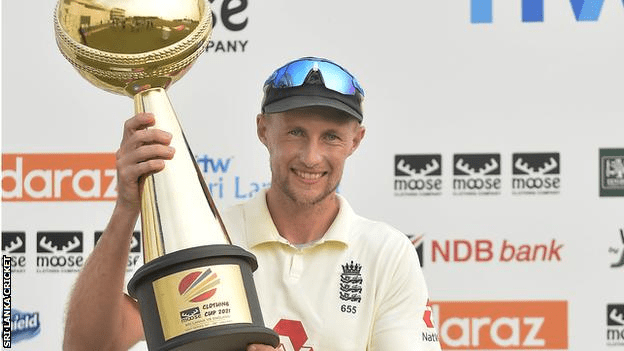
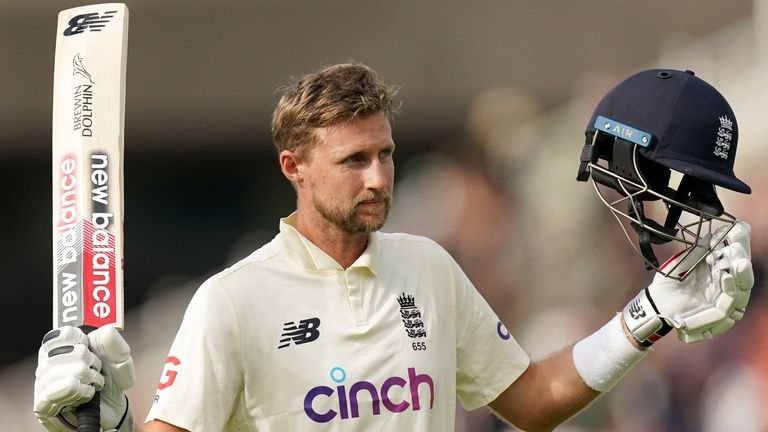
The start of so called ‘BazBall’, but we will not use that term given that Brendan McCullum hates it. But it actually could easily have backfired at the first hurdle but for a wonderful second innings 115 by Joe Root. Root played a classic Root innings, good strike rate but ‘proper’ batting.

The first innings were largely as the summer would pan out – sub 150 scores, the highest individual score in either first innings was Zac Crawley’s 43.

Second time around, New Zealand were getting away from England, Darryl Mitchel (108) scoring the first of his hundreds on this tour in partnership with Tom Blundell (96) who deserved a century – also a sign of what was to follow. Then Stuart Broad and Jimmy Anderson broke through and Colin de Grandhomme managed to run himself out for a duck – however dozy he was, Ollie Pope was equally sharp. de Grandhomme would later suffer an injury mid-over when bowling and drop out of the series. It would turn out to be the end of his Test Match career.

In the last innings, Root needed support from Stokes (54) who gave it away going for aggression late on Day 3. We would spend all summer worrying that Stokes was being too aggressive, but here he hit Ajaz Patel out of the attack which would turn out to be influential later in the series Personally I would have given Patel a bit more of a chance. New Zealand were slightly caught napping after Stokes was out when Root scored very quickly but in that quiet way he has, and all of a sudden the target was under 50.

Ben Foakes came in and played well for 32 not out. He stuck with Root on Day 3, a late wicket would have changed things. On Day 4 he was more than a support act and made his own contribution. Before the game, I would have dropped Foakes, moved Jonny Bairstow to keep wicket at 7 and picked Harry Brook at 5. However, Stokes put faith in Foakes, who needed that game to establish himself in the team for the summer. Brook would have to wait and Bairstow would flourish, so it was clearly the right call to play Foakes, who also would have a good summer.

A word for Matt Potts who made a fine debut with 7 wickets accross the 2 innings, and snaffled Kane Williamson both times. Potts would lose his place late in the summer, but a fine start and he will surely go on the winter tour.

This would also be Matt Parkinson’s only test match of the summer when he came in as a concussion substitute for Jack Leach injured when fielding. Stokes has invested confidence in Leach while Parkinson never seems to tick England’s boxes. He surely must go to Pakistan.

Second Test Match: England v New Zealand – Trent Bridge

England win by 5 wickets

It was Nottingham where the real madness started. New Zealand were very unlucky to lose Captain Kane Williamson at the eleventh hour due to Covid. When you add in the loss of de Grandhomme and also the second innings loss of Kyle Jamieson, New Zealand lost a key part of what got won them the World Test Championship. It showed – New Zealand were a shadow of the team that thrashed England a year earlier.

It was a tough gig for vice-captain Tom Latham who was never able to establish control in the field and eventually they fell victim to the ‘Jonny Bairstow juggernaut’. Until Bairstow got going, New Zealand were never totally out of it, but they failed to make the most of good positions and never landed the killer blow.

New Zealand were 169/4 and the big guns (Tom Latham and Devon Conway) out. Mitchell and Blundell would then go big (190, 106 respectively) and Michael Bracewell on debut added 49. A score of 553 looked big, but included two scores in the 40s from Will Young and Conway. If New Zealand had got to 600 it might have been a different game.

Predictably England were quickly 6/1 and would presumably dig in to ensure they did not lose. Alex Lees (67) missed the chance for a century and would end the summer having not quite proven himself. Pope batted sensibly for a lovely 145 and with Root coming in at 145/2 he was able to push along to 176 at a strike rate of over 80, and he bought out a remarkable reverse scoop for six out of nowhere. Stokes would perish for an astonishing 46 of 33 balls which certainly set the tone. Foakes would bat well (56) before he was run out and the tail was blown away. England would concede a small lead, being bowled out for 539.

New Zealand then were not sure whether to stick or twist, the third innings often is problematic. They should have gone super positive – play England at their own game. England bowled well, but all in all, New Zealand were poor in being bowled out for 284. The two run outs were costly.

In the final innings, Lees again would make an important 44 but fail to make the big score. When Root was out it was 93/4 and Bairstow would come in under pressure. He had a good start to 2022 but needed to get into the game after returning from the IPL. I think we can agree that 136 off 92 balls did that. Nobody could forget in a hurry those sixes he kept hitting when New Zealand inexplicably kept dropping short. Stokes appeared relatively sedate in scoring 75 but his strike rate was still 107.

This was the first game where the doors were thrown open on the last day and a strong last-day crowd saw England romp home in a rare fifth-day finish. It was a wonderful advert for cricket, and the weather at that point was perfect.

We must make one observation on this game. Yes, it did go to Day 5, but an astonishing number of catches were dropped by just about everyone. I cannot remember them all, but I am certain that the first innings scores would have been closer to 300 if the catches had been taken. It would not have gotten to Day 5.

The final word on this game is for Stokes. His input was clear to see. The team were smiling, and going for victory at all costs. The positive mantra turned Bairstow into the destructive player that we know he can be. We cannot be critical. However, Stokes should have scored a century in the first innings and taken England past 650. The ultra aggression did border on the reckless, and slightly let New Zealand back into the game. In the second innings, he was perfect – not reckless, willing to throttle back and let Bairstow dominate, but still scoring at an incredible rate. He can afford to play his natural aggressive game. Slogging is not needed.

This was also the time when we saw Stokes’ knee issues. For a while, batting with Bairstow he could not run. It did clear up but it clearly impacted him. Something is wrong with his knee but he has just decided to ‘cope’ with it. In all likelihood, his knee will just give up at some point and that will be the end. We can only hope it will last a couple of years yet. We must appreciate him while we have him – and that means accepting the reckless shots because when it comes off it is world-beating.

Third Test Match: England v New Zealand – Headingley

England win by 7 wickets

A quick look at the batting scorecards and you might think that it was the same game as the one before. Runs for Mitchell, Blundell, Root and Bairstow and a record run chase. It was a very different game to the one before, but it had a lot of similarities as well.

The difference was in the pitch and the hero bowler. Jimmy Anderson was missing – he was injured, but I suspect he might have played if England had not already won the series. Broad led the attack, but it was Leach who made the difference, while New Zealand opted not to play a spinner. Bracewell had looked full of potential at Trent Bridge, but on a helpful pitch showed himself to be more of a part-timer.

The similarities started in the first innings when New Zealand won the toss and chose to bat first. It must be said that England’s only loss of the summer came when they had to bat first, something for opposing toss winners to learn from. New Zealand again did not get enough out of the big guns, with Williamson returning and struggling to 31. He needed to kick on. Once again, Blundell joined Mitchell for another century stand, but it was not quite the massive partnership we saw in Nottingham and a score of 329 looked thin.

Leach broke the big partnership and took out the lower middle order for 5 wickets. It was the best he has bowled for England, though he got an astonishing piece of good luck to dismiss Henry Nicholls, who had a wretched summer. He smashed an on drive into the middle of Mitchell’s bat at the other end, which neatly deflected to Lees at mid-off. The eventual wicket of Mitchell though was hard-earned, coming from some careful field placement combined with aggressive bowling which lured Mitchell into one shot too many. Until then, Mitchell was magnificent and he has surely claimed a spot in the New Zealand eleven for a long time. He made a Steve Waugh or Graham Thorpe type of contribution – runs when they were really needed, here coming in at 83/4.

Then the game changed a bit. England got in a total mess at 55/6, and 329 looked a huge score. England played well but New Zealand lacked penetration again. Trent Boult was left on his own in the absence of Jamieson, and while Tim Southee was better than at Trent Bridge, he was far short of his best. Broad and Anderson have taught us not to write off old bowlers though, he may well be back.

This allowed Bairstow to join forces with Jamie Overton in his only game of the summer. Overton deserved a hundred but was out for a fine 97, while Bairstow just did what Jonny does. England had a lead.

Overton would make another big contribution. His bowling was not up to standard, but he did manage to remove Tom Latham (76). Williamson also looked set for a big score, but Potts got him again for 48. Blundell and Michell put on more runs but once Mitchell (56) fell to Potts, Blundell was left not out for 88*, and has filled the space created by BJ Watling.

By this point, New Zealand were utterly frazzled and England raced to 296/3 to take a 3-0 clean sweep. The game went to Day 5 just – mainly due to the weather, but at one point it looked like England would achieve victory within the 40 overs or so available on day 4, with Pope and Root going along like ‘tracer bullets’, Root bringing out the reverse scoop again with mixed results. Root (86*) was destined for another century but Bairstow again stole the show with 71 off 44 balls.

It was all over. New Zealand were battered and shell-shocked. They never got going in the series. But England did not give them a chance to get out of the blocks. The new Stokes era was launched.

Fifth Test Match: England v India – Edgbaston

England win by 7 wickets

India have only themselves to blame. Last year at Old Trafford England were falling apart and would have been thrashed by India. India should not have got away with clearing off in the way they did (and neither should England when they failed to go to Pakistan). India would have gone away with a 3-1 series victory that would have made history. The game should have been forfeited which would have left the series 2-2, but the eventual result was 2-2 in any case. India came across a very different England team, even if most of the players were the same. Not only did both teams have different captains from when the series started last year, India had a substitute captain as Rohit Sharma was not available. Jasprit Bumrah had to fill in and faced the same problems as Latham – an unstoppable Bairstow, in addition to a familiar obstacle for India in Joe Root.

England chose to bowl first, allowing them to bat last as they prefer. As was the case all summer, initial batting conditions were harsh, but as the ball aged it became a lot eaiser. Thus India scored 416 having been 98/5. It is the batting of Rishabh Pant we remember as he bludgeoned his way to 146 off 111 balls. Ravindra Jadeja was also also brilliant for 116. Broad then gifted India 35 runs in a single over by bowling bouncers. We saw later on in the summer that bouncer theory can work – but England persist with it for too long when it fails.

England were quickly in trouble at 83/5 and Stokes played another overly ambitious shot to leave them 149/6. Sam Billings replaced Foakes for this game who was struck down with Covid, and stuck around while Bairstow does what he does, although his strike rate was a mere 75 this time. Potts grabbed a few runs (19) but England were left over a hundred behind.

India’s second innings left the impression of not having quite made the most of things, but it still left England needing what would traditionally have been considered to be a massive score batting last. After the first innings one cannot criticise Pant, so Cheteshwar Pujara needed to make more of his 66. Other than that India made too many scores around 20. Virat Kohli is a shadow of himself currently, but when Stokes got him it was still vital and then he blew the tail away.

We looked at each other and said ‘England cannot do this again’, but while we were doing it Lees and Crawley went off like Ravi Shastri’s ‘tracer bullet’ and raced to 107. In doing so they broke the record for the fastest opening fifty partnership for England, which bizarrely was set not by Michael Vaughan and Marcus Trescothick, but by Graham Gooch and Michael Atherton. Crawley and Pope got a good ones but Lees was carelessly run out – he does have a habit of throwing away good starts.

At 107/3 it could have gone both ways, but it felt like India had had the stuffing knocked out of them. Root and Bairstow had to dig in and play careful cricket for a while though – they sped up but still ended up with strike rates around 80. It was arguably the best partnership they shared all summer, and was also Root’s last big contribution – he could not go on forever!

It was another seven-wicket win for England and they deserved it. Despite being so far adrift after the first innings, they continued to bowl with attacking fields which gave them a chance. Another 50 runs from India would have meant England chasing 425 but I am not sure it would have mattered. India were not brilliant except for Pant, whereas England were brilliant as a team.

Summary

Remarkable. England went from being hopeless to being brilliant. Rob Key has work to do with the One Day teams, but Stokes and McCullum are onto something. The winter will be a different challenge, as will the Aussies. But this aggressive game brings out the best in England. Yes at times it was too much, but I would rather have that than the timidity we saw under Root.
2022 Men’s International Summer: ODI and IT20 Matches

I wrote reviews of all the International Games that involved England last summer. I never quite completed them. However, it is interesting to look back at the end of last summer in the light of the T20 World Cup victory. To think I wrote off Jos as Captain….

I must confess that I did not get to much of the International Cricket this summer – I only got to the 2 One Dayers at Old Trafford. I should have been at Day 2 at the Oval, which did not take place, and Day 4 at Old Trafford but the game did not go that far.

However, I have followed it quite closely and I enjoy going back and looking at it all at the end of the men’s summer. However, it has to be broken down into sections as it is too much for one article.

  • Test Matches against New Zealand and India
  • One Day and T20 series against India and South Africa
  • Test Matches against South Africa

India ODI and T20s Matches

The test match results were unexpectedly positive for England. The short-form cricket was equally unexpected, but it was a total negative for England. If struggling against India was predicatable, almost acceptable, failing to beat South Africa was poor.

England’s short form batting would not really ‘click’ all summer, with Jason Roy horribly out of form, but Jos Buttler and Liam Livingstone looking worryingly short of form too.

One thing that must be said is that the fixture list really fails again – we knew that the Test Match Team would get hardly any first-class cricket ahead of the South Africa series. But th T20 Blast was just cranking into life during the India T20 series, so the best players missed the Blast, having had no preparation. The likes of Roy needed more game time.

India T20s

Confession Time. I can remember a lot about the test matches in the early season. But the IT20 fixtures are long forgotten. It says something about the format. So I had to go and refresh my memory.

This was essentially a second England team, with big names missing. Jonny Bairstow and Ben Stokes were rested, Adil Rashid unavailable and Joe Root oddly not in the frame for T20 cricket. Then of course, the England fast bowler injury crisis rumbles on, with Chris Woakes, Mark Wood, Jofra Archer and Saqib Mahmood all out.

First IT20 England v India – Southampton

India win by 50 runs

India won the toss and batted, and while wickets did fall the scoring did not slow. Rohit Sharma, back from Covid, raced to 24 off 14 balls and Deepak Hooda, new to those of us to do not keep up with the IPL, scored 33 at a strike rate of 194. We had not seen anything though.  Suryakumar Yadav (39) achieved a strike rate of over 200, and we all know the danger of Hardik Pandya.

The England bowling looked ragged except for Chris Jordan who bowled his four overs for just 23. Reece Topley improved as the game went on, and a look at the bowling figures make one wonder why Sam Curran only bowled 2 overs. He went for 18, but Moeen Ali, Tymal Mills and Matt Parkinson all went at over 10.

As would be the case all summer, the batting never got going and England quickly found themselves 33/4 at the end of the Power Play. Harry Brook and Moeen threatened, but the task was too steep, risks had to be taken and wickets fell. England were 148 all out.

Second IT20 England v India – Edgebaston

India win by 49 runs

Anyone who watched Lancashire in the T20 Blast would say that Richard Gleeson deserves his chance with England. In this game he showed it taking 3/15 off his four overs. He shared wickets with Jordan who was excellent again for his 4. It pegged India back to 170/8 with  Ravindra Jadeja top scoring with 46*. The other bowlers else struggled, though again Curran only bowled 3 overs. Buttler really struggled with Captaincy from behind the sticks too. At one point I heard him imploring his fielders to hurry up getting into position.

With the batting it was the same all over again and when Dawid Malan was out it was 55/5. Predictably people criticised Malan for scoring slightly slowly and then not going on with it. But for me the bigger worry is Jos Buttler who is out of form. Roy needs a score and Livingstone, Harry Brook and Moeen all look a spot to high up the order. David Willy top scored with 33* and makes the card look a bit better. England do not look at all settled.

Third IT20 England v India – Trent Bridge

England win by 17 runs

Better from England here, who changed the balance of the team, going with seven batters. It still does not quite look right as Brook this time ended up at 7 with England’s obsession with mixing the left hand and right hand combination. It can work, but can also make it look a bit haphazard. Malan showed his credentials with 77 at nearly 2 runs a ball. Livingstone finally made a sensible contribution with less crazy swipes and a bit more care. It took England to a commanding 215/7.

England had enough, but only just. This was the game where Yadav showed astonishing powers of destruction with a century at two runs a ball. Not many bowling attacks would have been able to handle this type of assault. If India do not win the World T20 they will have failed – as England did last year.

For England, the left arm trio of Willy, Topley and Gleeson proved more effective than Mills or Curran, both left out of this game. With 3 wickets, Topley again showed his skill and one wonders what he could achive if his body would left him. Jordan was not quite so tight in this game but took important late wickets.

A major concern for England is the spin department. Matt Parkinson has not been able to capitalise on the few chances he has had, but looks too slow to challenge at international level. With Rashid missing, and also getting older, the spin department was just Moeen and Livingstone. Moeen lost some of his effectiveness in 2019, and certainly does not bowl as well when his close friend Rashid is at the other end. Livingstone was murdered by Yadav. Whilst Livingstone can be quite effective, he can also go for runs.

So it was 2-1 to India, who look a far better side at the moment.

India One Day Internationals

Fifty over cricket should be unpredicatable and full of excitement. It should be fast paced, though I do not mean the scoring rate, I mean the over rate. We can all think of brilliant One Day games we have experienced – in my case mainly domestic finals featuring Lancashire. But a number of ODIs stick out too. Not this series.

No game threatended a close finish. The games were slow moving. The over rate was poor. Frankly, it was boring. The death knell is sounding for ODIs. It would be so sad – it is a great form of the game.

First ODI England v India – The Oval

India win by 10 wickets

At 26/5 this game was effectively over for England. India bowled extremely well, but it was a worry that England’s much vaunted batting line up could not get going. We remember a time when Moeen Ali was a very effective fifty over batter, and a repeat of that hundred against West Indies would have been great. It was not to be though so it was soon 68/8. Buttler got 30 and needed to keep going.

The problem with England’s aggressive style is that they have lost the ability to grind out a total. Scrap to 230 like they did in the World Cup Final and at least its a game. Its a trend I saw in the T20 blast as well. Sometimes, sticking in is the right way.

Mind you, England probably thought 110 would give the bowlers a chance to warm up for later games. Not a bit of it. Rohit blasted his way to 76. Shikhar Dhawan just sat in with him. England were thrashed.

Second ODI England v India – Lords

England win by 100 runs

This time India would collapse to England’s good bowling, but the game went on for longer because England were put in by Rohit. This time they did scrap to 246, though it was a rescue act from Moeen. I criticised him above but here he dug England out of a hole, but he could have done with turning 47 into 70. Earlier, Liam Livingstone showed us his six hitting, but too often this summer he tried for one too many and chucked his wicket away. His 33 was the only lively bit of batting in the day.

India were quickly 73/5 but it was all down to Reece Topley who took six wickets. The more the summer went on, the better he looked. England’s second string pacers looked ok in this game and the spinners had an easy ride but did take a wicket each. 1-1 then.

Third ODI England v India – Old Trafford

India win by 5 wickets

This was an incredibly hot day. Very noisy and not a nice place to be for England fans. I was one of them. England never seemed to be in the game. The big guns did not do enough, Buttler’s 60 being England’s top score. Rishabh Pant would score 125* not out which is what was needed from Buttler. 259 all out was not good enough.

India were 72/4 when Pant and Hardik Pandya and Pant did get a life. However, when Carse got Pandya on 71 the score was 205-5 with plenty of time left. That Ravindra Jadeja ended up on 7 showed the power of Pant who would dominate the stand with Jadeja. It was a dull game though.

England fans were in the minority to too much of a degree for a home fixture, and it was incredibly loud with horns blaring all the time. The over rate was slow, the concussion checks endless and the paying fan got a poor experience. One Day Cricket like this will not survive, and does not deserve to.

First ODI England v South Africa – Chester-le-Street

South Africa win by 62 runs

Talking about incredibly hot days, this was the game when Matthew Potts had to go off due to the heat. Durham had to open up air-conditioned rooms and shaded areas, and ship in all the water they could find. It was during the peak of the hot weather, and cricket needs to consider how it can remain viable given increasing temperatures.

This was also the game where Ben Stokes packed in One Day International Cricket. As far as I am concerned, the longer the game the better it is, so I am disappointed that Stokes has thrown away what is his best format of the game but chosen to continue playing T20 Cricket where he has made little impact for England, though Carlos Brathwaite might disagree. However, you can see why he wants to play T20 cricket financially, and something had to give. Its a bad day for the format.

For South Africa, Rassie van der Dussen is a good, gritty player who often threatens against England. He would prove unlucky in the test matches falling to injury, this was a fine century, eventually falling for 134. Aiden Markram is turning into a bit of a mystery – he should be dominating bowling attacks, and here he showed himself to be a fine player with 77. Fortunes quickly change, van der Dussen would fall to injury in the test match series where he was South Africa’s best batter. Markram would be dropped, his 77 would be quickly forgotten – more danger for this format.

It must be said, though, England ended up with an odd bowling lineup. I cannot remember who was injured and who was unavailable, but the best bowlers of the India series were Topley, Gleeson (who is T20 only) and Jordan, none of whom were playing here. Rashid was rusty and expensive, Brydon Carse looked short of the standard needed. Stokes looked like a bowler who was no longer interested in the format, and also looked unfit. It was an ODI too far for him. Sam Curran did ok, but is far from England’s best opening bowler. Livingstone showed what he can do as a bowler – yes he will go for runs but he can get wickets, and he got the top scorers out, otherwise, South Africa might have got 350.

We knew the potential of South Africa’s bowlers, but it was a clever move by Keshav Maharaj to open with himself. Roy and Bairstow put on a 102, but never got away from South Africa. England really needed one of them to stick around, but they fell for 43 and 63 respectively. Roy in particular would live to regret not making a big score. From then on England never looked like getting going, despite a fine 86 by Root, his last big score of the summer. Stokes and Buttler never looked like getting going, and Livingstone fell to Anrich Nortje who was brilliant. These days, 6 an over is ok, but he also claimed 4 wickets to finish England off, when Root looked like he might have pulled something out of the bag. Eventually, he needed support and did not get it. England were disappointing again.

Second ODI England v South Africa – Old Trafford

England win by 118 runs

The challenge of the British summer was made clear again. You can talk about climate change, but the sudden arrival of rain is hardly a new problem in Manchester. Old Trafford these days possesses amazing drainage, so it was a mad rush for the author when, all of a sudden, an 1830 start was announced for a 29 overs a side game.

England desperately needed to beef up the batting so bought in Phil Salt who came in at three behind the failing Roy, out before I found my seat for 14. It meant Root batting out of position – in One Day Cricket he must bat at 3. Nothing made sense about England’s batting order, and they quickly dug themselves into a hole at 101/6. Livingstone, Curran and David Willey dragged England up to what would prove a good score. Willey is most unfortunate to miss out so often for England. It was Dwaine Pretorius who made life difficult for England here, the conditions really suited his type of bowling, but England batted poorly. Buttler would go on to laud England’s positivity, saying that is what got them a score, but you cannot go on chucking wickets away.

By the end of the third over it was all irrelevant, when Buttler completed a brilliant run out of Markram to leave South Africa 6/4. With the entire top 4 dismissed for less than 6, with 3 ducks, it was always big trouble, and batting was hard. Topley was top class again, and Rashid looked better as he tidied up the lower order. South Africa were blown away for 83.

Third ODI England v South Africa – Headingley

No result

It felt like England dodged one here. Play was abandoned with South Africa 159/2 off 27.4 overs, with Quinton de Kock set on 92. de Kock missed out on a certain hundred, and if he had pushed up towards 150, South Africa could have got well past 300 again. It was a shame that the game could not be completed – South Africa deserved to win the series, England did not deserve to draw it.

First IT20 England v South Africa – Bristol

England win by 41 runs

Too many T20s means that games cease to become memorable, but this game would be the first time I would see Tristan Stubbs. I will certainly see more of him. England batted first, and it was ‘man of the moment’ Bairstow that would finally make his T20 mark. He would eventually get the top-order spot he should have had all along but break his leg playing golf. Here he was brutal, and if he had opened would probably have made a century, but the 90 was bruising enough. Malan showed his T20 colours again with 43 off 23 balls before Moeen went ballistic with an 18 ball fifty and 6 sixes.

Without Stubbs, it was easy for England, who ran out winners by 41 balls. However, the relief was palpable when Gleeson finally got Stubbs to go for one hit too many. Another over of Stubbs would have been an interesting finish. As it was, Stubbs departed for 72 off 28 balls. Madness. Reeza Hendricks also belted 57 – thirty three balls feels also these days. Gleeson suffered rather and ended up going for 51 runs off his four overs, but took 3 wickets. Topley was the best bowler again for England, though again Rashid bowled better for two wickets.

Second IT20 England v South Africa – Cardiff

South Africa win by 58 runs

Again the side batting first would win. Rilee Rossouw was brilliant, a bit like he was for Hampshire in the Royal London Cup Final a few years ago. His 96* combined with another good score from Hendricks (53) propelled South Africa to 207/3. Moeen was probably England’s best bowler here, though Curran and Topley did well to go for under 40, and Jordan went for 43 and grabbed a wicket. Gleeson and Rashid were expensive off 3 overs but at least Gleeson took a wicket.

The trouble with T20 cricket is when a team has to chase a score like 208. If the chasing team does not get a good start, it can be a dull 20 overs. England did not have a disastrous start, but again needed Roy or Buttler to press on. Malan failed, but only took 4 balls to fail, but it left Moeen and Bairstow with too much to do, and England quickly fell to 149 all out.

Third IT20 England v South Africa – Southampton

South Africa win by 90 runs

Justice for South Africa and a series win, after the One Day series, was rained off. If Stubbs’ stike rate of 257 is the most memorable aspect of this series, Hendricks had a brilliant series with another 70 here, backed up by David Miller with 51. England bothered to pick Willey and he took 3 wickets in the game, but again the other bowlers struggled. Too often in the One Day Summer one England bowler made a contribution, but they did not function well as a pack.

England fell in a heap for 101, Bairstow top scoring with 27. Tabraiz Shamsi took 5 for, but really it was the early bowling again of Maharaj and Nortje that put pressure on the England’s top 4, Shamsi piling through the last 5 wickets.

The great England team of 2015-19 is well and truly gone, and a lot of questions need to be asked after a summer where England only won 3 games out of 12.

2022 Men’s International Summer: Test Matches v South Africa

I wrote reviews of all the International Games that involved England last summer. I never quite completed them. However, it is interesting to look back at the end of last summer in the light of the Pakistan series.

I must confess that I did not get to much of the International Cricket this summer – I only got to the 2 One Dayers at Old Trafford. I should have been at Day 2 at the Oval, which did not take place, and Day 4 at Old Trafford but the game did not go that far.

However, I have followed it quite closely and I enjoy going back and looking at it all at the end of the men’s summer. However, it has to be broken down into sections as it is too much for one article.

  • Test Matches against New Zealand and India
  • One Day and T20 series against India and South Africa
  • Test Matches against South Africa

South Africa Test Matches

We expected England’s Test Match challenges to get sterner as the summer went on. New Zealand were undercooked and India could not hope to reach maximum intensity in a single game. However, South Africa had had a good run and possesses good bowling stocks. It initially looked like South Africa could challenge England, but the challenge vanished as quickly as it came.

It is hard to assess the quality of the cricket we saw. It saw some moments of brilliance, but also some pretty awful batting. People talk about exciting test matches – but none of these games went to 4 days, let alone 5, and the last game contained a certain element of farce as it only just made it into 3 days of actual cricket – but should have been completed in 2 if we could only apply some common sense to the policy around bad light.

First Test Match: England v South Africa – Lords

South Africa win by an innings and 12 runs

This one felt like it was all over when Stokes was walking back after another poor shot at 100/5 after 25 overs. That England got to 165 was thanks to 73 from Ollie Pope, who was perhaps lucky to get that far. One feels that a really top class number 3, like Jonathan Trott, would have ground out a few more runs and perhaps dragged England to 200, which would have been enough to put South Africa under pressure. England’s long tail looked long, and they never had enough runs.

Saying that, South Africa should not have been able to rocket to 85. Sarel Erwee and Dean Elgar are no Gordon Grenwich and Desmond Haynes – England bowled poorly and once again Stokes had to drag it back. He very nearly did, but Marco Jansen (48), Keshav Maharaj (41) and Anrich Nortje (28*) dragged South Africa up to 326.

England flopped again and were bowled out for 149. Alex Lees looked ok, but both he and England needed 135 rather than the joint top score of 35 with Stuart Broad, scored in typical fashion. England were thrashed, and some thought that ‘Bazball’ was over.

Second Test Match: England v South Africa – Old Trafford

England win by an innings and 85 runs

Sometimes, people and teams make very odd decisions. Surely whoever won the toss would bowl first. England love to bat last, and South Africa’s bowlers had just decimated England’s batters. For some reason, Elgar chose to bat first. It felt like South Africa made decisions before they looked at the pitch, based on old history. At Old Trafford you bat and play two spinners. Not in the crazy summer of 22.

It was another game that was all over after 30 overs when Anderson took the wickets of Simon Harmer and Maharaj in 2 balls and it was 92/7. Not long afterwards, Broad snaffled Kyle Verreynne. Kagiso Rabada found his way up to 36 to drag his team up to 151.

It was peculiar how much fuss was made about Zak Crawley’s 38. It was important that he kept Stokes in the pavillion until the next day, along with Jonny Bairstow. But whilst Bairstow had a lot of credit in the bank, Crawley could have done with big score. Rabada and Nortje were brilliant again in reducing England to 147/5 – but of course, that was pretty much parity. For once, Stokes dug in and scored an excellent 103 – his strike rate of 63 low for Stokes, but excactly what was needed. Ben Foakes needed runs and got them with a really good 113 not out.

South Africa were out of it, but perhaps could have dragged the game into day 4. However, they were all out on day 3 for 179. Keegan Petersen and van der Dussen put up a fight, the latter with a broken finger. Ultimately though, a couple of 40s was never going to be good enough, and once Anderson and Ollie Robinson got hold of the second new ball, they bowled England to victory. It was good to see Robinson back, looking trim. He has potential to be a very effective England bowler.

A fine victory for England, but another very one sided game.

Third Test Match: England v South Africa – The Oval

England win by 9 wickets

We must be mindful of the circumstances under which the game was played. After Day 1 was rained off, Day 2 (which I should have been at) was cancelled following the death of Queen Elizabeth II. The cricket authorities were quite right to cancel this day of cricket. With hindsight, it might feel like the game could have gone on, but those days were unprecedented days for so many of us. We saw the impact of a game being cancelled ‘on the day’ at Old Trafford last year when India did not want to bother, so it was good to see a clear decision being made the night before, within hours of the announcement about The Queen.

When the game finally started on Day 3, the atmosphere was sombre and full of respect. I think it was Jonathan Agnew who said ‘you could here a pin drop’. Laura Wright’s singing of the National Anthem and the way in which is was received, was the highlight of the game. What a moment. And we must recognise the role of the South Africans here – it was difficult for England, but also very difficult for them. The South African players were totally right to refuse to stay an extra day – they have families too – and, quite predictably, 3 days was more than enough.

When it comes to the actual cricket being played, it was dreadful. Stokes did not repeat Elgar’s Old Trafford toss suicide and made the obvious decision to bowl first – play to your strengths. For the third time in three games, the team batting first almost failed to make a hundred. This was the worst of the lot though, a first innings score of 118 was woeful, recalled Marco Jansen top scored with 30. South Africa had to make changes, the two-spinner policy was wrong anyway and they had injuries. However, the batting resources look incredibly thin, to say the least. Robinson and Broad bowled well, but it was never a 118-all-out pitch.

It was a-3 match series, locked at 1-1, and England wanted to win and knew they had limited time. The right approach here was to get a lead, look to bat once, and have time to bowl South Africa out again. However, England went with recklessness, and Stokes again chucked his wicket down the drain. Pope played well for 67, but he could do with more hundreds. Harry Brook on debut was slightly unsure of how to approach test match cricket and got out caught in the outfield – in a T20 he would have belted that ball out of the ground. England’s tail fell away and it was 158 all out. A lead, but small enough to let South Africa into the game.

For a while, it looked like South Africa were going to take the chance of setting England a difficult last-day target. They managed an opening stand of 58, Stokes the partnership breaker once again after a poor start by England’s bowlers, Erwee gone for 26. The Elgar Erwee partnership has potential but failed to put on that really big stand in this series. Petersen raced to 23 before Anderson and Broad came on and turned on the pressure. Nobody was willing to admit it, but these 2 warhorses rolled back the years and gave South Africa nothing to score off. It soon paid – a reminder that, whether batting or bowling, aggression is not always the only option. South Africa collapsed again and it was 169 all out.

Alex Lees and Crawley quickly proved that this game ought to have been a 3 day draw – the pitch was fine. They raced to 108 within 20 overs before Lees was out to Rabada – a summer where he has not done quite enough. Crawley was majestic and has done enough to keep his place, as has Pope who had to come in to finish the job and take England up to 130. Rabada had a game to forget here, but in the second innings, the South African team knew the game was up.

However, we had to have one more bit of madness before the end. While Lees and Crawley were smacking 90mph bowlers all round The Oval, the umpires took the players off for bad light when only 33 more runs were needed. It could be argued the match officials were just ‘following the rules’, in which case, the rules are stupid. My view is that they got it wrong on Day1 and went off for bad light before they needed to – but that set the benchmark. In either case, cricket needs to stop this madness. Turn on the gigantic flood lights and….PLAY THE GAME. Particularly when a team is going at over 5 an over and only 33 more runs are needed.

England finished the job on Day 3 but it was a poor end to a low-quality test match. A great summer for England, but I am not sure how safe the future of Test Matches is, or if this approach will work for England next year. Tougher challenges await ‘Baz-Ball’.

The Morgan era is over

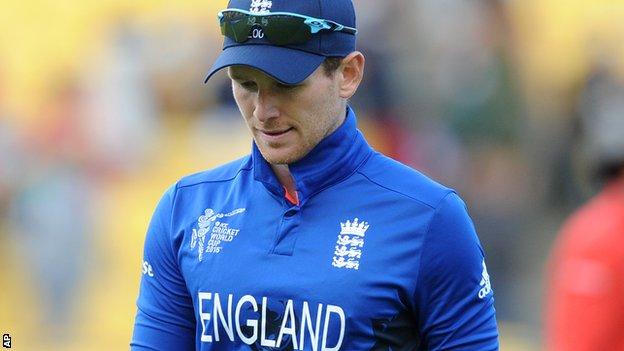
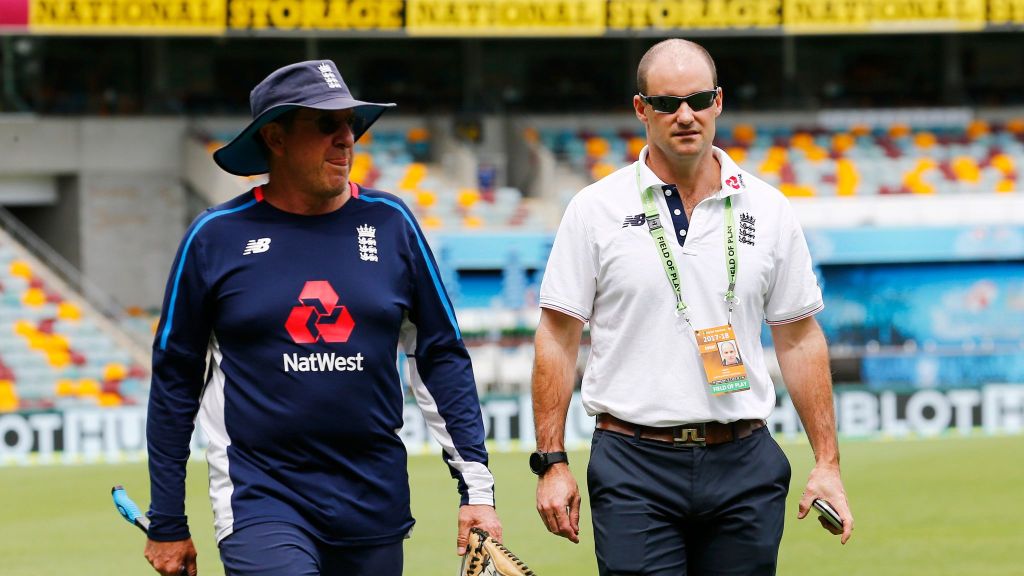
FROM the moment that Eoin Morgan retired, it was over. Morgan has led the transformation of the England One Day Teams and achieved what some of England’s greatest Captains failed to do in winning the World Cup. If the creation of the new team in 2015 was a joint venture with Trevor Bayliss and Sir Andrew Strauss, it was Morgan who set the example on the field.

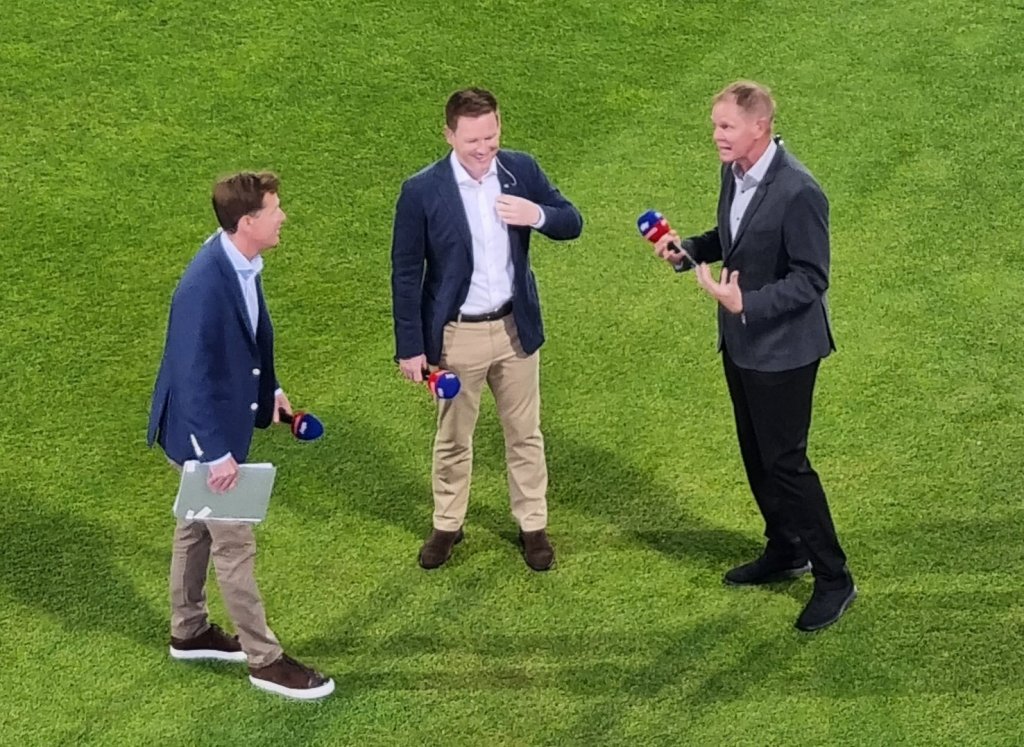
Not the best quality but its my own! Morgan now is a media man – here at the Old Trafford ODI against South Africa

Perhaps it was over from the moment that Jos Buttler broke the stumps at the end of the World Cup Final. Let’s face it – that team has never played together again. That was also when Bayliss stepped away. Since then England’s results have not been quite as good but they needed Morgan to get the team through Covid. By the time of the T20 World Cup last year, he was blocking a slot in the team and not giving the performance required. As his batting fell away, he was not able to set the same leadership example with that bat, and it became about words and culture. Indeed, Morgan’s values became a bit too dominant at times with the strange treatment of Dawid Malan and the refusal to move on with Alex Hales. In my opinion, Morgan should have retired sooner, but it is easy to say – you are a long-time retired. He is gone now. Buttler and Moeen Ali need to make decisions and not just ‘do what Eoin would do‘. Of course, they would all be aligned in many ways, but Buttler has to show his own true colours.

England has not done transitions well. Duncan Fletcher tried to replicate the 2005 team in 2006/07 and it led to a predictable 5-0 Ashes thrashing. The 2013 England Test Match Team imploded in a spectacular way. Even those few teams that manage success over many years change. The West Indies bowling attack had to accommodate the retirement of the fearsome foursome (Holding, Garner, Croft Roberts became Ambrose, Walsh, Marshall and Patterson). Australia went from Taylor, Slater, Boon, Jones, S Waugh, Border to Haydon, Langer, Ponting, Martyn, Clarke, Symonds).

What unites those two great sides of the past is that they ruthlessly picked the best players. Australia had to drop Michael Slater to create the Matthew Hayden / Justin Langer partnership and had to drop Ian Healy to allow Adam Gilchrist into the team.

England will need to do the same thing, and cannot ignore all the talent that was evident in the T20 Blast and The Hundred (Salt, Smeed and Jacks come to mind). Jason Roy has to get back into the runs, Liam Livingstone has to make meaningful scores and the bowlers have to tighten up or be changed. Even Adil Rashid is not quite the bowler he was.

In some ways, Ben Stokes has got the easier gig. It is perhaps easier to take over a failing team. However, I am not convinced by Buttler the Captain, and wonder if Moeen would be a better option. With Buttler I am reminded of Marcus Trescothick, who was passed over in 2003 when the England Captaincy went from Nasser Hussain to Michael Vaughan. Looking back now, it is clear that Vaughan was a good Captain, but he would not have coped well as a Deputy. Trescothick was the ideal deputy, but not the leader.

Buttler might yet prove me wrong, but he needs to step out of Morgan’s shadow. Moeen has a chance to turn things around, and if he was to do so it would be an interesting dilema. But difficult decisions might be needed to avoid another transitional failure by England.

Eoin Morgan

Eoin Morgan has retired from International Cricket, stepping down from Captaincy. Some would say that it is a case of leaving before being pushed – he could not have continued much longer without scoring some runs. Despite this, Morgan will go down as one of the best England One Day Captains. Equally important as his success as a leader is that he was given the chance to succeed in the first place, and a lot of that credit must go to Sir Andrew Strauss.

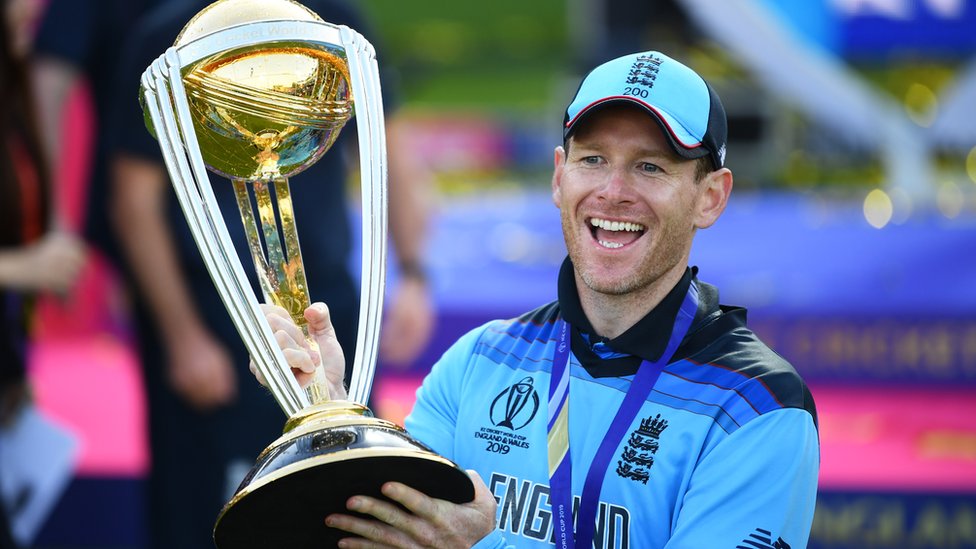
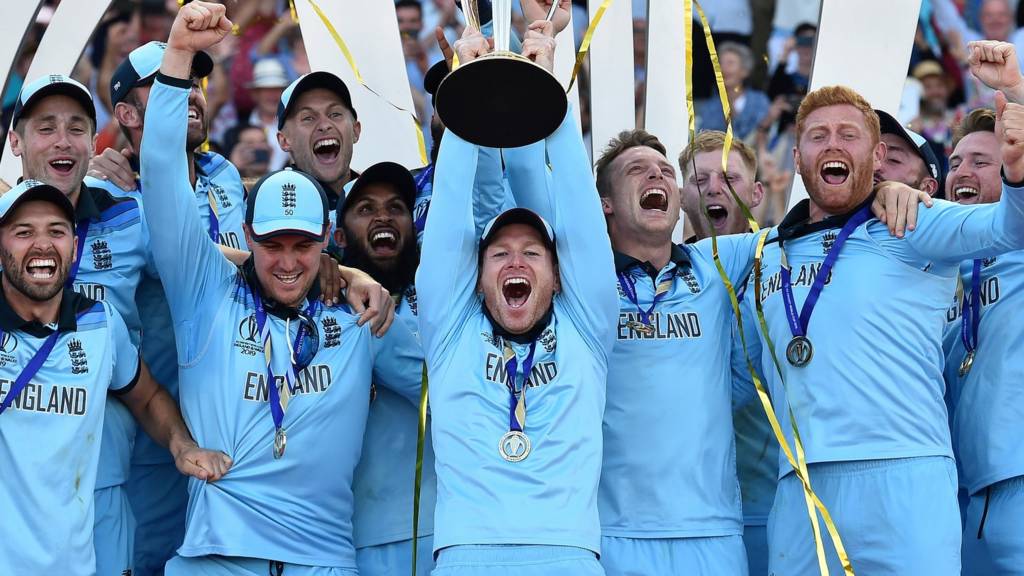
Finally England held the World Cup in 2019 – Picture from the BBC

World Cup 2015

One way or another, it all starts with the 2015 World Cup. Morgan had been around for a while and was probably England’s best One Day batter in the first half of the 2010s, along with Kevin Pietersen. He had failed to crack Test Match Cricket – the hope had been that Morgan would fill the Number 6 spot vacated by Paul Collingwood. Morgan had made a couple of hundreds, but it always felt like he would struggle technically – though he probably would have gone ok under the Ben Stokes / Brendan McCullum regime! In 2012, England had nearly managed to win a Champions Trophy somehow, but that flattered an England Team that, by 2015, was playing an outdated form of One Day Cricket under Sir Alistair Cook. Cook was a hero in the longer form of the game but was failing in the One Day arena both as batter and leader. England was terrible at One Day Cricket.

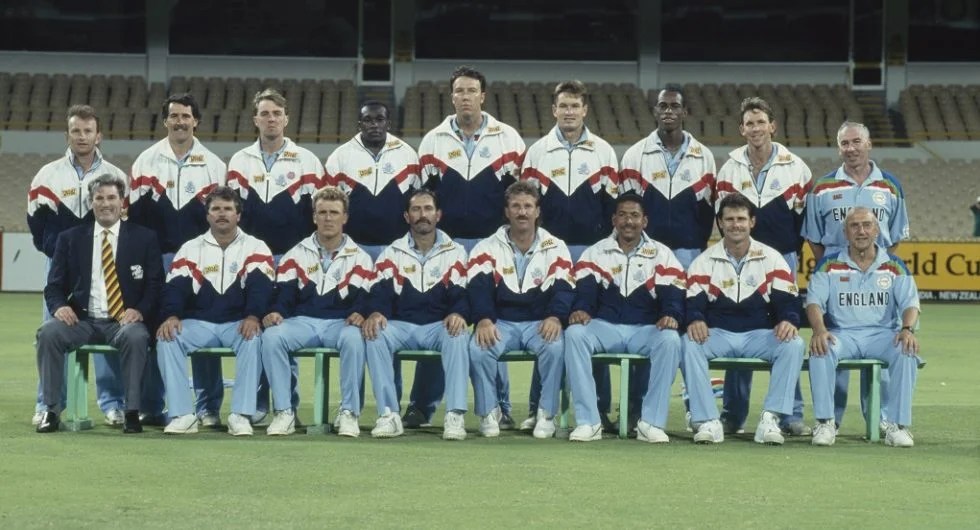
It was clear England needed to make a change before the World Cup, but every opportunity to do this was missed. The result was that Morgan was made England One Day Captain also immediately before the start of the World Cup. Morgan had no chance. He was given a squad that would have struggled in the 1996 World Cup, never mind 2015. For instance, Ben Stokes was not selected. The whole campaign was a disaster.

Morgan joined an ever-growing list of England Cricket World Cup Captaincy failures. It is a high-profile list, including Michael Atherton (1996), Alec Stewart (1999), Nasser Hussain (2003), Michael Vaughan (2007) and Strauss (2011) – all of whom only got 1 go at a World Cup.

Morgan went away to the IPL and waited for the phone call telling him he had been sacked as Captain. It felt like Morgan was going to be remembered as a decent One Day batter who was not quite able to make the most of his undoubted ability. However, when that phone call came, it would be Morgan’s big chance. From what I have read, Strauss was clear – Morgan was to be the One Day Captain, but only if he was certain he wanted the job. Unlike the others, Morgan would get a second go at the World Cup, and England meant business.

In 2015 Morgan thought it was all over – Picture from the BBC

2016: It all went mad

I remember the 2016 English Cricket season reasonably well. It was a summer when I spent a lot of time in the car, and it so happened that I must have been in the car on 30th August when England smashed past the 400 barrier, because I remember the incredulity of the Test Match Special Team when Alex Hales was battering the ball to all parts. By the end of the season, England was regularly getting well past 300 in 50 overs. Something had started.

It took the combination of Morgan, Strauss and Bayliss to set England on a new path. Picture from Sky Sports.

The obvious thing that happened was that England started to pick the right team, but it is a bit more subtle than that. It actually came down to deciding on an approach and assigning clear roles. The approach would be the very aggressive approach taken by New Zealand – but dialled up still further. So England finally started to pick Alex Hales and Jason Roy. England had the talent – people had been screaming for these two to be picked for a while – and it was time for that talent to be given a go.

Finally, England picked Hales and Roy. Picture from Express.

But while we all remember the 444/3, batting is only ever half of the equation. After the 2019 World Cup, we would hear about those early conversations between Morgan and new coach Trevor Bayliss. They quickly agreed on the need for a World-Class, wicket-taking spinner and Adil Rashid was to be that bowler, joining Moeen Ali.

As important as the approach was the assignment of responsibilities. This most obviously applied to bowlers. Liam Plunkett was recalled and given that clearly defined role in the middle overs – yes the objective was to slow the scoring rate but the way to do this was to take wickets, alongside Rashid who would also be encouraged to attack, but with well-set fields offering protection. On the other hand, Moeen would often bowl in the Power Play, and batters would perish as they took liberties against Moeen, knowing Rashid was coming at them later on. It is worth noting that England only won the 2019 World Cup games in which Plunkett played, and it is something of a mystery that he was cast aside after 2019.

Plunkett had a clear role from 2015 to 2019 – Picture from Sky Sports

Batters too were given clear roles. Jos Buttler would be the finisher, Root would accumulate while Roy and Hales would try and hit the ball out of the ground. You might think this was all put together by a committee in the dressing room, but it still takes a leader to ensure the individuals in the team were playing in the way they were being asked to. With the batting, this meant he took the super aggressive option, showing the batters that it would be ok to get out caught at deep midwicket on the slog-sweep. Funnily enough, it freed him up and made him better as a batter. With the bowlers, it was about communication – be clear in terms of expectations but also be supportive.

It set England on a path to winning the World Cup in 2019. Remarkably, some would say England underachieved, failing to win the T20 World Cup and the Champions Trophy. That to me was churlish – England had been rubbish at One Dayers for so long that to win a World Cup was the stuff of dreams, dreams that I had not dared to dream since 1992.

2019

By 2019, it was clear England had a serious chance to win that elusive World Cup. I remember a conversation on Test Match Special when they tried to pick England’s All-Time best One-Day Team, and it was basically the entire 2019 team. Legends such as Graham Gooch, Allan Lamb, Robin Smith, Marcus Trescothick, Paul Collingwood and Darren Gough were not getting near that All-Time team.

However, Mike Brearley, Mike Gatting and Gooch had already found out the hard way that getting through an entire World Cup campaign was not so easy. England powered through the early stages of the World Cup but then got in a mess and had to win against India and New Zealand to make the semi-finals. Those early days in 2016 were important, but it was those last couple of weeks in the 2019 World Cup where Morgan would really earn his money. In those last couple of weeks, he had to get the best out of a team that was under incredible pressure, and yet even in the super over, he was calmness personified. No loss of temper, no public panic, no tantrums, no lectures. He just got on with it.

Gooches 1992 heroes were not getting near England’s All-Time One Day team.

Batting

A word about Morgan’s batting. We knew back in 2007 that Morgan was different. He had all those sweeps and reverse sweeps, and his wrists seemed to be made of rubber. In 1988 we could tell that Gatting was going for the reverse sweep practically before Allan Border started to walk in. With Morgan, he could leave it incredibly late before swishing the bat round in a reverse sweep. They all do it now, but then it was unusual. Then he became a six-hitter.

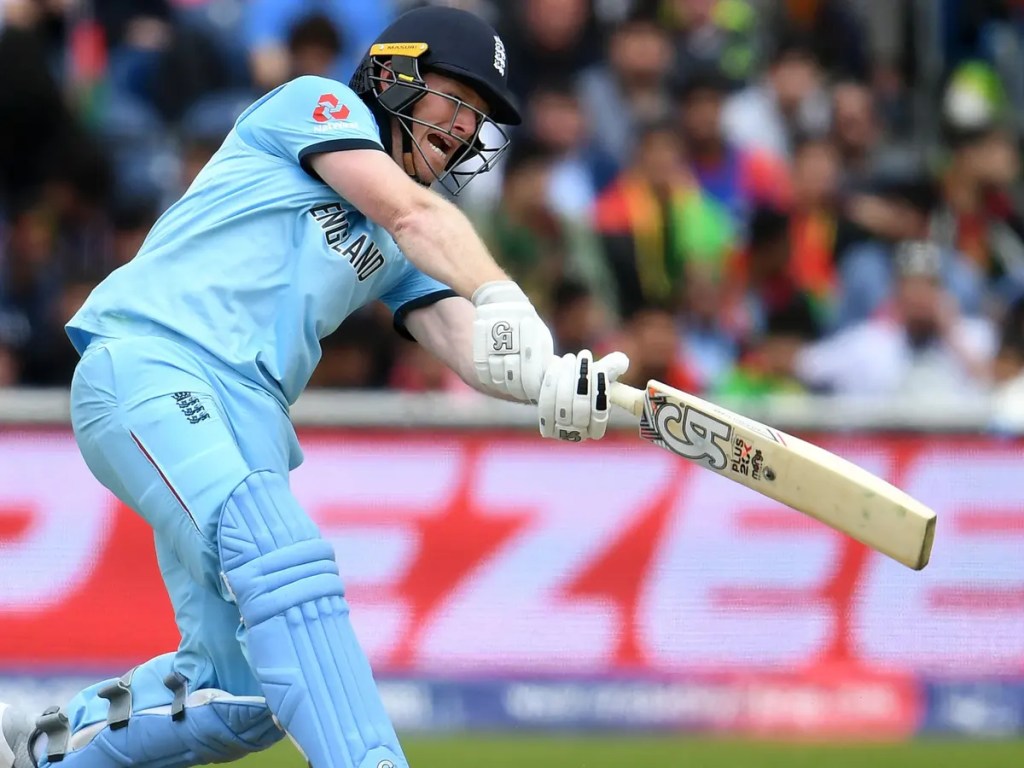
I was at the Old Trafford game against Afghanistan in 2019. It was only after he had hit about 5 sixes that we started to realise something mad was going on. That day he was outrageous – Old Trafford is not small and the sixes were way back, particularly the ones over long-on. Not only was it amazing batting, but it also showed the team how he wanted them to play. He was prepared to perish in the quest for quick scoring – and so the rest played the same way.

Morgan at Old Trafford – Picture from The Guardian where Ali Martin made the point on 18th June 2019 that ‘Eoin Morgan’s brutal 148 shows he practises what he preaches’. That was vital for the rest of the team.

In 2022 his batting seems relatively normal – alongside Liam Livingstone and Jos Buttler. But in 2010 alongside Collingwood, Strauss and Jonathan Trott it was remarkable.

Legacy

Whatever Rob Key says, Morgan’s legacy is the 2019 World Cup. It was so important that England used that home advantage. But to achieve that, he had to redefine the way England played the game. He had some proper players to work with, but he freed them up to succeed. The England One Day team had been a laughing stock from 1992 to 2015. Now they are feared. It is quite the transformation.

CWC19 will always be Eoin Morgan’s legacy – Picture from the BBC

Jimmy and Rooty: Man or Machine

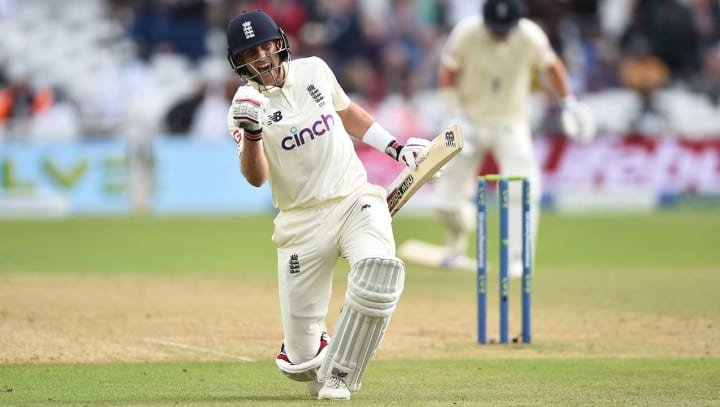
Joe Root’s performance is clear for all to see (outside of Australia). Since the start of 2021 he has scored 10 centuries – some of them were massive hundreds, and mostly he was on his own for England. Everyone has gone mad over his recent hundred at Trent Bridge. It was a marvellous effort but for me, his hundred against India at Trent Bridge last year will live long in the memory. That was a solo effort when he single-handedly dragged England into a game they deserved to lose.

Despite how rubbish England were in 2021, Root’s innings at Trent Bridge against India was a great innings. Picture from Trent Bridge
Anderson had a great year too, here in Sri Lanka where, when England picked him, he took wickets. Picture from Inews

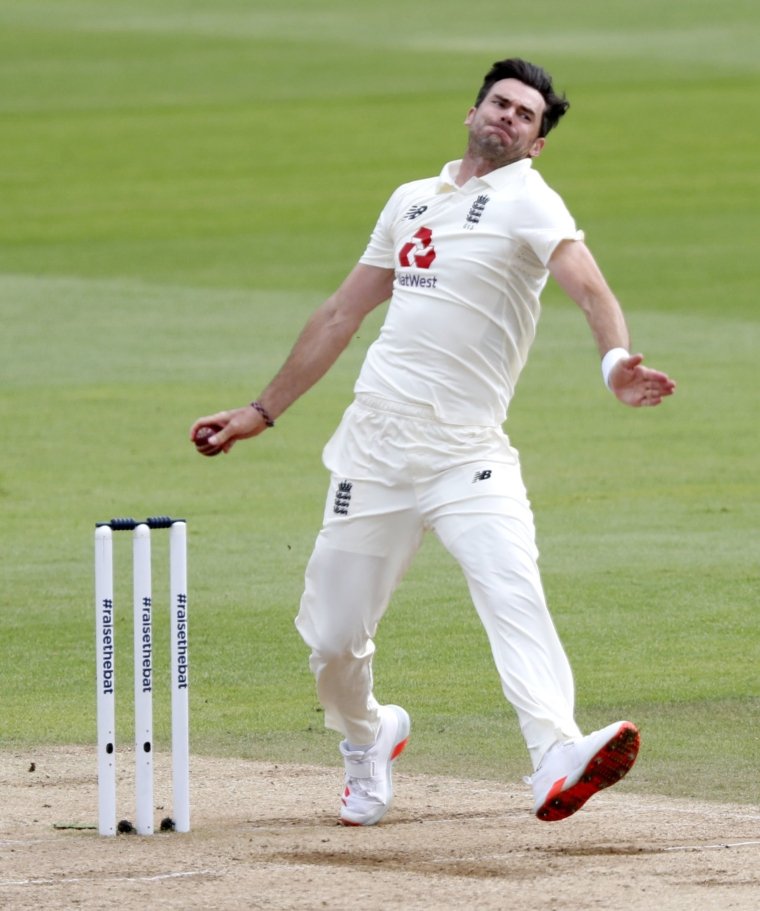
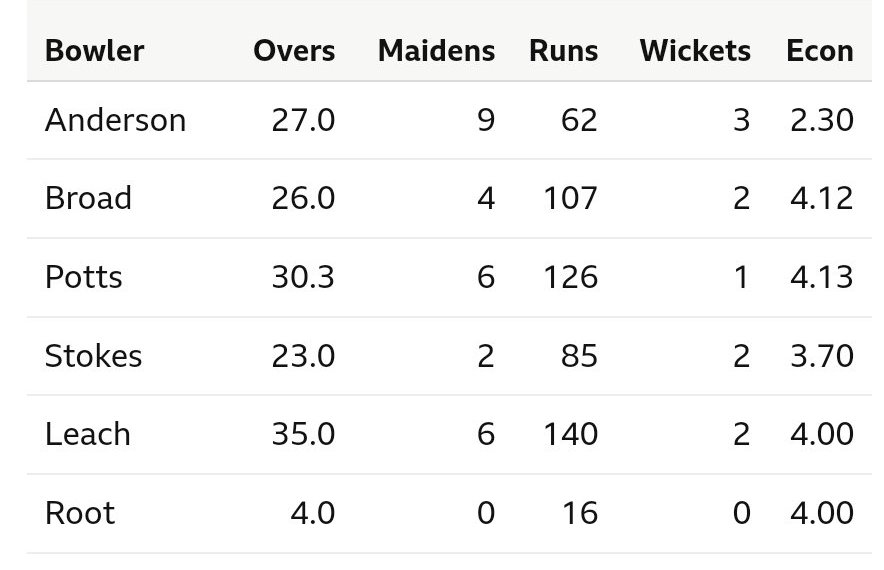
As for James Anderson, he has taken 50 wickets in the same time period. It does not sound special, except that England regularly did not pick Jimmy in that period. The more you think about that, the crazier it seems. Looking at 2021, Anderson took 39 wickets at an average of 21.74. If you are still unconvinced, look at his bowling figures at Trent Bridge in the first innings – 3 wickets at 2.3 per over. All the other bowlers went at over 3.5 and nobody took as many wickets.

While Root’s impact is obvious, for Jimmy sometimes you need context. For example, look at the England Bowling figures from the first innings at Trent Bridge in 2022.

These guys are not machines. They are just very good cricket players. We need to savour every stroke Root plays and every ball Jimmy sends down.

New Captain 2: Stokes common sense?

In all honesty, I do not think I would have chosen Ben Stokes as England Captain. But the more I think about this, the more I think it is the right call.

In recent years has been that it has all got so complicated. Yes, Covid made things complicated, but England managed to make it even more complicated than it needed to be. Strip away the complexity, and the choice of Stokes becomes a matter of common sense. He is the only person who is guaranteed to be selected (other than Joe Root). He had to be picked as Captain, and Rob Key was strong enough to ignore the noise.

Yes, The first thing that Stokes can bring is some common sense. In the first test match of a series, you pick the best players available. Sure, some may not be available due to workload, but of the best available, you take the best. In the first game of the recent Ashes series, the best available team included ‘Broaderson’ (Jimmy Anderson and Stuart Broad).

That also involves using your best players correctly. England’s best batters are Root, Stokes and Jonny Bairstow (plus Nat Sciver, Heather Knight and Tammy Beaumont). Stokes has already made 2 key decisions about himself and Root, and they both warrant exploration. Let us start with Stokes himself. He is the Captain, he gets to bat where he wants to, and he wants to bat at 6. Perhaps Root was too willing to ‘fit in with the team’ so hence moved himself between 3 and 4 in the order. Stokes has made a choice and he believes he can make the most impact at Number 6. The decision about Root is also very important. Root is one of the best we have ever had, so actually that should be enough – he bats where he wants to. But Stokes also pointed to Root’s record at 4. But the most important thing is that a clear decision has been made. Whether we think this is a good decision or not, the decision has been made and the debate is closed. Which brings me onto Jonny Bairstow.

Recent years have been blighted by a repeat of the The Stewart Saga, but this time the protagonists being Bairstow, Jos Buttler and Ben Foakes. When it comes to Bairstow, England have to make a decision and stick with it. I wanted Foakes to ‘keep, but he did not grab his chance. I would go with Bairstow at 7, keeping wicket. And I would give it a solid year. But if they go for Foakes they need to go for it consistently. And it is time for Buttler to move on, which I think will be easier. Rounding off the batting, perhaps Stokes’ common sense can also ensure that Rory Burns, Dom Sibley and Ollie Pope stop doing crazy things technically, and just go back to watching the ball.

As for the bowlers, picking the best ones is less clear cut, but choices have to be made and committed to. But Stokes must be the 5th bowler. That means going with a spinner and sticking with him – for me it would be Matt Parkinson, with second spinners picked when it is sensible. Normally it will mean 3 other seamers. If rotation is required, then make it consistent rotation (e.g. one of Anderson or Broad plays every game). And pick the best bowlers. The best bowlers, not the bowlers who can bat best. That has to involve Saqib Mahmood.

The other thing Stokes must bring is honesty. The appointment of Brendon McCullum as Test Match Coach will surely only boost this. In recent years, it has really annoyed England fans when England have blamed everything on Covid or rotation (which both did have a big impact). Some things were just poor decisions. For example, the fans supported the decision to rest Jos Buttler in India. But they did not support the decision to take him just for the First Test Match, then rest him. That was nuts.

It is back to basics. Pick the players who are the best, and do the right things with them. Own up when you get it wrong and learn from it. OK, sometimes it is debatable who is best, but as long as you have clear reasoning it is fine. Sometimes you will loose games. But do the best you can to win. Otherwise, England fans will stop going, which will be the end of the Test Matches.

New Test Captain 1: What were we to make of Joe Root

Before we try and consider how Ben Stokes will get on as England Captain, let’s consider how Joe Root got on in the job. It is not that easy to give a definitive answer – eventually, it comes down to a matter of opinion. Mine is that, irrespective of many challenges, and some were self-inflicated, Root always promised, but did not deliver enough as Captain. It goes without saying that Root the batter is a different story.

The ambassador

Firstly, one overwhelming positive. It sounds a bit ‘corny’ perhaps, but Root has been an amazing role model. When my son asks who he should watch, I say Joe Root. I cannot remember such a positve example being set by an English cricketer. In my lifetime, perhaps Moeen Ali or a young David Gower (pre Tiger-moth) could stake a claim – Ali for the way he has shared his faith, Gower for the way he played the game. But Root has done it consistently, while his team has been battered despite his endless runs. It would have been easy to get a bit cross in those difficult interviews with Gower in Australia, but he never did. He backed his players, he backed the various initiatives of the ECB relating to racisim and inclusivity. He handled the Ollie Robinson fiasco so well – even having fronted up to that campaign he also treated Robinson fiarly and did not unduly criticise him.

His rebuke to Shannon Gabriel in 2019 will live long in the memory for many of us. Root consistently plays the game the right way. Whilst nobody is in doubt about any of this, I have often wondered with Root if he was just a bit too nice for Captaincy. I think this was the issue for Gower at times. Being a ‘good bloke’ is not enough.

The good news is that he can continue to do all this despite no longer being in charge. He can lead by example, and people will follow. Again he can take the lead from Michael Atherton, Alec Stewart, Nasser Hussain and Sir Alastair Cook, who all provided vital support for Stewart, Hussain Michael Vaughan and Root repectively when playing on after being the Captain.

The statistics are not helpful.

We can dismiss the number of wins and losses as a pointless statistic. Let’s face it, Root won more games than most because he Captained more games than most. We could consider win percentage, where Steve Waugh is the winner – but whatever the merits of Waugh as a Captain, it was pretty hard to lose too many games with that Australian Team.

My next tack was to consider Draws. I do think a major weakness of modern International Cricket is the absence of Draws – it shows a lack of determination, and some of this comes from the Captaincy. When it comes to determination, Atherton managed to come out of 37% of his games with a draw compared to Roots 17%. But any attempt to utilise that Statistic fails too – Waugh only achieved 12% –  and that is not for a lack of grit, more because he won so many games.

What we can do is try and compare Root’s record with some of those England Captains who were not blessed with the resources that were available to Vaughan and Sir Andrew Strauss, or Mike Brearley for that matter. Root did have some world class players available, but rather like the 1990s, he had to carry too many passengers. Atherton and Hussain tried to make England ‘hard to beat’, and a justifiable criticism of England in 2021 was that they were easy to beat, so here we will focus on loss ratio. Atherton lost almost 39% of his games, Hussain 33% and Graham Gooch, another England Captain lacking resources, 35%. Root lost 40% of his games – not much different to Atherton who many considered to be an good Captain.

I remember hearing David ‘Bumble’ Lloyd talking about Atherton the Captain  – he described him as a great Captain, if only he had had the players. And of course, that has also been an issue for poor old Joe – a Captain can only be as good as his players.

Whilst a Captain needs to win some games, we do have to look at Root’s batting, which, outside of Australia at least, has been out of this world. As Captain Rooot scored over 5,000 runs at an average of over 45. For England in modern times, only Gooch came close to that record as a Captain – his batting got better when leading. I think Root’s batting also got better as Captain – or certainly he became more determined to get the really big scores, after his relatively lean patch around 2019 (relative being the key word here). In 2022 it felt as if the more the Captaincy dragged him down, the better he batted.

Picutre from Sky Sports – Root the batter was incredible in 2021 and his innings at Trent Bridge was something else.

Where both Gooch and Root both failed was Australia, where they both have moderate records. The Aussies know how to sort a Captain out – just ask Atherton. One thing that sets Strauss and Mike Gatting appart is that they won that Ashes away as Captain (and they only got one chance). It is no coincidence that both Strauss and Gatting scored important centuries in the series they won down under. Let’s hope Root gets one more chance to conquer Australia.

Tactically?

And I am sorry to say that this is where things go downhill. I know that David Lloyd said that a Captain is only as good as his players, and he is right. But my word, some poor decisions have been made on Root’s watch.

Root rarely had his best players over recent years, and even when he did have England’s best ever bowlers available he did not manage them well, or even select them at times. Jimmy Anderson and Stuart Broad have clearly been a challenge for Root. Add in the white ball focus and Covid and it cannot be doubted that Root was unfortunate in his timing. Cook was not a great Captain either, so Root lacked a strong leadership role model in the team. If all this was not enough, the hapless ECB have really offered little support.

Yes, we must accept these mitigating factors, but we must also accept that basic errors have been made. You only need to look at recent Ashes series and the West Indies tour for those decisions to jump out. Selection has consistently been awful, and if you want to put some of that blame for that down to Chris Silverwood, Root is entirely responsible for some poor decisions the toss.

Worse, Root also lacked presence on the field. Often, it was not clear who was in charge. The game was allowed to drift too often, when a quick bowling change was needed or a field change. Hussain was full of emotion on the field, and took it too far at times, but I would rather Captains err that way than become too passive. At times, Root needed to ‘bang heads together’. Equally, Root often lacked patience – none more so than when England worked so hard to successfully snatch defeat from the jaws of victory against India at Lords. That hour at Lords in 2021 was one of the worst passages of Test Match Cricket I have ever seen, and Root did nothing to change it. When a good team wins it is one thing, but on that occasion India were gifted a win. What was needed on that dreadful day of cricket was dicipline, not bouncers.

A further observation is that England have been obsessed with this concept of a ‘brand’ of cricket in the last few years. In Root’s early years the ‘brand’ was aggression. It resulted in that game against West Indies at Headlingly in 2017 being thrown away, but, retrospectively, perhaps he should have stuck with this method, as the best players available were aggressive ones. Later, the plan was to be attritional – something that worked for Strauss, but he regularly had 500 on the board combined with a world class spinner.

The problem with having a pre-determined approach is a loss of flexability. At times, it has felt like Root has been playing yesterdays’s game with tomorrow’s plan. For example, at Brisbane last year England were so fixated with a plan for the second game at Adelaide, they picked the wrong bowling attack. Then at Adelaide they picked the bowlers they should have picked at Brisbane. Constantly, England were focussed on ‘what was next’, forgetting about what was right in front of them.

Summary?

For me, things just did not work for Root as Captain. He failed to manage his key assets (Anderson, Broad, Jofra Archer and Stokes). His longevity is impressive, but in other eras Root would have been gone in 2018 or 2019, and certainly he should have been encouraged to resign after the 2021/2 Ashes. One could aos argue that longevity has contributed to the lack of replacement candidates for the Captaincy. In 2019, Broad would have been a good choice, but by 2022 it felt too late.

On the good days Root had a gameplan, and on the occasions he could stick to the plan he was successful. For example, he was successful in Sri Lanka and South Africa when big scores were made. In the home summer of 2020 it also felt like Root made lots of good decisions, particularly at Old Trafford against Pakistan.

But when things when wrong for Root, they went massively wrong. It is easy to look at the batting collapses, but also one cannot ignore the awful sessions with the ball when games of cricket were handed to the oppoition. Some might wish to point out that it was good teams that beat England in 2021, but I do not think they were as good as England made them look. And Root also lost two series away to the West Indies.

His professionalism, courtesy and dignity are greatly to be admired. His class as a person and a batter is obvious for all to see, but I never felt Captaincy sat comfortably on Joe Root’s shoulders. Without doubt, it was time for a change.

Design a site like this with WordPress.com
Get started