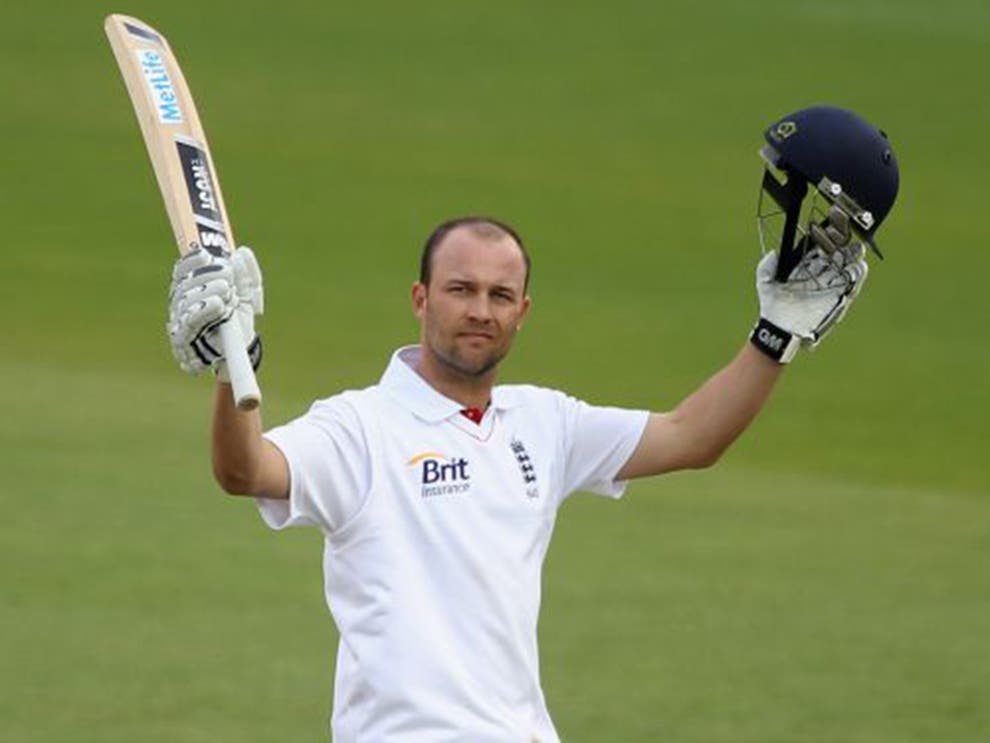
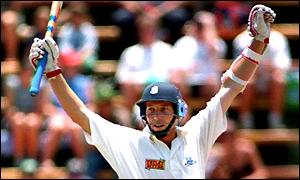
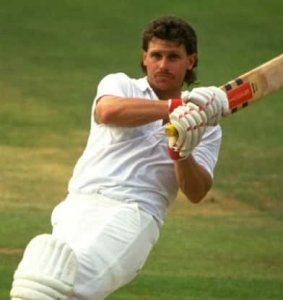
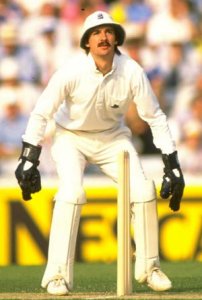
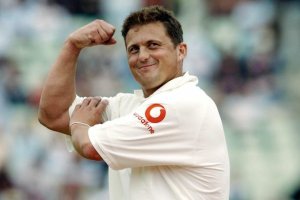
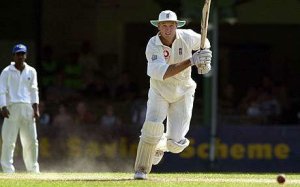
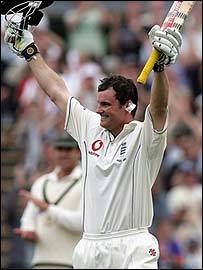
A marvelous, marvelous innings by Graham Thorpe. A masterful innings.

When Bob Willis uses words like marvelous (twice) and masterful, you take note. I was watching – though on Sky Television, on 2nd April 2004 when Graham Thorpe played his best innings.

I know Willis was more positive than his TV persona but he did not he throw praise around unless it was deserved. For Willis to react in such a way shows the brilliance of Thorpe’s 119 not out.

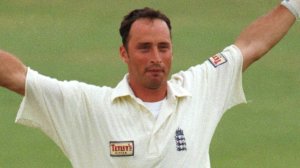
That tour of the West Indies in 2004 was a vital stepping stone for this England side. It was the highlight of Steve Harmison’s England career (see 7/12 at Sabina Park, Jamaica) and the emergence of England’s 4 prong pace attack for the 2005 Ashes. England made the decision to go with Geraint Jones instead of Chris Read following Alec Stewart’s retirement. Ashley Giles started to show how many runs he could grind out at number 8. Andrew Flintoff was established and growing in stature. We started to see what Michael Vaughan wanted his team to look like – except for the middle order. The likes of Andrew Strauss, Rob Key and Ian Bell would all emerge over the next year, but at that time England relied heavily on 3 ‘old pros’ – Mark Butcher, Nasser Hussain and Graham Thorpe.

It is worth noting that all 3 made vital contributions to that 2004 series win yet none would make it to the 2005 Ashes and they all must have known that they would be replaced before too long. Butcher was very unfortunate with injuries. Hussain ran out Andrew Strauss but still went out on a high. Thorpe got the closest to the Ashes and I would have played him that great 2005 series instead of Ian Bell. But Thorpe’s Barbados century was ‘classic Thorpe’.

For England fans, Graham Thorpe was a constant beacon of hope during the 1990s. His career seemed to have 3 phases – which spanned both of Brian Lara’s World records – Thorpe was on the field for both.

1993 to 1998

I know he was dropped in 1994 after the West Indies tour to make room for Graham Gooch and Mike Gatting but Phase 1 goes from 1993 to 1998. He made an impression early with a hundred on debut but early in his test match career he got criticised for scoring a lot of 80ish scores. I was always baffled because in those days an England 80 was pretty significant. In Australia in 1994/5 Thorpe was England’s best player. By 1997 he was a complete test match player and I always liked him at Number 5 behind Stewart and Hussain.

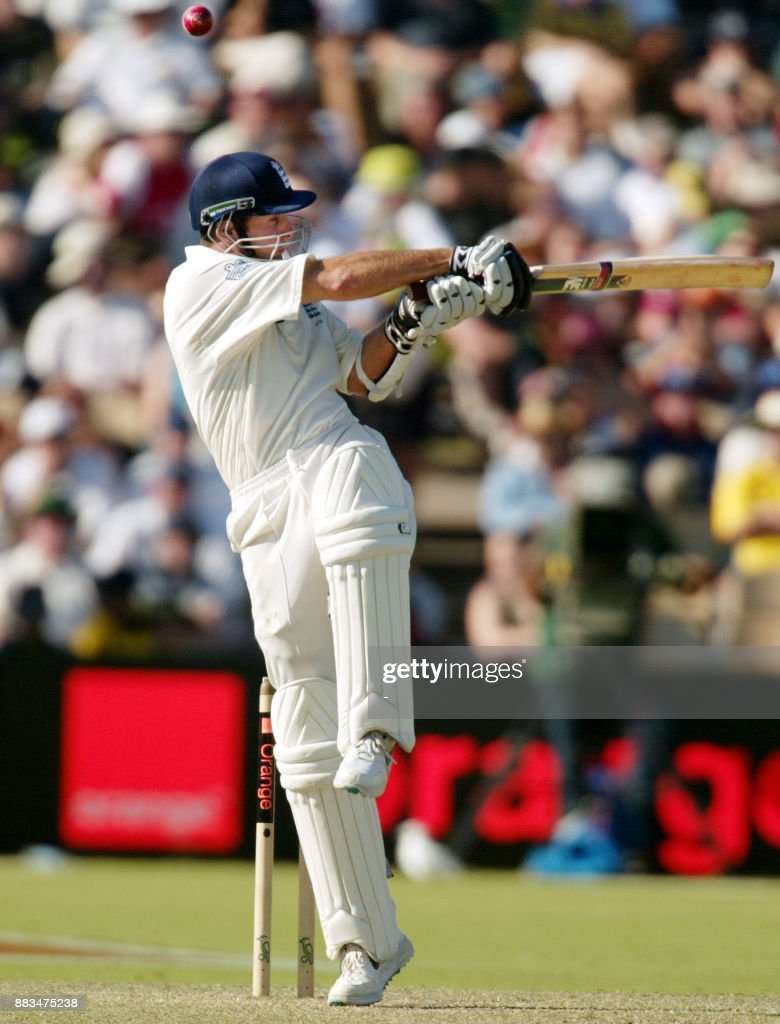
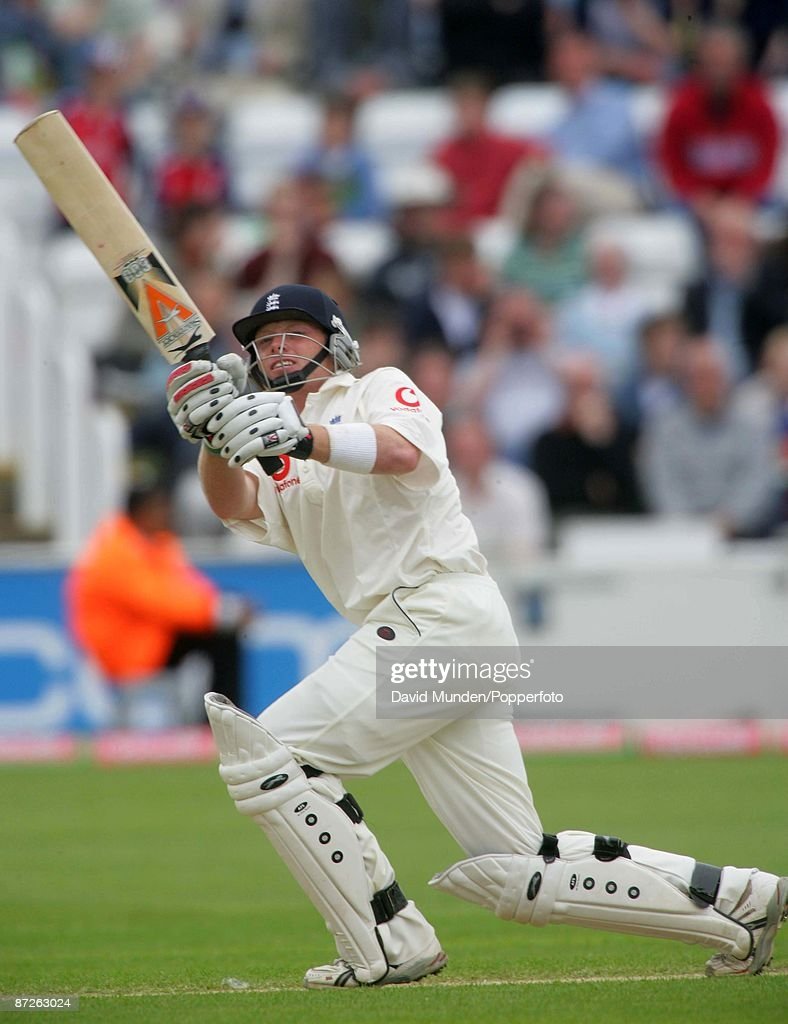
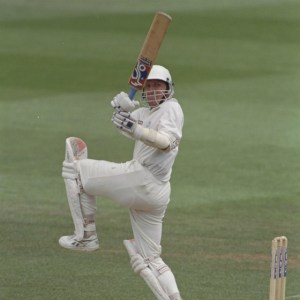
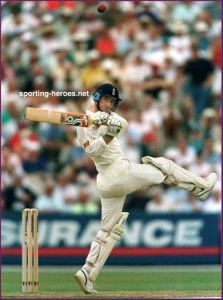
Emma John notes in her book ‘Following On’ that Thorpe reworked his technique after the 1994 West Indies tour to include that unique pull stroke which was so important to Thorpe over the years.

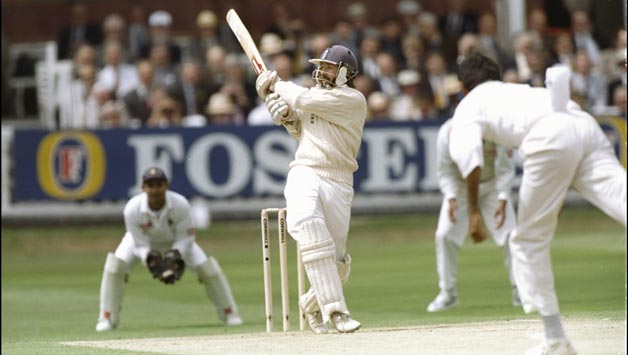
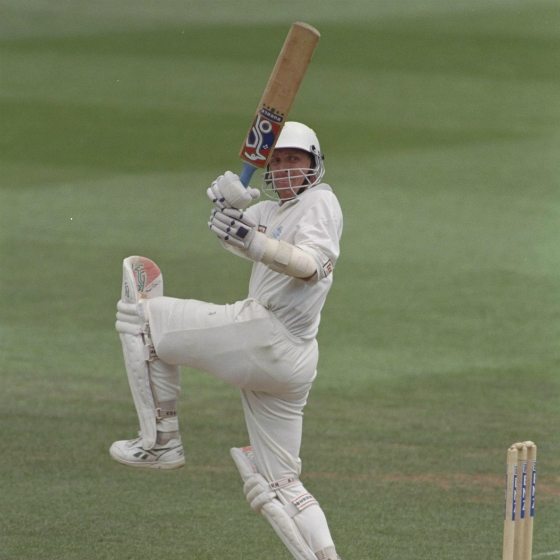
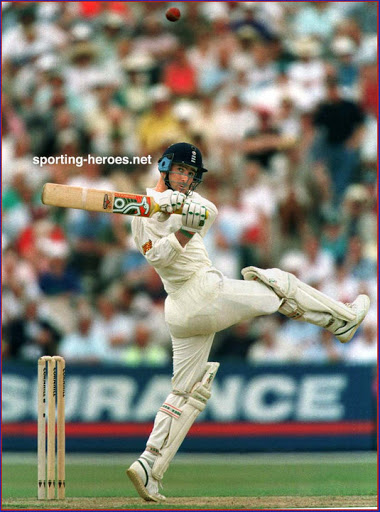
One leg in the air, the pull stroke. Thorpe felt the traditional England back foot push was not a good option and he needed a back foot game – it worked for him as he made a century at Perth. Picture from http://www.sporting-heroes.net/cricket/england/graham-thorpe-2047/test-record-v-west-indies_a02115/

1999 to 2002

During this period Thorpe missed a lot of games. His career would be restricted by a back injury and his well documented personal issues. I honestly believe Thorpe would have been better supported by the 2020 England management and would probably have played 15 more test matches.

The strange thing was that he still scored runs when he did play, and this period featured an amazing innings against Pakistan in Lahore featuring just a single 4. He also made his top score of 200 not out against New Zealand in March 2002 – that was a game where Nathan Astle would knock off another 200. One thing to note about Thorpe’s 200 was that Flintoff would make his first test match century in partnership with Thorpe. I am certain Thorpe would have been a real help to Flintoff.

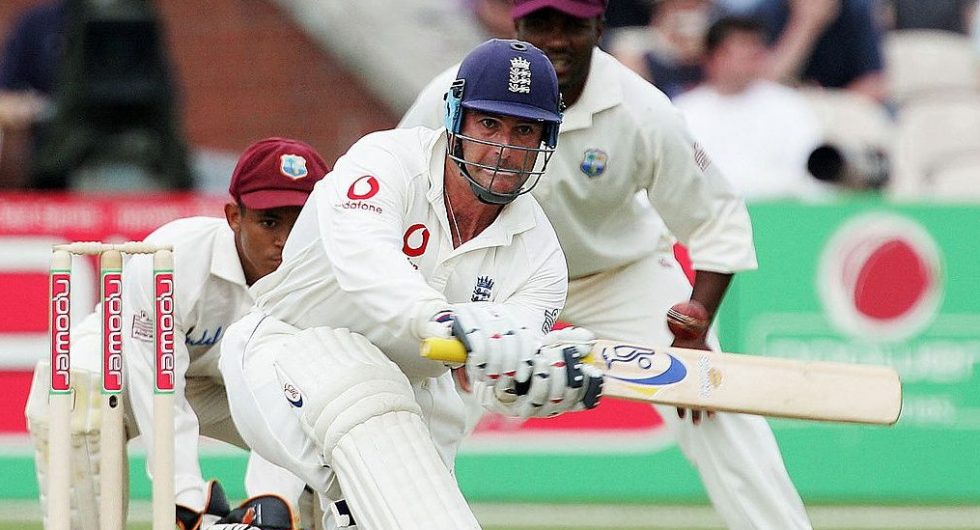
Thorpe was also a fine player of spin and had some success against Shane Warne as well as in Pakistan and Sri Lanka – Picture from Wisden.

2003 to 2005

Thorpe made the dream comeback at The Oval against South Africa with a fine century which some would say was a better knock than the Barbados one. He then had a brilliant run of scores, and Wikipedia notes that in the two years between his comeback and his retirement he scored 1635 Test runs at an average of 56.37.

In this period, Thorpe played a bit differently. In his early career he would counter attack, usually coming in at 50 for 3. That led to all those 80ish scores. By the end of his career, Thorpe knew that once he had dug himself in, he could stick around.

Barbados brilliance

Thorpe scored 119 not out out of 226. England were 119 for 6. Thorpe and Harmison shared a last wicket partnership of 39 but Harmison scored just 3. Butcher and Flintoff played loose shots. Hussain was bowled attempting an off drive. Nobody looked comfortable other than Thorpe – though he did have to dig his way in.

As England increasingly looked destined to fall short of the West Indies 224, Thorpe got more innovative. He walked down the crease to get his hundred. He unfurled a reverse sweep at one point. He got lucky with an early pull, but then played it to great effect. That little clip off his legs for 2 was a crucial shot.

As Emma John pointed out in her book, Thorpe was a really respected member of the England team. The reaction to Thorpe’s hundred here allowed an outpouring of that respect. Even the West Indians in the crowd were standing up when he walked into the dressing room.

In the last 20 years, England have had some fine middle order players. The likes of Bell and Joe Root come to mind. But Thorpe made runs against the best bowling attacks of the time. Amongst the players I have watched Thorpe would be one of England’s best left handed middle order players, second only to David Gower.

Blog Update

FOR some time now, I have been considering what to do about my blog sites. Below is a bit of a recap of the three blog sites I have created over the years, but firstly, a little bit of an announcement.

After a couple of years of relative inactivity on the blog sites, I am planning to wake things up a bit and will be making some new blog posts in the coming weeks. I will also be making a couple of little changes behind the scenes to allow me to update the look and feel of the sites and also to make it easier in the future to release new content.

Another important change is that I will be unlinking my blog sites from other other social media. What this means is that Facebook, LinkedIn and X will not automatically update when new content is released. The reason for this is that I have found that some blog posts are not suitable for all social media platforms. Therefore, I will manually post on relevant platforms based on the content being shared.

If you do want to follow my writings, the best thing to do is to Subscribe to the Website (it should be an option somewhere on the page) – stick in your email address and you will get an email each time I update something. If you are not into cricket – you do not need to Subscribe to that one, but you might want to subscribe to the more general content. You can also comment on the blogs on the site itself, as opposed to via other social media. However, I see all the comments – so whatever works for you.

Whether you subscribe or just look out for social media updates, I would love it if you would take a read.

Recap: What are my blog sites?

As a bit of a recap, I started writing in 2015 when I created http://charlottenotforgotten.wordpress.com/ after our daughter Charlotte was stillborn. I found it personally helpful to be able to share  something of my experience online. I hope it was useful to some readers as well – I believe that it was. However, I came to a point around 2017 where I felt I had shared everything I wanted to share about those events of 2015. Those events remain with me, but I felt I had nothing new to say. Since then, I have occasionally shared new posts, and I occasionally will continue to do so when it seems appropriate.

http://charlottenotforgotten.wordpress.com/

I also found that I wanted to write about a slightly broader range of subjects, and it seemed inappropriate to use charlottenotforgotten for this. Therefore, I decided to create http://edward.reecefamily.co.uk/. The intention was to write about a range of topics. Some articles were well received while others were perhaps not such a good idea. Mostly, the idea of a single site for lots of topics worked – but my cricket writing was a bit off putting for some!

http://edward.reecefamily.co.uk/

In 2020, during the first and most restrictive of the Covid lockdowns – with no live sport to watch – I created http://cricketed.reecefamily.co.uk. This was partly a bit of a lockdown project – we all had one – but it went quite well and I enjoyed it. I am planning to keep this up, but it does take time to create good quality content.

http://cricketed.reecefamily.co.uk

Please look out for updates!  Thanks.

Edward Reece – June 2024

England teams of the decades: 2010s

As we ticked around to the end of the disaster that was the year 2020, a lot of “Teams of the Decade” were shared. ESPN created a test match team of the decade. Whilst I keep up with most of the England Test Matches, I do not really keep up with all the other international fixtures. I am pretty familiar with England teams since 1990 so I have picked teams of the decade for the 1990s, 2000s and 2010s.

Recently I heard Michael Vaughan say that we are in a golden period of England Cricketers. When you consider the results of the last few years, it is hard to agree with him. However, when you look at the players it must be said that the 2010s featured some fine England Cricketers. Consistency has been a big problem since 2013, and perhaps the strength in depth has been lacking.

The Team

It was therefore not easy to pick a balanced team for the 2010s. Some surprising players had to be left out (it came down to Strauss or Trott – but Strauss had to be captain). Other spots were hard to fill – before Archer, who would be the 3rd fast bowler? 

AN Cook, AJ Strauss (c), JE Root, KP Pietersen, IR Bell, BA Stokes, MJ Prior (w/k), CR Woakes, GP Swann, SCJ Broad, JM Anderson. Reserves: IJL Trott, J Archer

The Batting

Alistair Cook: Of course, Cook became a legend in 2010/11 when he batted the Australians into submission. He had a very good record down under. But he also was brilliant in India, and broke all the England records for batting, even when he had to open so much in England. And for half his career, he batted whilst the revolving doors spun at the other end after Andrew Strauss retired.

I think the key was that when he got big, he went very big, with several scores over 200, and he narrowly missed out on the tripple. Having solid partnership at the top of the order is vital – and it is no surprise that England have struggled for consistency since the opening partnership of Cook and Strauss came to an end.

I am not sure that Cook could be described as a ‘tactically’ great captain. I personally still tend to be of the view that he should have stood down after the 2013/14 Ashes shambles. What he did have was determination and commitment. He was also undoubtedly a ‘team man’ and he took the Kevin Pietersen nonsense on the chin when he could have taken a different approach. He was backed into a corner, let down by England management until Strauss came back as a Manager and sorted things out regarding Pietersen. Yet Cook just got on with it.

Andrew Strauss (c): For his batting since 2010, Strauss would not get in this team. He enjoyed a stellar run from 2008 to 2010 which ended when he scored a vital century in Brisbane. Since then he did little else in the 2010s until just before he retired when he made centuries against the West Indies.

It meant that it became a shoot-out between Strauss and Trott, though picking Trott would mean him or Joe Root opening which is not ideal for either.

But of course, the 2010/11 Ashes were in the right decade – just about, and so it was obvious the captain of the victorious Ashes series would be captain of this decade, when England only had 3 full time test match captains.

The other measure of a player is ‘can they be replaced?’. Neither Strauss or Trott have been replaced – though Zak Crawley might be the man.

Joe Root: So now we have Root, Pietersen and Bell. None of them are suited to batting at 3 – either it was not a successful position (Bell) or not a preferred spot (Pietersen and Root). But all 3 had to be selected, and with Stokes too that leaves no room for Trott who was England’s best number 3 since David Gower.

So I have put Root in at 3. I never understood why it mattered so much to him, but now with Zak Crawley around England probably will keep Root at 4. But of the 3 players who could bat at 3, I consider Root to be most suited to it. And perhaps coming in behind Cook and Strauss, batting at 3 would be easier.

Saying that, Root, like Bell, had probably had more success at 5 than 3 or 4 in the decade, but in 2021 he has maybe started to change that. In any case, he is one of England’s best of all time, and I would be very surprised if he does not feature in the England Team of the 2020s (I plan to write that feature for the newspaper I will be writing for in 2030 as Chief Cricket Writer).

Kevin Pietersen: Pietersen was obviously going to bat at 4 in this team, and would get the choice before Root or Bell because of his ability to destroy. I remember Shane Warne talking about ‘KP’ during his 200 at Adelaide in 2010. To paraphrase, Warne said that you needed a lot more than ‘just talent’ to be succesful. But when it comes to talent, ‘KP’ was up with the best.

Sadly he became a rather unhappy member of the team and in the end was ‘sacked’. I personally would just have dropped in in 2014 and left him the option of banging the door down for selection, rather than making it permanent. By 2014 he actually did not deserve his place in the team.

Its such a shame, because he played some of England’s greatest ever innings at Leeds, Mumbai and Colombo. And he destroyed Australia in 2010 at Adelaide. I suspect that with Pietersen it was always going to ‘end in tears’ but it was fun while it lasted.

Ian Bell: Bell was unlucky to miss out on my 2000s team, and it is his longevity that sees him selected ahead of Trott.

Bell was of course perfect to watch when in full flow. His cover drive was beautiful to watch and technically perfect. I do not think this always helped him, and left him open to strange accusations of trying to be ‘too correct’. He also had a problem where he only scored centuries after someone else already had.

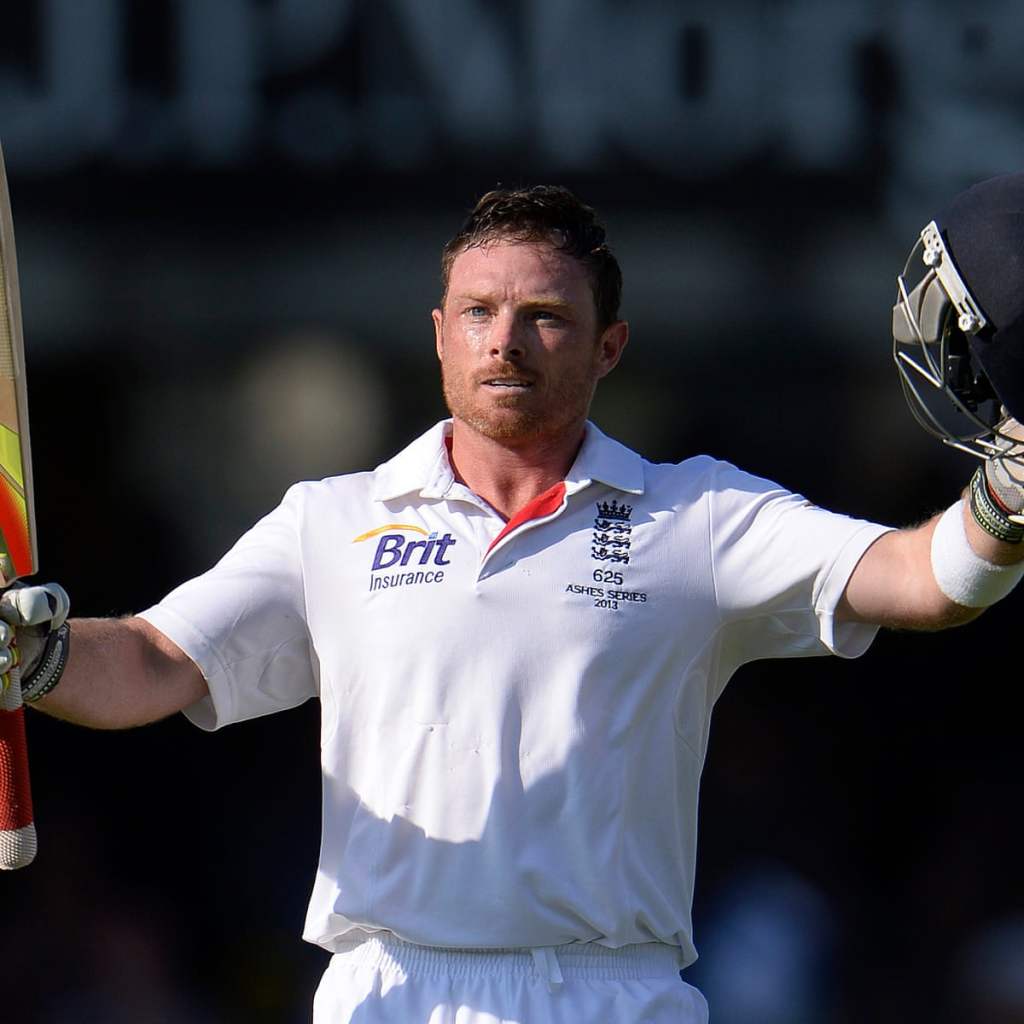
This latter point was also always a strange argument – and if he needed to address it he certainly did in 2013 when he scored 3 hundreds in the Ashes – all 3 of which were crucial. In all 3 games someone else got the credit of being ‘the match winner’ but in all 3 cases, they would not have had the opportunity without Bell. Sadly, he never again reached those heights and 2013 turned out to be ‘the beginning of the end’. He was the last of the 2005 Ashes heroes to retire.

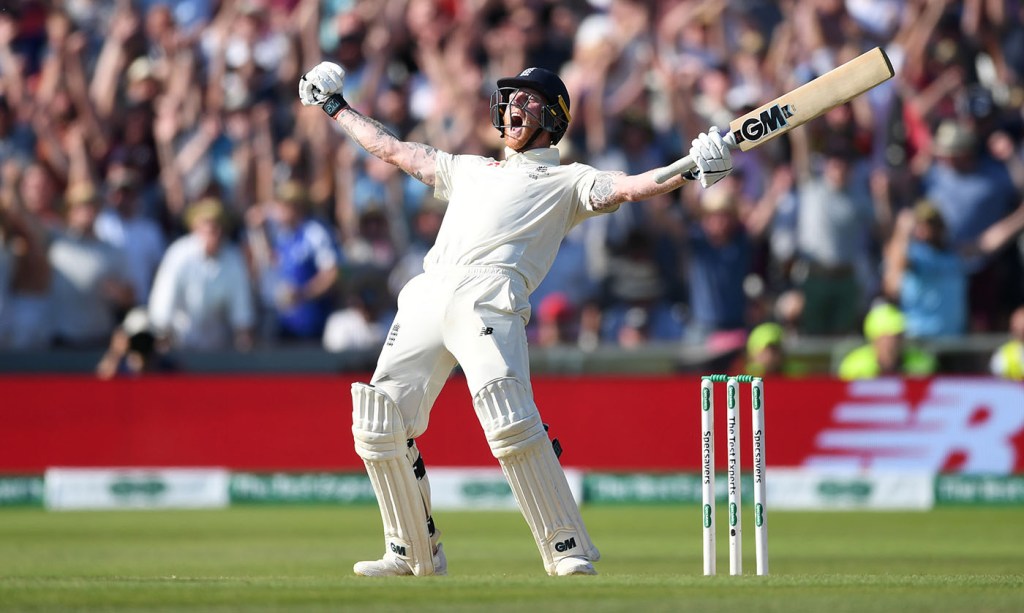
Ben Stokes:  Where do we start with Stokes? To be honest, I am not sure. I will start with those truly memorable performances – Perth on debut, Lords against New Zealand in 2015 and of course the miracle of Headingley in 2019. And I forgot the 250 against South Africa. Yes, we have many memorable moments to choose from – and not all of them positive.

Let’s be clear, Stokes still has work to do in order to get his stats where they could be. His batting average should be above 40 given he is increasingly a batting all rounder. But stats are not everything.

It is impossible not to start to compare Stokes with Sir Ian Botham or Andrew Flintoff. Clearly Stokes is a better batter. His bowling is not up with the other 2. All are super slip fielders, but Stokes is an all-round fielder (though perhaps Stokes has gone off the boil with catching since 2020). And none of them are or should ever have been England Captaincy material.

But all 3 have that impact, that ability to do what nobody else can do. When Stokes is invovled, the crowd wake up.

LEEDS, ENGLAND – AUGUST 25: Ben Stokes of England celebrates hitting the winning runs to win the 3rd Specsavers Ashes Test match between England and Australia at Headingley on August 25, 2019 in Leeds, England. (Photo by Gareth Copley/Getty Images)

The Wicket Keeper

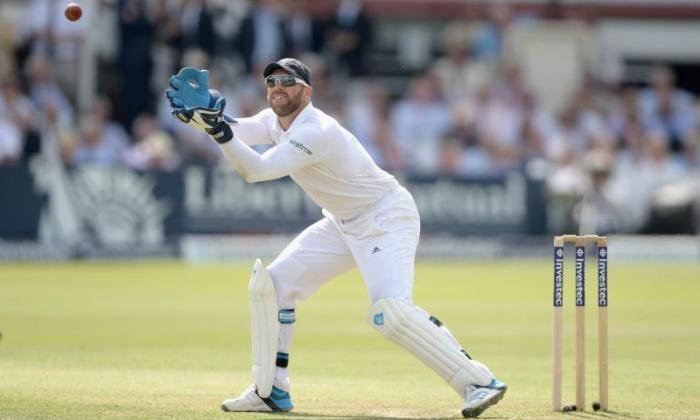
Matt Prior: If it was unclear who the keeper should be for the 2000s team, for the 2010s team Matt Prior is the only man. Prior transformed himself from ‘Dire Prior’ into England’s best. His best moments came in 2010/11, but more importantly he made himself into a real presence behind the stumps.

I must admit that I could not think of loads of Prior performances except for his Ashes Tour in 2010/11 when he ‘kept well and made runs. So while I knew he had an average of 40, I was surprised to see that he has 7 test hundreds. Perhaps that is the point with Prior – he became a cricketer that got the job done. Despite incurring the rather strange hatred of Pietersen, Prior was also considered a true team man and a key aid for captains Strauss and Cook.

I suppose Matt Prior’s most memorable moment was when he saved a test match against New Zealand, batting at the end with Monty Panesar. Sadly this would be the start of the end for Prior. However, in this performance it was his determination that made the difference, and Prior would go down as a seriously determined cricketer. It was a shame his career ended in the way it did.

The bowlers

Chris Woakes: In 2021 England have too many fast bowlers can cannot work out what to do with them. What they do in India is pick 4 of them on spinning wickets and 2 of them when they need 3. But that is another story.

For much of the 2010s, the brilliant Broad and Anderson needed some help. So it is not surprising that it was a struggle to fill the spot in this team. Steven Finn was the great hope. Chris Tremlett made the difference in 2010/11 but injury cut short yet another career – and injury would later impact Mark Wood and Toby Roland-Jones. Tim Bresnan for a while was England’s lucky charm. Moeen Ali has had runs of success but lacks consistency. Jofra Archer arrived in 2019. Have I missed anyone? Probably?

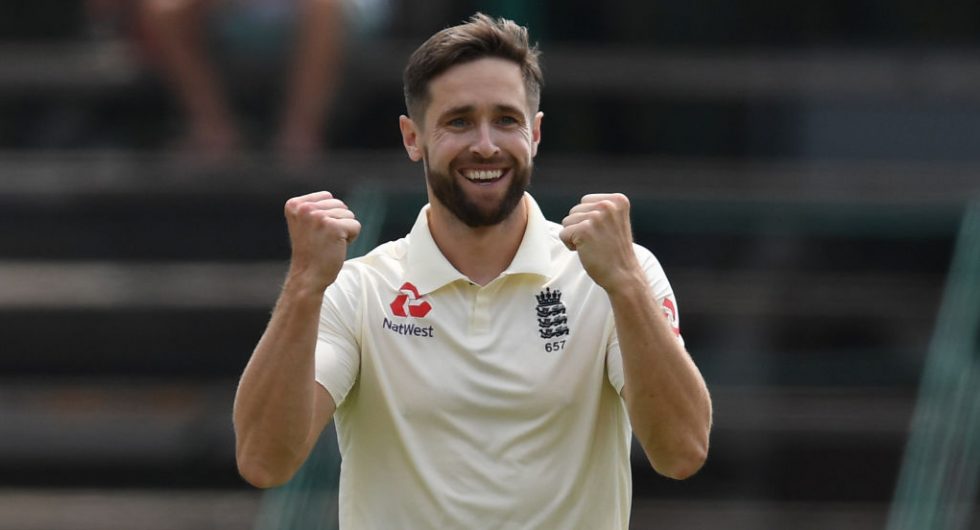
Chris Woakes has played 38 test matches (though inexplicably not in 2021) and both his batting and bowling averages are just under 30. Probably the reason he has not played more games is down to his struggles away from home. And Jimmy Anderson. But he had a fantastic 2020 which included success abroad, albeit in relatively helpful South Africa.

In 2021 he would not be England’s third choice, more likely fourth behind Anderson, Broad and Archer. But if I was handling the England rotation policy, Woakes would play whenever Anderson does not play and Archer and Wood would rotate. In the 2010s, Woakes was probably overall the best choice as third seamer.

Graeme Swann: England won the Ashes home and away and home again when Swann was at his best. He was the biggest loss to England in 2013/14 when he could not keep bowling to the same standard. He copped a lot of ‘flak’ when he retired in the middle of the Ashes in 2013/14, but in truth, if I knew I was finished, going to loose a series 5-0 and never play again, I would clear off too. What was the point of staying? It was a sad end and what a shame he did not finish after the Home Ashes win. Not many can choose when to retire though, and I am sure it had an impact on Cook’s decision to retire in 2018.

One just cannot overstate the importance of Swann in that period from 2009 to 2013. The most perfectly balanced team for test match cricket requires an all-rounder – like a Stokes, Flintoff or Botham. The next best thing is to have the team with 6 front-line batters and just 4 front-line bowlers. And this configuration worked for the 1980s West Indies and 1990s Australians. But you need 3 of those bowlers to be genuinely world class (think McGrath, Gillespie, Warne). As soon as England lost Swann, that team configuration no longer worked – and the whole team fell appart.

Strauss and Cook were able to rotate Stuart Broad and James Anderson around Swann, and it meant that even though England often struggled to find another pace bowler, Swnn could provide control. That in turn made 2 amazing bowlers in Broad and Anderson truly devastating. You see the same thing now with Nathan Lyon for Australia, who surely increases the impact of Pat Cummins.

Stuart Broad: Think Broad and you think of The Oval in 2009, Durham in 2013, Trent Bridge in 2015 and The Wanderers in 2016. Crazy ‘purple patches’ where nobody could play him. It is not the whole story though.

People have had a tendency to think of Broad as inconsistent, but none the less, with those ‘purple patches’, a perfect foil for consistent Anderson. You do not get 500 wickets without being consistent though, and in 2019 he showed that he does not just live in Anderson’s shadow.

We had hopes for Stuart Broad the all-rounder, but his batting has rather fallen off a cliff since his test century in 2009 (I was at Lords and I did not spot the no-balls!). But he was more than made up for that. Most importantly of all, though, is that Broad has performed in advercity, so many times. Even on the disgraceful Ashes tour of 2013/14, he came out with a small amount of credability. Many wrote Broad off in 2018 during a period of poor form (though again, everything is relative) but in 2019 he came back and had an amazing Ashes series. Broad is a real champion.

James Anderson: Oh Jimmy Jimmy……Anderson, born in 1982, has played test matches alongside Alec Stewart, who made his debut for Surrey in 1981. Graham Gooch famously played for England into his 40s, and Alec Stewart’s longevity as a ‘keeper is incredible. But for a fast bowler to be still bowling for England aged 38 is incredible.

Like some of the other players in this team, I struggled to remember many of the Jimmy Anderson moments. That is because he has become ‘Mr Consistent’. He is not known for those Broad ‘purple patches’ but it is rare for him not to take a few wickets. He also rarely goes for many runs.

However, he has taken thirty 5-wicket hauls, and 10 in a match on 3 occasions. The most memorable 10 wicket haul was in 2013 against Australia. That turned out to be a massively important game. I think it was in that Trent Bridge game when he bowled a ball to Michael Clarke in 2013 that was described as the ball of the century, swinging late past the bat to take off stunp. Actually, Anderson has been bowling that ball for years. He has that amazing combination of consistency with enough variation to rarely be predictable. If he was found out in the 2013/14 Ashes, he did well in the 2017/18 down under. However, any suggestion of Anderson being a poor traveller is undone by his success in Asia. A truly remarkable bowler that has too often been let down by England’s batsmmen.

The reserves

Just a batman and fast bowler this time.

Jonathan Trott: I could not get Trott in this team, but like Swann, you cannot over estimate the impact of Trott on England from 2009 to 2013. Trott experienced mental health issues in 2013, and while he did return for England after 2013, he was never the same player again. It is no surprise that England’s consistency suffered without Trott holding it together at 3.

For me, Trott in 2010 was like Mike Atherton in the 90s. When Trott was in, you felt England would score lots of runs.

Jofra Archer: In 2019, Michael Vaughan picked Archer as 12th man for the all time England one day team. It seemed crazy. But despite only playing a handful of test matches, it is clear that Archer could become a great test match bowler. If he can keep fit and motivated.

How would this team do?

This team would give any team from any era a real challenge. We saw that in the early part of the decade. And it must be said that since the team of 2010/11 only Root and Stokes have made themselves indispensible, leading to Trott just missing out. I suspect the great West Indian team might edge it, because really fast bowling has been a problem for several of this batting line up – though not for Stokes who thrived on it in Perth.

England teams of the decades: 2000s

As we ticked around to the end of the disaster that was the year 2020, a lot of “Teams of the Decade” were shared. ESPN created a test match team of the decade. Whilst I keep up with most of the England Test Matches, I do not really keep up with all the other international fixtures. I am pretty familiar with England teams since 1990 so I have picked teams of the decade for the 1990s, 2000s and 2010s.

Picking this team was much more challenging than picking the 1990s team. The 90s team was slim pickings. It was in the 2000s that things changed. England went from being hopeless in 1999 to being world beaters in 2010. But the seeds were sown in 2000 when England embarked on 4 successive test series victories. To those of us who had followed England since the late 80s this was new territory. In this decade England had some seriously good players – so some good players did not make the cut – and some have every right to feel unlucky.

The Team

ME Trescothick, AJ Strauss, MP Vaughan (c), KP Pietersen, GP Thorpe, A Flintoff, MJ Prior (wk), AF Giles, SJ Harmisson, MJ Hoggard, SP Jones. Reserves: IR Bell, JM Anderson, MS Panesar

The Batting

Marcus Trescothick: I was watching on television the Old Trafford test match in 2000. Alec Stewart tore into the West Indies bowling attack, which was nothing like what it had been, but still included Ambrose and Walsh. ‘Tres’, on debut, just dug in and kept Stewart company. Within months he was a guaranteed selection.

His best performances came against South Africa in 2003 at The Oval and then in 2004 at Johannesburg. However, he will always be remembered for his contribution to the 2005 Ashes. He failed to score a 100, but his 90 at Edgbaston changed the complexion of the series.

It is hard not to think about what might have been, as Trescothick had to retire prematurely from international cricket. He would have broken all the records, and Sir Alistair Cook would have had to wait a long time to get in the team. But perhaps Trescothick achieved the most by releasing his book and sharing the terrible health problems he had faced. Sport had to recognise mental heath as a result. That is quite a legacy.

Andrew Strauss: It had to be the opening pair from 2005. Strauss began his career with a run of centuries and formed a brilliant partnership with Trescothick. Both Strauss’ centuries in the 2005 Ashes were vital – but England fans will remember that the one at Old Trafford was made after a bang on the head that in 2021 would probably have resulted in a concussion substitute.

Strauss went on to form a long term partnership with Cook. His form dipped around 2007, but determination dragged Strauss to 170 against New Zealand at Napier in 2008. Strauss went on to score hundreds in both innings at Chennai later in 2008 and soon after was England Captain and Man of the Series in the 2009 Ashes. Of course, his greatest moments came in the next decade.

Like Trescothick, Strauss belonged to international cricket from day 1, and England fans had rarely known such riches in 2004, when it took injury to Michael Vaughan to get Strauss in the team. Team man Nasser Hussan called time after running Strauss out at Lords, and the 2005 Ashes top 3 was formed.

Michael Vaughan (c): He had to be captain of this team. Hussain did much of the hard work which allowed Vaughan to thrive. But Vaughan was a good captain, both for his tactics and his man management (particularly of Kevin Pietersen). Sadly, injury destroyed Vaughan’s career and his team, or else the 2005 team could have been more successful than Strauss’ team in 2011.

As for Vaughan the batsman, he had an astonishing purple patch in 2002/3 when he scored loads of hundreds. In the Ashes down under he scored 3 hundreds in the series, and I will always remember that ‘swivel pull’ which he played against McGrath and co stood on one leg.

He was never the same after he injured his knee in 2004, though did manage a fantastic century in 2005 at Old Trafford. It was the beginning of the end though, he did score a couple more hundreds but his career was prematurely finished off by injury.

Kevin Pietersen: I remember Shane Warne talking about ‘KP’ during his 200 at Adelaide in 2010. To paraphrase, Warne said that you needed a lot more than ‘just talent’ to be succesful. But when it comes to talent, ‘KP’ was up with the best.

From the moment he walked out at Lords and tried to hit McGrath into the Grandstand, we knew Pietersen was different. I remember when he played the switch hit at Edgebaston against Muttiah Muralitharan. “That is outrageous” said Bob Willis.

If you forget the shambles that was Pietersen the captain, dismiss the nonsense of ‘textgate’ and the stupid criticism of Matt Prior and Andy Flower, you are left with a lot of brilliance. Pre 2010, the 158 at The Oval would be the most amazing innings.

Graham Thorpe: My selection of Thorpe is perhaps based on some sort of 90s loyalty. But I would have kept Thorpe for the 2005 Ashes at the expense of Ian Bell. But England won the 2005 Ashes and Bell had a pretty good career. So maybe Bell is unlucky not to make this team (and he does make the next Team of the Decade).

Thorpe did have a fair impact on that 2005 team though. He helped establish it. He had that amazing patch after his last comeback in 2003, and along with Mark Butcher and Hussain instilled ‘grit’ into the batting line up in 2004. He was also at the other end when Andrew Flintoff scored his first hundred. I suspect he was a major part in guiding Flintoff to his first big score.

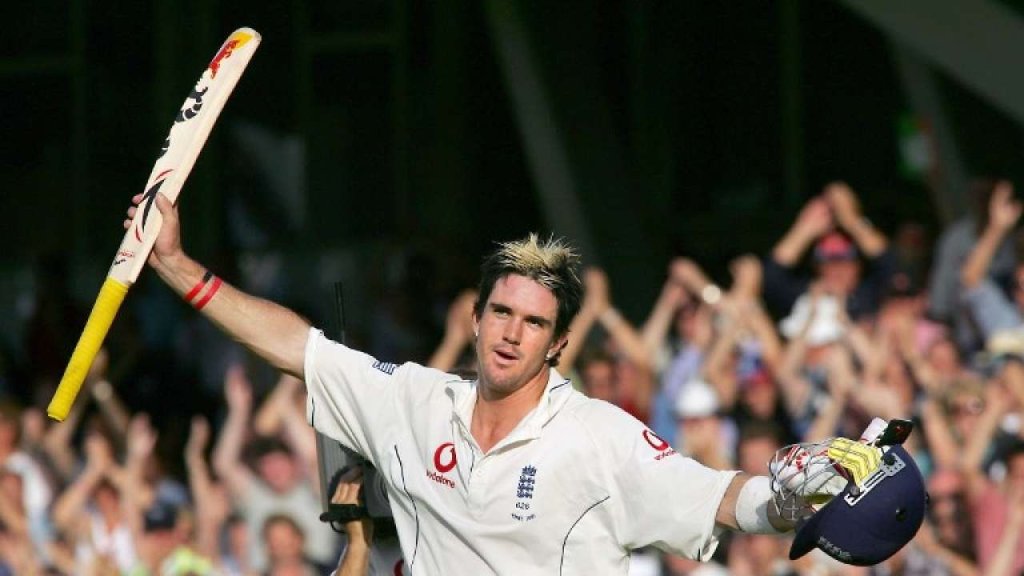
That partnership against New Zealand got Thorpe to his double hundred, and Thorpe had success in Pakistan and Sri Lanka. But it will always be the Barbados innings against West Indies in 2004 that sticks out. Thorpe single handedly kept England in the game. That was what Thorpe always did. Perhaps more effective at 20/3 than 200/3, he was a fighter that kept England in the game. In the 2000s, he scored hundreds rather than 80s and England managed to grab the opportunities a lot more.

Andrew Flintoff: In the end, Flintoff was all about the 2005 Ashes. He was the key difference with bat and ball.

He had lots of other success as well – particularly in One Day Cricket. He had the famous over against Jaques Kallis in 2008 and the wickets at Lords in 2009. And of course, ‘mind the windows Tino’. If only he had never been made Captain and not bowled 50 overs against Sri Lanka….He lost that cheek of the Tino Best incident when Captain. I hope England learn the lesson with Ben Stokes.

Flintoff will always be synonymous with Edgbaston 2005 though. He made runs in both innings, but it was in the second innings that it really matered, because he was left on his own. He hurt his shoulder and struggled….then started hitting sixes. Eventually Shane Warne got him, and then ran across the field to say ‘well played’. Like or loath Warne, he played in the right spirit (mostly) but rarely gave out praise to England players unless it was really warranted. Then ‘Freddie’ bowled the famous 7 ball over when he got Justin Langer and Ricky Ponting. Ponting said afterwards that he really did not want that no-ball, he just wanted that over to finish. The Edgebaston crowd loved that no ball, and as Sir Ian Botham said on commentary ‘he’s having a pretty good match’.

Perhaps Flintoff should have been fitter and then might have achieved more. We will never know. But he needed that ‘cheek’ to thrive.

The Wicket Keeper

Matt Prior: Now the Wicket Keeper was difficult. Several of the 2010/11 team only make the 2010s team and have missed out on this one. And for the next decade’s team, Prior was an obvious choice. But Prior did not become ‘first choice’ keeper until 2008, after a debut season of good batting and poor keeping in 2007. Before then, several wicket keepers had played for England in the 2000s (Alec Stewart, James Foster, Chris Read, Geraint Jones, Tim Ambrose). Jones nearly made it but in the end was finished off by the horrors of 2006/7 down under, and he just did not score enough runs.

So nobody really ‘claimed’ the Wicket Keeper role before Prior, and I nearly selected Stewart. In the end though, I think Prior achieved more in the decade. He also transformed himself from ‘Dire Prior’ into England’s best. His best moments came in 2010/11, but he made a key contribution to 2009. Despite being victim of some strange dislike by Kevin Pietersen, Prior also made himself into a real presence behind the stumps.

Neither Bairstow or Buttler have been able to live up to Prior, and both have more talent. That’s what I love about Prior – he worked his absolute socks off to be the best.

The bowlers

Ashley Giles: If I am honest, I am not sure I rated Giles. If I was picking the best spin bowler for the decade on instinct, I would pick Monty Panesar. And Panesar certainly should have been ‘first choice’ spinner for the 2006/7 Ashes, though Giles exited that tour under difficult circumstances.

Looking at Giles’ figures, they are not spectacular. He enjoyed excellent tours of the sub continent and had bowling success in 2004 against West Indies. It was probably his batting that made the difference – England were ‘stung’ so often in the 90s by having useless tail enders. He was also a good fielder.

Giles actually did very little that was spectacular. I think that is the point. He was a team man, a key part of Hussain and Vaughan’s teams. But he was not just in the team because of his popularity. He chipped in when it really mattered. Think the wickets he took at Edgbaston in 2005 – he got Ricky Ponting on the sweep when he was just cutting loose. And at The Oval he dug in with Pietersen to ensure the draw. That was typical of Giles. Not spectacular….but when it really mattered he often came good.

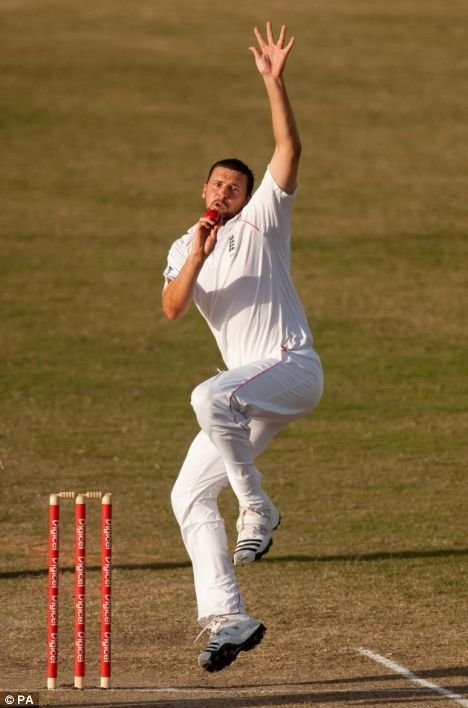
Steve Harmison: 7/12 at Barbados. And of course, drawing blood from Ponting on Day 1 at Lords in 2005, which set the tone for England’s bowling in that series. Let’s remember that and not the first ball at Brisbane….

Harmison should have been fitter and more consistent. If he had been fitter he would have been England’s leading fast bowler for longer and would have been more consistent.

But for that period around 2005 he was fantastic. In the days before Stuart Broad, we just did not see those kind of spells from England bowlers. He was at his best alongside Flintoff…..but also his worst. It was fitting he was able to ‘finish off’ in 2009 alongside Flintoff, having made an important contribution to another home Ashes victory.

Matthew Hoggard: Whenever I think of Hoggard, I actually think of Hoggard the batsman. Firstly, sat on the balcony at Lords on debut in 2000 desperately hoping Dominic Cork and Darren Gough would get England over the line (they did). And of course, that cover drive at Trent Bridge in 2005.

Then I remember Hoggard’s hat-trick in 2004 against West Indies. That hat-trick was Hoggard’s only major contribution to the 2004 away series, but that was the thing about the 4 fast bowlers in that period – someone always stepped up.

Hoggard opened the bowling for England and provided the stability for the rest of the attack. His success came from being different to all the other bowlers, providing the contrast. Of course, he also kept James Anderson out until 2007.

Simon Jones: Again Brisbane strikes, this time in 2002, as Simon Jones dived in the field to save runs. His knee dug into the ground but the rest of his body kept going. It still makes me shudder.

So Jones’ career was sadly short and full of injury. But in those 18 matches he took 5 wickets in an innings 3 times. His bowling average stayed under 30. And he did enough for us to know that he would have achieved a great deal if only his body had permitted it. More than Harmison for sure.

The reserves

I decided I would pick a spare batman, fast bowler and spinner. It was obvious who I would pick.

Ian Bell: I picked Thorpe over Bell, and still think that would have been the right call. But Bell took those short leg catches….

Bell was a number 5, not a number 3, and found himself at 3 too often, too young. He was wonderful to watch, but in the 2000s he did not quite ‘make it’ His greatest moment was in the 2013 home Ashes series. But he still had pretty good  figures and would have walked into the 1990s team.

James Anderson: Jimmy Anderson spent the mid 2000s carrying drinks while England coaches tried to ruin him. Anderson comes in as 12th man ahead of Broad because he did more in the 2000s. It is amazing to think that Anderson played alongside Alec Stewart!

In the end it worked out pretty well for Jimmy – once he got in the team. He had to push out 2 fine bowlers in Hoggard and Harmison.

And he saved the day in 2009 at Cardiff……

Monty Panesar: Talking about Cardiff……Panesar was England’s best spin bowler from 2006 to 2009. Graeme Swann took over, and Panesar should feel no shame in that.

How would this team do?

Its the 2005 Ashes team, with Thorpe for Bell and Prior for Geraint Jones. This team in the 2000s would give anyone a challenge. It was only injury that stopped England developing into true world beaters.

In 2021 this team would thrash everyone. No question.

England’s Root

A perception abounds that Joe Root has not made the most of his talents. I took a look at his stats.

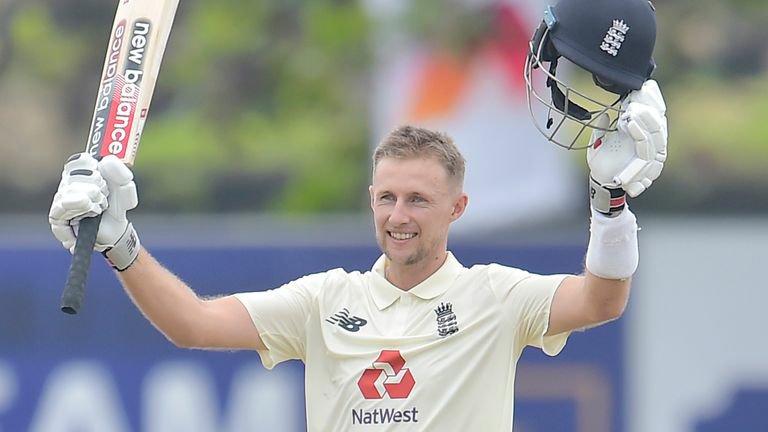
Joe Root brings up another double in Sri Lanka – Picture from Sky Sports

In Test Matches, let us start with averages. Root’s average has come down to 48, having been over 50. To find higher averages over a long career, you are looking at Ken Barrington, or the famous trio of Wally Hammond, Denis Compton and Herbert Sutcliffe (the latter’s average of 60 over 54 games is probably the most impressive.

Looking at run scorers, he is 7th in the list of England’s leading run scorers. He will almost certainly go past Graham Gooch and it will be in a similar number of matches. I am not sure he will pass Alistair Cook, but it is a possibility.

His apparent achilles heel is centuries. He is correctly criticised for not scoring enough test match centuries. Pretty 70s do not a test match series win. But he has 18 test centuries so is ahead of David Gower and Graham Thorpe, to name people of recent eras. And going back, he is in front of Compton, though obviously has played more games. The other thing about Root is that he is pretty good at 200s. In the century maker list, he again almost certainly will go past Kevin Pietersen but perhaps perhaps Cook will prove a step too far.

Before looking at 50 over cricket, let’s quickly look at T20 internationals. He is 6th on the list in terms of English run scorers, and has the highest average of that top 6. His strike rate is 126.3, and the likes of Eoin Morgan and Jos Buttler can add 10 to that. However, for me, his contribution in 2016 was significant to England getting to the T20 World Cup final. Whether he will play more T20 internationals will depend on Dawid Malan keeping up his form. It would also be hard to pick Root in front of Alex Hales.

In test cricket, the ‘big 3’ of Virat Kohli, Steve Smith and Kane Williamson have moved ahead of Root. Kohli is out in front when it comes to the One Dayers, but Root, Smith and Williamson remain much closer together. I certainly think Root’s best game is the 50 over stuff. For England run scorers, he sits in second place to Eoin Morgan, and I think it likely he will pass Morgan. His average, though, is a remarkable 50. Remarkable when you consider that for the first part of Root’s career, England were useless at 50 over cricket. Number 3 is the perfect spot for him.

What about his captaincy of the test match team? Let’s get the stats out of the way – it is hard to make a judgement on captaincy from statistics. For example, I think that Mike Atherton would have been a great captain with slightly better and more consistent players. Root has won 24 test matches, which brings him level with Andrew Strauss with only Michael Vaughan is ahead of him. Of course, Vaughan and Strauss also lost fewer games with more draws. You cannot compare eras, but it is notable that Mike Brearley only lost 4 games.

Root is an attacking captain which means he has not drawn so many games (as has been the modern way), but you think of the Headingley declaration against West Indies in 2017 which effectively allowed a West Indies win – I think it was the wrong move, but it was certainly positive. More recently you look at the decision to open with Jos Buttler and Ben Stokes at Old Trafford in 2020 to ensure quick runs. I was not sure about that move either – but it worked.

I think it is fair to say that captaincy did not sit naturally with Root at first. After loosing the first test match against South Africa in 2020, he was roundly criticised. Many said he should go.

Since that loss, it has been a very successful run for Root. It has also started to feel like Joe’s Team. He seems to be at his best getting the best out of the youngsters, and not so much the diciplinarian. A bit like Vaughan – but Root has not had the players Vaughan had. For example, in the recent Galle test match,at one point Dan Lawrence tried to play the biggest slog ever seen in the middle of what otherwise was a fine innings. Root just came down the pitch laughing and joking. At that point Lawrence did not need a lecture about not giving it away. But many would have done that.

It is that schoolboy grin that is Root’s greatest asset – even as a leader. At times, I think he has felt unable to laugh and joke. And he has to lead by example. But he cannot afford to loose that.

Root is likely to go down as the captain that could not beat Australia, as despite India’s heroics one has to assume England will struggle in Oz. But he has a chance – if he can get the team he wants together, and if he can get the hang of Jofra Archer.

As for Root the batsman, perhaps he is not in that top 3, but he is still a brilliant batman who should go down as one of England’s best. And he is just a delight to watch, which cannot be said of Steve Smith!

England teams of the decades: 1990s

As we ticked around to the end of the disaster that was the year 2020, a lot of “Teams of the Decade” were shared. ESPN created a test match team of the decade. Whilst I keep up with most of the England Test Matches, I do not really keep up with all the other international fixtures. I am pretty familiar with England teams since 1990 so I have picked teams of the decade for the 1990s, 2000s and 2010s.

When it comes to the 1990s, what is notable is that most of the batsmen pick themselves – it was slim pickings. When it came to bowlers, it is much harder. England had good bowlers but they rarely all played together in consistent combinations due to injury and terrible management.

The Team

GA Gooch, MA Atherton, AJ Stewart, N Nussain (c), GP Thorpe, RA Smith, RC Russell (w/c), D Gough, AR Caddick, ARC Fraser, PCR Tufnell.  Reserves: GA Hick, DG Cork

The Batting

Two of the batsmen standout as the best of the bunch but perhaps belong to an earlier era. One of them was potentially an alrounder, but for me more effective as an opener. One of them is better than the stats look. The other 2 fall into a category of ‘the best available’. All of them would get into an England Test Match team in 2021.

Graham Gooch: In the early 90s, Gooch was just something else. When Gooch was batting, England could bat. When he got out, well it was pretty nerve wracking.

Up to the late 80s, Gooch had been a good player but in 1989 Gooch suffered a nightmare against Australia and was constantly LBW to Terry Alderman. It felt like Gooch had never made the most of his ability with an average of under 40. That was about to change.

Ahead of the 1989/90 tour, Gooch was made captain and embarked on a remarkable run of form. As captain, his batting average is 58, and he holds records for the number of runs and centuries scored after his 35th birthday. In 1990 he scored is 333 in that remarkable Lord Test Match against India, scoring another 100 second time round. In 1991 he scored that amazing 150 at Headingley against a great West Indies bowling line up. In 1993 he was just about the only player to master Shane Warne.

As a captain, he did OK under the circumstances, but lacked the flexibility to deal effectively with the likes of David Gower and Ian Botham. His focus on fitness was perhaps ahead of its time. Hence he opens for this team, but not as captain.

Michael Atherton: Solid. Gritty. Once he was in, he was hard to shift. His career tailed off a little due to a chronic back injury, but for a while was England’s best batsman after Gooch retired.

Atherton was at his best when opening with Gooch or Alec Stewart. He formed a strong partnership with Gooch, and if the England selectors had not been so useless, he would have done so with Stewart after Gooch retired.

He peaked in 1995 with his 185* against South Africa, but by the time he retired his average had dipped below 40. In the early 90s, Atherton had a good record against Australia. Warne was not the problem, the problem was Glenn McGrath. For whatever reason, Atherton just could not handle McGrath, so from 1997 onwards his record against the old enemy was poor.

While Curtly Ambrose got Atherton out a lot of times, Atherton also scored a number of very good hundreds against West Indies attacks. Atherton did have the upper hand against South Africa too, with a little help from Umpire Steve Dunn in 1998. Whilst Atherton is remembered as a slow scorer, he could score – his strength being off his legs and the square cut. The problem was that for so long, he was single handedly holding England together. Combined with the back problems, it got too much and he was not quite the same after 1998 – but still better than the stats look.

It is hard to rate Atherton as Captain. He was consistently undermined by management, particularly Ray Illingworth. Of course, the ‘dirt in the pocket’ in 1994 weakened him considerably. Probably, with better (or any) support, he would have been more successful as a leader.

Alec Stewart: At his best as an attacking opening bat, and poorly managed for much of his time (poor management is a 90s theme). Despite that poor management, Stewart scored more runs in the 90s than anyone else in the world.

The problem was always that Stewart was a decent wicket keeper, so he ended up batting out of position in order to keep wicket. After his twin hundreds in Barbados in 1994, I was always certain that Stewart should open the batting with Atherton, which makes it ironic that he bats at 3 in this team.

Stewart had success at number 3 though, memorably with a big hundred at Old Trafford in 1998 against South Africa. In that game, Stewart was fighting for a draw – so whilst at his best attacking, he had a solid, though unusual, method. In 2000, he batted down the order and took the West Indies apart in his 100th game at Old Trafford. He was majestic that day.

That 100 in 1998 allowed him to claim the honours as the only England captain to win a 5 match series in the 1990s. His ‘sargent major’ style inspired the likes of Angus Fraser and Darren Gough, but he lacked the aggression of Nasser Hussain who replaced him as captain and therefore is in this team purely for his batting.

Nasser Hussain (c): Hussain makes this team as captain. While he ends up at 4, it was the number 3 slot that allowed him to make his break through.

The number 3 position had been a problem for England since David Gower and Mike Gatting were at their best. Hussain broke the stigma of the number 3 position when he made 100 against India in 1996, finally establishing his place in the team.

Despite possessing a fine cover drive, Hussain was the type of player who had to drag out every bit of his ability. A willingness to fight was perhaps the difference between the 1993 and 1996 versions of Hussain – he was considered petulant in his early days.

Once the decision was taken to use Stewart as a number 3 and wicket keeper, Hussain found himself at number 4 and enjoyed a fine period between 1996 and 1999. His 200 against Australia in 1997 was the batting highlight of his career, but he made several hundreds around that period against good bowling attacks including South Africa and Australia.

Once he became captain, his batting went down hill resulting in an eventual career batting average of 37. It was as captain that Hussain made his greatest mark though, establishing a degree of determination and passion that had been sadly lacking in the England team. He is therefore appointed captain.

Graham Thorpe: Like Hussain, if we take Thorpe’s record in the 1990s, he gets into this team by virtue of being the best avaiable.

Thorpe’s best performances for England came in the new millenium. If you take the overall career record, he still gets into both the 1990s and the 2000s team.

But actually, again like Hussain, their was a bit more to Thorpe in the 90s than that. He was England’s best middle order batsman in the second part of the decade. He made his first three hundreds against the best team of the time – Australia. This included success against Shane Warne.

He had a bit of a problem from 1994 to 1997 where he was consistently scoring good 70s but not making centuries – a bit like Joe Root. But the difference was that often by the time Thorpe got to 70, England were 180 for 5 so he could not hang around. But from 1997 he was off and running. It was only his back injuries and personal issues that stopped him usurping David Gower’s record.

Robin Smith: Along with Gooch, England’s best batsman of the 1990s. Only such a badly run team as England in the 90s would fail to pick Robin Smith.

Smith is most famous for taking on the West Indies quick bowlers. He claimed to enjoy the experience of being ‘bounced’ by the fast bowlers.

People remember Smith for not being able to bat against Indian spinners and then Shane Warne in 1992/3. In reality though, not many had success against those spinners. Smith had to be able to play spin – but it was not his strength.

After 1989, Smith never quite conquered Australia – and he was not even given the chance in 1994/5 – inexplicably rejected in favour of Gatting. If he had been backed up by good management (again we mention the managers) he would have been more successful, but still ended up with a career batting average of 43.

Perhaps he needed to take fitness more seriously – but nobody will ever forget that square cut which was seen to disintegrate boundary boards. However, his overall technique was excellent, and I loved watching him hook the ball off his nose.

The Wicket Keeper

England’s inability to get the wicket keeper situation right did not begin with Jonny Bairstow and Jos Buttler. But I have already discussed that.

Jack Russell (w/c): Without doubt, England’s best wicket keeper since Alan Knott.

Russell kept loosing his place in order to allow the selection of an extra bowler, which never made sense given it was runs England were always short of.

I think it did not help that Russell looked odd when he was batting. Some would say he always looked odd, but while he looked natural as a keeper, his batting was somewhat untidy. Interestingly though, Russell scored 2 centuries and ended up with a batting average of 27.1. Mark Ramprakash only marginally beat Russell with an average of 27.3 and again just the two hundreds.

Russell with the bat is probably remembered for scoring 29 off 235 balls in partnership with Atherton. With the gloves, in the end he is probably remembered for all those remarkable stumpings for Gloucestershire.

Jack Russell should have been England’s keeper and number 7 for most of the decade. I am sure that would have made Alec Stewart into an even better batsman.

The bowlers

While the batting is clear cut – basically pick the only 6 that had any consistency about them – the bowling is more challenging. England had a lot of good bowlers in the 90s, but they rarely all played together for long. Some, like Dean Headley, had careers cut short by injury. Others, like Darren Gough, were constantly fighting injury. It means the bowling attack is more based on ‘gut feel’ than stats.

Darren Gough: Gough at 8 is probably a bit worrying, but in 1994 he could bat. Gough the opening bowler? No question. He leads the attack.

I have a few Gough memories. Firstly at Sydney in 1995, David Boon left the ball which then crashed into off stump. In 1997 at Edgbaston, Mark Waugh was bowled off a no ball. Next ball he is caught at slip. And at Sydney in 1999, an Ashes hat trick. Darren Gough was at his best against Australia.

Gough also had important contributions to series victories against South Africa in 1998 and West Indies in 2000.

The most important thing though is that Gough was always so full of enthusiasm and character. I remember 2 diving catches at 3rd man against West Indies in 1995 and 2000. Other players would not have gone for the catch, not even got close. Both the catches were vital parts of victories.

Andrew Caddick: Caddick was all arms and legs, and for some reason was generally much more effective in the 2nd innings than the first.

Only England could manufacture the situation where a Test Match debutant opens the bowling in a home Ashes series. After struggling against Australia he had a reasonable tour of West Indies in 1994. From 1995 to 1997 Caddick struggled with injuries, but eventually it took the captaincy of Nasser Hussain to get the best of Caddick.

His best figures came against South Africa and he also destroyed Australia at Sydney in 2003. However, it was against West Indies in 2000 that Caddick’s finest hour came. At Headingley he took 4 wickets in an over in the 2 day game.

While Gough is the leader of the attack, Caddick took a few more wickets than Gough. That rivalry between the two was  major driver for them both. They remain 11th and 12th in the list of English wicket takers.

Angus Fraser: Yet another career blighted by injury. In the early 90s, Fraser was the first bowler on the team list. In 1991 he nearly dragged England to a rare victory against Australia in Sydney.

With some severe injuries, he lost a little bit of pace but kept all his determination. Despite a series of match winning efforts against West Indies (1994 and 1998) and South Africa (1998), Fraser did not seem to be a popular selection and rarely began a series for England. Instead he was usually added when injuries reached crisis point.

Most people will remember Fraser as extremely grumpy, kicking away at the turf. But he was determined and would run in all day. A captain’s dream.

My selection of Fraser is vindicated by the list of top wicket takers – looking at the 90s, Fraser is the next name after Gough and Caddick.

Phil Tufnell: Where does one start when it comes to Tuffers? Well he could not bat or field, and he was a nightmare to manage.

However, he was England’s best spinner of the 90s. Looking at the records, probably Robert Croft and Richard Illingworth were next in line, and both offered more with the bat and in the field. And I suspect Tufnell’s record at The Oval is much better than anywhere else. This is because England got into a routine of not picking Tufnell until the series had been lost, before allowing him to be man of the match in the final game of the summer.

Once again, the failure was of management. Tufnell would never have been easy, but his county captain, Mike Gatting, managed much better than Gooch and Atherton who were Tufnell’s main England captains. The fact is that he was the best spinner available consistently through the 90s. Anybody who was watching at The Oval in 1997 would have to agree.

The reserves

I decided I would pick a spare batman and pace bowler. To be clear, I would not compromise on having 6 batsmen and a keeper – otherwise the batting is too weak.

Reserve batsman – Graeme Hick: This was tricky. Good quality batting for England in the 90s was a sparse commodity.

Firstly, I had to discount the old timers. David Gower (3), Allan Lamb (2) and Mike Gatting (1) all scored centuries in the 90s. Gower’s and Gatting’s were against Australia – Gatting did the ground work for the 1995 Adelaide win. But really, all 3 of these players belong to the 1980s – and I will perhaps do a 1980s team at some point.

Mark Ramprakash and John Crawley were rejected – the sub 30 batting average was a blocker.

And next up for consideration was Mark Butcher. Butcher will be unlucky as he will miss out on the 90s and 2000s teams. His period of success straddles the millennium, but most of his hundreds came after the 90s.

So it came down to Graeme Hick. I wonder retrospectively if he was a bit better than we thought at the time. His batting average was just over 30, but the aforementioned Gatting and Lamb only averaged mid 30s. And Hick could bowl. If he had been properly managed, not dropped in at 3 and then dropped totally (repeat…) and perhaps if he had been permitted that century at Sydney…..but we will never know.

In the end he failed to maximise his ability, but once Graham Gooch and Robin Smith were retired, it was hard to pick 6 batsmen without picking Hick.

Reserve bowler – Dominic Cork: It was even tricker when it comes to bowlers, because England seemed to have lots of bowlers. The fact that bowlers like Steve Watkin and Martin Bicknell were so often overlooked proves that.

I expected to be picking Devon Malcolm, but his bowling figures are inferior to Dominic Cork and Phil Defreitas. The combination of the high bowling average (37) and economy (3.35) were just too much for me. Another management fail – Ray Illingworth seemed particularly keen to ruin Malcolm.

Defreitas took more wickets, but Cork has a better bowling average and strike rate – better than I expected in fact with an average under 30.

But with Cork, it is all about character. And the West Indies! Cork loved to play with West Indies. He is a good good reserve bowler, he would support the team but always be ready to go and grab his chance.

How would this team do?

This batting line up ought to be powerful but I think liable to collapse without runs from Gooch or Atherton at the top.

The bowling line up ought to be quite effective. Gough and Caddick to open up, Fraser to hold an end and quietly take wickets. Tufnell ought to be effective if well captained.

In 2020? Hard to beat. In 1995? Well some amazing teams were around. Certainly this team would fight.
Another Cricket Blog?

Cricketed? Seriously? Yes I know! Many, many sites exist about cricket. Many of them, like this, are free and contributed to by people who have played cricket or watched much more than I have been able to. More people are involved in written media about sport than ever before. But you have to start somewhere, and perhaps I can offer a different perspective on the game. Plus I love writing and love cricket, so why would I not have a go! So I will write about cricket, and it will appear on Cricketed. The bits and pieces I have written about cricket have all been migrated Cricketed, and more will appear.
It is an incredibly interesting – and dangerous – time for cricket. As with just about every part of life, Covid-19 has stopped everything in its tracks. It has also served to increase the impact of problems that already existed. In the medium term it seems that cricket will happen at empty stadia for the television, which is bound to impact the spectacle.

England are about to start a rescheduled Test series against West Indies, and I am working on my series preview which will be released ahead of the first game at Southampton. Hopefully August will bring about a domestic season in England. I intend to do some limited match reporting, but I do have other work and family commitments to work around. I will also write about aspects of the game that have interested or currently interest me.

I am not sure how regular the contributions will be, but hopefully the site will regularly be updated. The purpose is largely for interest and entertainment, though perhaps I can fuel some passionate and respectful debate (respectful is a none negotiable on Cricketed).

So please, join me in a new venture.

My favourite cricketer

For this article, I focused on players I have seen live, be it on television or at a ground. Therefore, I could not choose ‘Beefy’. Picture from Cricket Country

How do you even pick a favourite cricketer? One can think about all sorts of qualities or statistics. But at the end of the day, while these things all matter, a choice of a favourite is not scientific at all. It is all about how a player ‘made you feel’. One stipulation I did make is that I wanted to focus on players I have seen. Whilst it was tempting to pick Ian Botham, I never saw the best of Botham, except on the old videos. Eventually, I pick 2 favourites.

Winning in Australia eventually was all it takes to be a favourite.

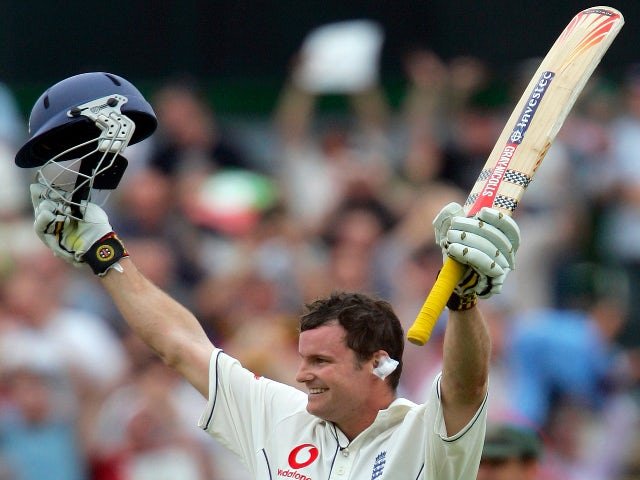
When Andrew Strauss came on the scene in 2004, he scored lots of centuries. Between May 2004 and September 2005, he scored 7 centuries. Adding Strauss to Michael Vaughan and Marcus Trescothick, it suddenly felt like England had a serious batting line up that could get big scores. Strauss was the only person to score 2 hundreds in the 2005 Ashes series, and I will always remember the image of him celebrating his hundred at Old Trafford which the bloody tissue on his ear, having been hit on the head early on. For me, Strauss was the obvious choice of captain in 2006/7 but it probably worked out better for him longer term that he was overlooked. Early on Strauss seemed a fairly free scoring player, but I feel that Strauss became a slightly different player later in his career, more of an accumulator. His high point as a batsman was probably 2009 – both the West Indies tour and home Ashes series, though the two centuries in the match against India in Chennai was a significant achievement.

Battered and bruised, up came the 100. Picture from the BBC

Strauss’ moment was as captain. Even though Strauss won the Ashes twice as captain and took England to number one in the world, many were critical of his tactical captaincy. Sometimes Strauss was perhaps conservative, particularly in the West Indies in 2009. However, you do not win the Ashes in Australia with a tactically inept captain. It was as a man manager that Strauss was most successful. He became captain after the total breakdown between Kevin Pietersen and Peter Moores, and my view is that Pietersen never quite got over that. Strauss held the dressing room together, including Pietersen, until the Headingly test match against South Africa in 2012, when Pietersen and some text messages contrived to end Strauss’ career. He should not have been left to finish his career in that way. His team was to fall apart spectacularly a year later in Australia – yes Cook was captain by then, but it was Strauss’ team – without Strauss.

Most importantly, Strauss won the Ashes in Australia – 24 years after Mike Gatting. He broke England’s ‘duck’ since 1986/7, though since 2011 the pattern of Australian home dominance has resumed. Indeed, it is astonishing to think that England have only won 4 test matches in Australia this millennium – Strauss won 3 of those, the other was won by Nasser Hussain in 2003. Winning in Australia eventually was all it takes to be a favourite.

One can be in no doubt about Strauss’ greatest moment on the field. Picture from the BBC

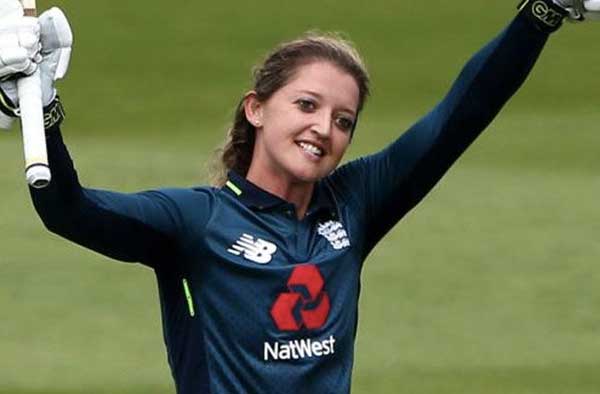
Sarah Taylor is responsible for my interest in ladies’ cricket. Growing up, I had always seen the ladies as rather dull – but I did not watch enough ladies cricket to know if this was real or perception. However, since 2006 Sky have shown more and more ladies cricket, and whatever the standard used to be, it has improved greatly. I cannot remember when I first watched Taylor, but I know she scored a century. Looking back at Taylor’s record, I think it might have been in 2008 when she made 129. I certainly do remember watching Taylor in 2009 when she broke a record for the highest score by an Englishwoman against Australia. As I watched Taylor bat, I started to watch other players like Charlotte Edwards and Anya Shrubsole, but I did need something to spark my initial interest. By 2020, it is just cricket to me.

Sarah Taylor

Sarah Taylor is responsible for my interest in ladies’ cricket

Taylor has clearly had a tough time with her mental health. Though she spoke bravely about it, I do not really know much about what she went through. I am not sure it is any of my business. What I do know is that she made a comeback, and a successful one. It was an amazing achievement.

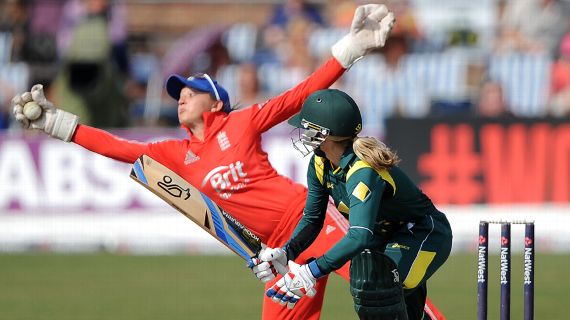
Another astonishing catch. Picture from ESPN.

It was fantastic that she was able to return and play a starring role in the 2017 World Cup. By 2017 I was watching her wicket keeping, and I realised that she was one of the best wicket keepers I have ever seen, up with Jack Russell. Sometimes, it seems like Taylor was able to remove the bails before the ball got to her. If she made a mistake, it would generally be an easy catch that would go down before then doing something truly remarkable. Taylor was also great fun to watch – though occasionally she would get carried away! That is part of the appeal – and I think that was also the role she was asked to play. In 2019 it was more and more apparent that Amy Jones was going to, at some point, replace Taylor, and so I think Taylor made the right decisions. We will always remember those stumpings!

Enjoy some memories below!

The Stewart Saga

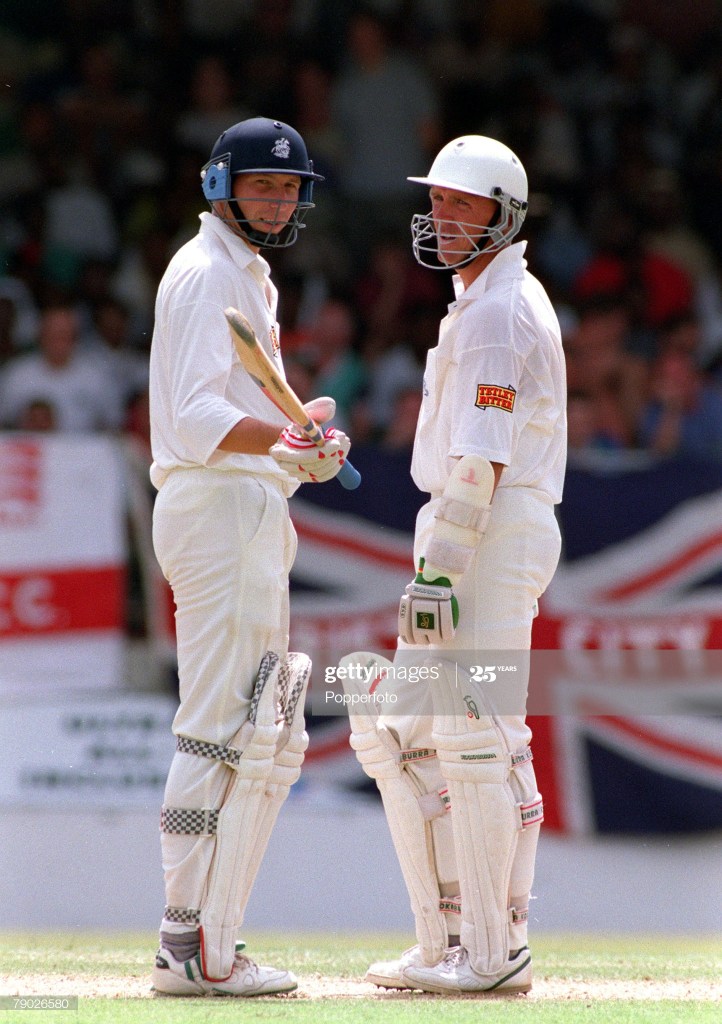
Fourth Test Match, Barbados, April 1994, England beat West Indies by 208 runs, England opening batsmen Michael Atherton (left) and Alec Stewart (Photo by Popperfoto via Getty Images/Getty Images)

In 1994 Michael Atherton and Alec Stewart opened the batting for England against the West Indies and performed well with two 100 partnerships in the series. Stewart made the famous two centuries at the Kensington Oval. In 1996, Atherton and Stewart performed well, and Stewart made 170 opening the batting against Pakistan at Headingley. England had an opening pair ready for the post Graham Gooch era. But we are talking about 1990s England here. Nothing was ever simple.

For those who did not follow English cricket in the 90s, it was a time of strange and inconsistent decision making. You never knew what an England team would look like, but one thing you did know is that every season would include a debate about whether or not Alec Stewart should keep wicket in test matches.


Jack Russell and his old hat. He could have been one of England’s best ever. Picture from Wisden.

Take the period of 1993 to 1996. In 93 Stewart did the entire Ashes summer behind the stumps. However, for the 93/4 winter tour to West Indies, Jack Russell was back in favour. In 94 we had an odd flirtation with Steve Rhodes, before we were back to Stewart keeping wicket in the first home test match against West Indies in 1995 (and we will ignore the incomprehensible decision to open the batting with Robin Smith).  1995 was unusual because we started with Stewart keeping but by the end of the series, Russell was back. Russell kept his place until the last home test match of 96 against Pakistan. 96 repeated what had happened in the 91 and 92 home seasons and the 90/1 and 92/3 away seasons – Stewart became a keeper at the end of a series to squeeze in an extra bowler. As England failed to win all these series, it is fair to say it never worked.


Russell on his way to a test match hundred against India in 1996. Enough to get him dropped. Picture from countycricket.com

The dropping of Russell in 1996 really annoyed me. Just 5 games earlier, Russell had top scored for England against India at Lords – taking the score from 107/5 to 344. Just 5 games before that Russell drove the South African bowlers to distraction in partnership with Atherton at Johannesburg. In Russell’s final test match in England at Headingly in 1996, Stewart had scored the 170 and Nick Knight 113. At the Oval, Stewart opened but after that, in Zimbabwe, moved to 3 and Knight opened. That means that 3 of the players that made 100s in the summer of 96 found themselves dropped or in a different role. It was a total
shambles.

If you have read this far, you have probably already worked out that I always wanted Stewart and Atherton to open the batting, and I wanted Jack Russell to keep wicket. Looking back now I feel the same. But I will concede that this was never a simple issue. Gooch and Atherton had formed a good opening partnership and so generally when Atherton played, Stewart had kept wicket and batted down the order (93 being a case in point). England were always a class player short and were fixated on building a team around an allrounder batting at 6 (the ‘new Botham’). Jack Russell was always the victim of this. Another interesting point, hard to imagine in 2020, is that there were a lot of good openers playing county cricket – the likes of Hugh Morris, Martyn Moxon, Steve James, Nick Knight, Mark Butcher, Jason Gallian and Mark Lathwell. Astonishingly, in 1993 Lathwell had been considered such a talent that Gooch, at the time perhaps the best opener in the world and arguably the best England had ever had, was moved down the order resulting in top order containing 4 openers.

There are a number of reasons why I would personally have selected Stewart as opener, not a wicket keeper. Firstly, I believe Atherton played better with Stewart at the other end. They were, and remain, totally different character but they complemented each other perfectly. Stewart was an attacking opener, at his best against pace, happy to get the score moving. Atherton needed to dig in, but once in was hard to shift. Atherton was also captain and under huge pressure, as his presence had such an impact on the entire batting line up. We needed to take pressure off him and not put it on him. Stewart at the other end did this.

The second reason is that, to me, it always seemed that England were short of runs, not short of wickets. Using Stewart as a wicket keeper served to shorten the batting line up and reduced the effectiveness of one of our best players. As a pure batsman, Stewart’s average was close to 47 whereas his overall average ended up just below 40. Indeed, I was recently reminded that Stewart scored more runs in the 1990s than anyone else in world cricket (6407) at an average of just over 40). This stat is clearly going to favour Stewart because he played throughout the decade – Gooch was clearly a vastly superior player but he is 10th on the list of 90s run scorers but he retired in 1995. But I still wonder how many runs he might have scored if he had been consistently opening. England just did not have enough quality batting.

Look at the best sides of the last 40 years or so. West Indies in the 80s, Australia around the year 2000 and the world beating England side of 2011 all favoured a 4 man bowling attack with a keeper at 7 (though it must be said that Jeffrey Dujon, Ian Healy, Adam Gilchrist or Matt Prior could all have batted at 6). Continuing the international comparisons, it is notable that Kumar Sangakkara and AB De Villiers mostly did not keep wicket in test matches once they became so key to the Sri Lankan and South African batting line-ups.

The biggest issue of all though is that every time the Stewart swap occurred; the whole structure of the team changed. The opening partnership, the keeper, the slip cordon, the batting order…EVERYTHING! Contrast that to the England Team of 2010/11 when the England top 7 was unchanged for the entire tour.


When I think of Alec Stewart, I think of the pull stroke, the white helmet and Kookaburra bat. Picture from Kookaburra.

With the arrival of David Lloyd as coach and the overdue departure of Raymond Illingworth, Stewart’s role generally became clearer. Stewart opened kept wicket in one day cricket – and that always made sense – after all, he was the 1992 keeper, and Russell playing in the 1996 World Cup was another moment of madness for England selection. In test matches, Stewart kept wicket and batted at 3 which advantageously allowed Nasser Hussain to bat 4 and Graham Thorpe 5. Memorably, Stewart as wicket keeper scored 2 fabulous hundreds at Old Trafford – 164 against South Africa in 1998, setting up a draw, and 105 against West Indies in 2000, rescuing England from 17/3. Even then, there were exceptions where Stewart did not keep wicket – the 1998 West Indies tour and Ashes test matches in 1997 (Trent Bridge scoring 87) and 2000 (SCG scoring 107). It is hard to ignore the fact that Stewart’s single century in Australia came when he was opening and not keeping.


If England are not careful, they will ruin the test match careers of both Buttler and Bairstow.

Twenty years later, you may be wondering why on earth this still matters? It matters because we have an abundance of keepers. Jos Buttler, Jonny Bairstow and Ben Foakes would seem to be enough options, but recently James Bracey was named in the training squad for the rescheduled West Indies series. In the 2015 home Ashes series, Buttler was in possession but in 2016 it seemed that Bairstow had made the position his own, before he was then moved to number 5 (Bairstow does not have the technique to be a test match number 5 in England). Not long after that, Foakes took an opportunity presented by injury, but a few games later was dropped. In the 2019 series, Buttler was batting in the wicket keeper’s number 7 spot but was not keeping wicket. Again, it made no sense.

Ed Smith would be well advised to take a look back at the 90s and the Stewart Saga. The lesson is actually simple. With Stewart, you could have gone either way, but you needed to make a decision and stick with it. By 2000, Stewart was established as first choice wicket keeper. It is no coincidence that the year 2000 saw England start to turn the tide, with series wins against West Indies and Pakistan. Consistency is key.

Design a site like this with WordPress.com
Get started